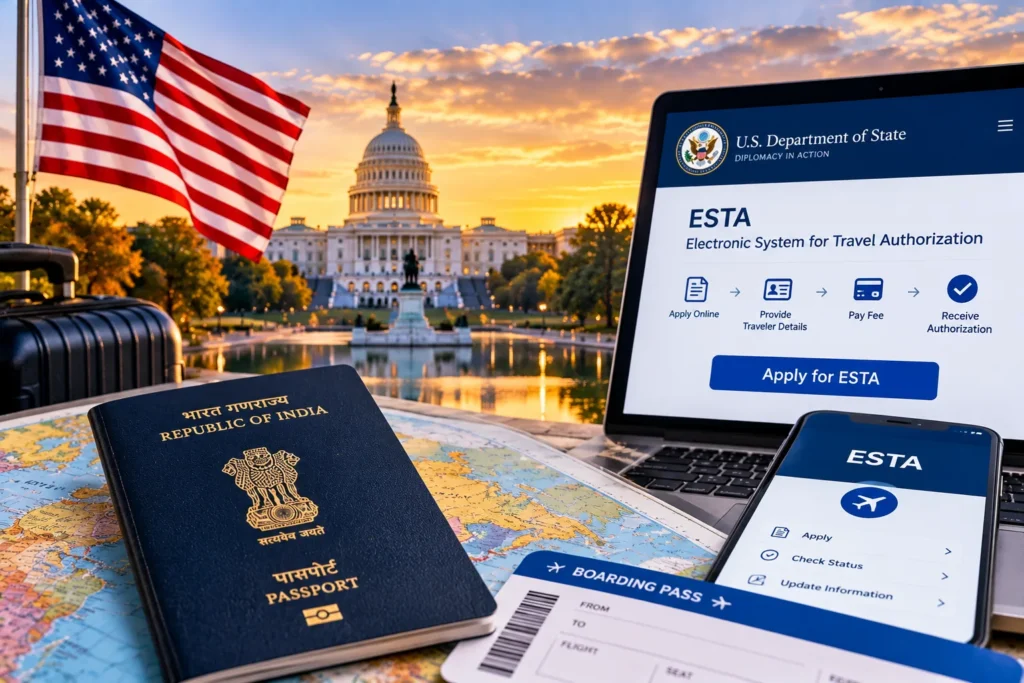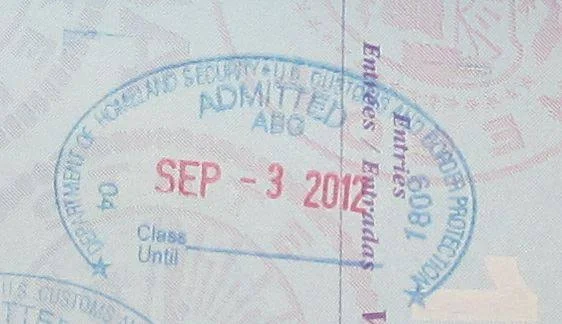
The United States is reducing routine passport admission stamping, placing greater importance on electronic records for many international visitors. The change affects arrival documentation while leaving visa requirements, border inspections and admission decisions in place.
An October 2026 US Customs and Border Protection bulletin indicates that officers will stop issuing routine stamps during primary processing. Stamps may still appear during secondary inspections and certain exceptional circumstances.
For tourism, the practical change concerns how visitors confirm their admission details. Where authorities issue an electronic Form I-94, that record becomes particularly important for checking immigration classification and authorised stay.
Electronic Records Take a Larger Role
Electronic I-94 records already form part of US border administration. The revised stamping practice builds on that established system.
Many foreign visitors can retrieve their latest admission information electronically rather than relying on an ink impression inside their passport. The record generally identifies their admission category and permitted period of stay.
However, not every visitor receives an I-94. Existing exemptions remain relevant, meaning the absence of both a stamp and an electronic record requires consideration of individual circumstances.
The change therefore should not be described as a universal replacement applying identically to every traveller.
It also does not mean passports have become unnecessary. Visitors must continue carrying the documents required for their journey and admission category.
No New Visa Exemption for Visitors
The documentation change does not introduce visa-free access for countries across the Americas. Nor does it guarantee admission for travellers holding valid visas or travel authorisations.
Visitors must still meet requirements associated with nationality, travel purpose and immigration classification. Border officers retain responsibility for determining admissibility and the conditions of entry.
A traveller arriving for a holiday therefore faces the applicable inspection process even without receiving a routine passport stamp.
The distinction matters for international tourism because a simpler documentation process can easily be mistaken for relaxed entry rules.
Travel businesses should describe the development accurately when explaining arrival procedures to customers.
Canada and Mexico Have Different Arrangements
Canadian and Mexican travellers require particular attention because their existing admission arrangements differ.
Many Canadian citizens visiting for ordinary tourism or business are exempt from routine I-94 requirements. Consequently, they should not assume that every entry generates an electronic record.
Mexican visitors may face different documentation requirements depending on their travel circumstances. Certain qualifying Border Crossing Card journeys within authorised border areas can fall under I-94 exemptions.
Travel beyond those permitted arrangements may require additional documentation.
These distinctions demonstrate why a country list alone cannot explain the change. Nationality, admission category and the nature of the journey remain essential considerations.
Tourism Across the Americas Faces a Documentation Shift
Eligible visitors from Brazil, Argentina, Colombia, Chile, Central America and the Caribbean may encounter reduced stamping when entering the United States.
However, authorities have not identified a separate group of American countries selected exclusively for the phase-out. The development concerns processing practices rather than a new regional travel agreement.
Existing visa arrangements and nationality-specific restrictions operate independently of the stamping decision.
For hotels, tour operators and travel advisers, the immediate task is clear communication. Customers need to understand that electronic documentation records admission where issued; it does not create permission to travel.
There is also no basis to assume the change will automatically increase visitor numbers or shorten every immigration queue.
Admission Dates Matter More Than Passport Markings
One important distinction concerns visa validity and the length of an individual authorised stay.
A visa’s expiry date does not necessarily determine when a visitor must leave after admission. For travellers receiving an I-94, the admission record generally contains the relevant stay information.
Without a physical stamp, visitors may have fewer visible reminders inside their passports. Checking the electronic record can therefore help clarify the conditions attached to their arrival.
The record may also support administrative processes requiring evidence of admission. An old stamp or previous arrival history does not establish permission for a future entry.
Digital Processing Changes the Arrival Experience
Travellers who receive an electronic I-94 can access available admission details through CBP’s official system. They can retain an electronic copy or print the information when needed.
Any apparent discrepancy requires attention through the appropriate CBP correction process.
Meanwhile, occasional stamping can continue in specific circumstances. Visitors should therefore expect some variation rather than assume every inspection will look identical.
For international tourism, the transition changes a familiar arrival ritual while preserving the underlying inspection framework. Accurate documentation remains central to understanding the terms of a US visit.
For more travel news like this, keep reading Global Travel Wire