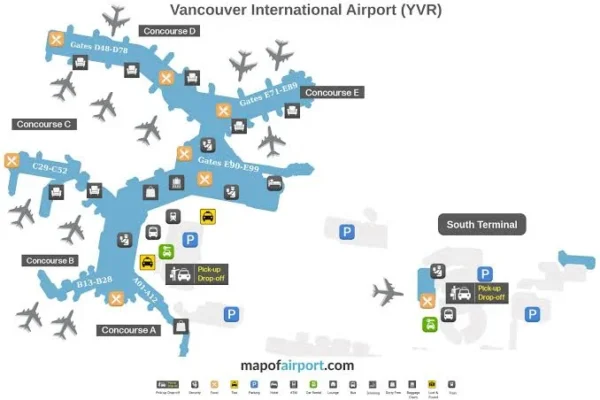
Vancouver International Airport is helping passengers navigate its terminal more confidently through an interactive digital map and online travel-planning tools. The technology allows travellers to locate essential services, understand airport processes and prepare before reaching YVR.
Passengers can access the map through a web browser without downloading a dedicated application. They can explore the terminal before travelling or use the tool after arrival to find check-in areas, security checkpoints, gates and passenger facilities.
The platform is particularly useful for first-time visitors, international passengers, families and people making time-sensitive connections. It can reduce uncertainty by presenting the airport layout through an interactive interface instead of relying entirely on static signs.
However, digital navigation does not change airline check-in deadlines or recommended arrival times. YVR advises passengers to arrive at least two hours before domestic departures and three hours before flights to the United States or other international destinations.
Interactive map highlights essential facilities
The Vancouver Airport digital map allows users to examine different terminal areas and levels. Travellers can zoom into specific sections and search for facilities based on their immediate needs.
Available categories help passengers locate airline check-in counters, security screening areas, washrooms, restaurants and retail outlets. Travellers can also search for water refill stations and other practical amenities.
This functionality can make a significant difference inside a busy airport. A passenger looking for an airline counter can identify the relevant area before entering the terminal, reducing unnecessary walking and last-minute confusion.
Once inside YVR, travellers can use their current position and selected destination to understand the route ahead. Directions may include turns, walking paths, escalators and movement between terminal levels.
The experience resembles the familiar process of using an outdoor digital map. However, it adapts navigation to an indoor airport environment where gates, security zones and floor changes determine the available route.
Passengers should still check airport signs and flight information displays. Gate assignments and operating conditions can change, particularly during disruptions or peak travel periods.
Journey planning begins before airport arrival
YVR’s wider travel-planning information helps passengers prepare for each stage of departure. This can include confirming flight details, checking in online and organising identification or travel documents before leaving home.
Early preparation reduces the number of decisions travellers must make after entering the terminal. It also allows them to focus on baggage processing, security screening and reaching the appropriate departure area.
International journeys often involve additional document checks. Passengers should confirm passport validity, visa requirements and destination entry conditions through official authorities and their airline.
Travellers connecting through Vancouver should also understand whether they must collect baggage, clear customs or pass through another security checkpoint. These requirements depend on the itinerary, origin and destination.
Digital guidance can organise this information more clearly. Nevertheless, travellers remain responsible for following airline instructions and allowing enough time for every required process.
Time awareness reduces missed-flight anxiety
One of the greatest pressures inside a large airport is understanding whether enough time remains before boarding. Walking distances, queues and unfamiliar terminal layouts can make passengers feel uncertain even when they arrived early.
Digital journey guidance can help travellers identify their remaining steps and move toward the correct gate. This becomes particularly valuable during holidays and other high-demand periods.
Passengers should scan only official YVR QR codes and use trusted airport pages. They should avoid entering travel or personal details into unfamiliar websites reached through unofficial signs or messages.
Technology can support better time management, but it cannot guarantee that a passenger will reach a flight. Security queues, airline procedures and operational disruptions may still affect the journey.
Digital customs tools support international travel
Passengers arriving in Canada through YVR can use the optional Advance Declaration feature in ArriveCAN. Eligible travellers may submit customs and immigration information up to 72 hours before reaching Canada.
After arrival, passengers must still confirm their declaration at an airport kiosk or electronic gate and complete the required border process. Advance submission can simplify this stage, but it does not replace examination by border officers.
Eligible passengers departing Vancouver for the United States may also use Mobile Passport Control. The U.S. Customs and Border Protection service allows qualifying travellers to submit passport and customs information through the official mobile application.
YVR has U.S. preclearance facilities, allowing passengers to complete American border procedures before departure. Travellers must verify their eligibility because these digital services are not available to every passenger.
Smart navigation strengthens Vancouver connectivity
Clearer airport navigation benefits more than individual travellers. It can improve passenger movement, support terminal businesses and help airlines reduce delays caused by late arrivals at gates.
Restaurants and retailers may also become easier to discover when passengers can see nearby options and understand the time needed to reach their departure point.
Accessibility remains essential as digital services expand. Airports must continue providing physical signs and assistance for travellers who cannot use smartphones or prefer human support.
Vancouver International Airport’s interactive tools show how digital mapping can turn a complex terminal into a more understandable environment. By combining advance planning, indoor navigation and official border services, YVR gives travellers greater control over their airport journeys.
For more travel news like this, keep reading Global Travel Wire