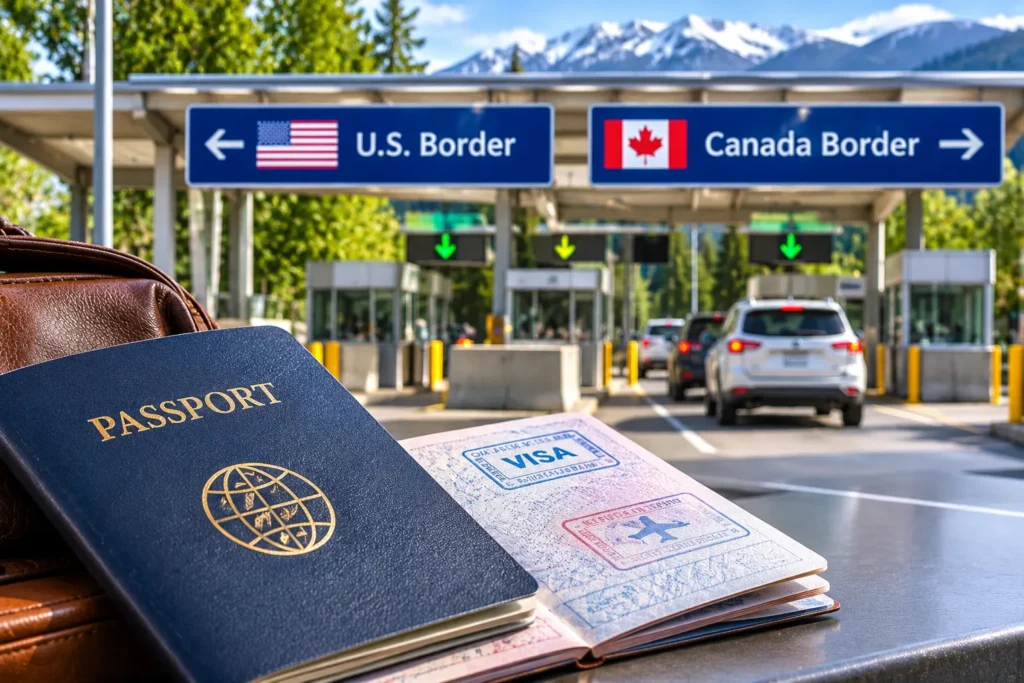
Cross-border mobility between Canada and the United States remains one of the busiest international travel corridors in the world, yet recent border enforcement practices highlight how closely U.S. Customs and Border Protection examines an applicant’s complete international travel history. While Canadian citizens generally enjoy visa-exempt entry into the United States for tourism and business under U.S. federal immigration regulations, admission at any land port of entry or airport preclearance facility is never guaranteed and rests entirely on the discretion of inspecting officers at the time of arrival.
Under U.S. immigration law, every foreign national seeking admission—including Canadian citizens—bears the burden of establishing admissibility to the satisfaction of U.S. Customs and Border Protection. During primary or secondary inspection, officers routinely review passport stamps, active foreign visas, electronic travel records, and previous international itineraries to assess security compliance, travel intent, and adherence to federal entry standards.
Why Past International Vacations Draw Scrutiny at U.S. Ports of Entry
A valid passport and a clean domestic record do not shield travellers from detailed questioning regarding prior trips to third countries. U.S. Customs and Border Protection officers have broad statutory authority to inspect travel documents, question visitors about past destinations, and evaluate whether previous foreign travel or active visas raise admissibility or security concerns under U.S. federal guidelines.
When an officer notices an active visa or entry stamp from a foreign destination visited years earlier, secondary inspection may follow to verify the purpose, duration, and circumstances of that trip. Depending on the destination involved, bilateral diplomatic considerations, or federal screening protocols, an unexpired foreign visa inside a traveller’s passport can trigger heightened scrutiny. In certain situations, officers may refuse entry or advise a traveller to resolve documentation questions—or wait until a specific foreign visa expires—before seeking admission again.
According to official guidance from U.S. Customs and Border Protection and the Government of Canada’s travel advisory portal, border officials also examine digital devices, social media activity, financial sufficiency, and ties to Canada whenever questions arise regarding a visitor’s background or intentions. Even frequent cross-border travellers with decades of routine visits can face extended questioning if an officer identifies an anomaly in their travel history.
Understanding Refusal of Entry Versus Withdrawal of Application
For Canadian visitors turned away at a U.S. port of entry, the legal classification of the refusal carries major consequences for future U.S.-Canada border travel. Under federal regulations codified in Title 8 of the Code of Federal Regulations, officers typically resolve non-criminal admissibility concerns at northern ports of entry in one of two ways:
Withdrawal of Application for Admission: At the officer’s discretion, a traveller may be permitted to withdraw their request to enter the United States and return immediately to Canada. While the incident is logged in U.S. border databases—meaning future crossings will likely prompt secondary inspection—a withdrawal does not constitute a formal removal order or trigger an automatic multi-year entry bar.
Expedited Removal or Formal Inadmissibility Determination: If an officer determines that a traveller lacks required entry documentation, has committed a prior immigration violation, or has engaged in willful misrepresentation, the agency may issue an expedited removal order. Such an order carries a mandatory five-year bar from re-entering the United States, or a permanent bar in cases involving fraud or misrepresentation.
Official guidance from both U.S. Customs and Border Protection and the Canada Border Services Agency advises travellers who are refused admission not to immediately attempt crossing at a different port of entry. Border records are shared electronically across all land, air, and sea checkpoints, and attempting to bypass an earlier refusal without resolving the underlying issue can escalate the enforcement outcome.
Essential Documentation and Preparation for Canadian Travellers
Official U.S. Customs and Border Protection guidelines specify that Canadian citizens entering the United States by air must present a valid Canadian passport or a valid NEXUS card when travelling via participating airports. For land and sea crossings, accepted primary documents include a valid Canadian passport, an Enhanced Driver’s Licence, an Enhanced Identification Card, or a trusted traveller card such as NEXUS or FAST.
Beyond primary identification, Canadian government travel advisories strongly recommend carrying supporting documentation demonstrating strong residential, financial, and employment ties to Canada—such as proof of ongoing employment, property ownership or lease agreements, return travel itineraries, and evidence of sufficient funds to cover the planned stay.
As border screening technology and interagency data sharing continue to expand across North America, travellers planning cross-border holidays or business trips benefit from reviewing the visas and stamps in their current passports well ahead of departure. Understanding how international travel history interacts with U.S. admissibility rules remains essential for smooth, predictable journeys across the U.S.-Canadian border.
For more travel news like this, keep reading Global Travel Wire