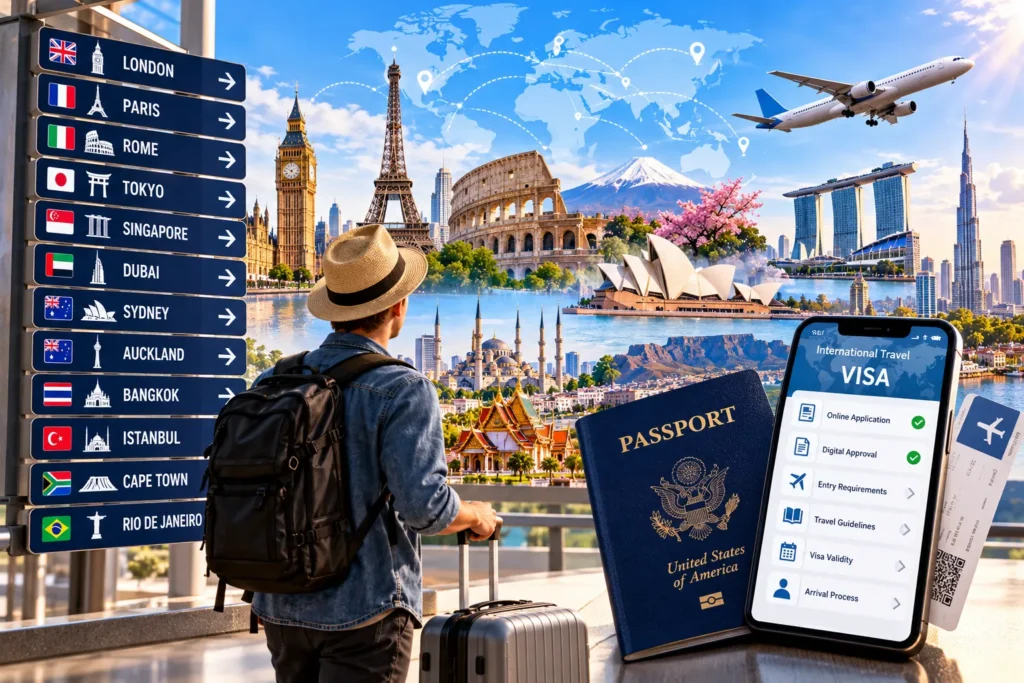
The landscape of international travel mobility continues to evolve as foreign governments refine border control systems, implement automated clearance protocols, and update reciprocal entry agreements. While a United States passport remains among the most versatile travel credentials globally—granting visa-free or visa-on-arrival entry to roughly one hundred and eighty territories—several high-profile tourism destinations require formal advance permissions or electronic authorizations. International tourism boards and consular authorities emphasize that reviewing official entry prerequisites well in advance is essential to avoid boarding denials and unexpected travel interruptions.
Border entry mandates are rarely permanent, and regulatory shifts across South America, Europe, Asia, and Africa demonstrate how quickly entry frameworks can change. Travelers preparing overseas journeys must navigate an increasingly diverse mix of traditional consular visas, digital eVisas, electronic travel authorizations, and conservation tariffs.
Western Hemisphere Updates: Brazil and Cuba Transition to Digital Portals
Across the Americas, entry protocols have undergone notable revisions. Brazil officially ended its temporary visa-free arrangement for United States nationals, reinstating mandatory visitor visa requirements under diplomatic reciprocity principles. In response, Brazil’s Ministry of Foreign Affairs deployed an online eVisa system through its official processing platform. Eligible leisure and business visitors can obtain a ten-year, multiple-entry electronic visa permitting stays of up to ninety days per visit, capped at one hundred and eighty days within any twelve-month period. Commercial air carriers require verified digital approval codes prior to issuing boarding passes, with official guidance advising applicants to submit documentation well ahead of travel.
Further north in the Caribbean, Cuba modernized its entry procedures by replacing physical paper tourist cards with a centralized eVisa system. The digital permit streamlines pre-departure checks for leisure travelers, though United States authorities remind citizens that domestic regulations governing authorized travel categories to the island operate independently of Cuban immigration requirements.
European Travel Authorizations: United Kingdom Enforces Pre-Departure Clearance
Transatlantic travel to the United Kingdom has entered a new phase of digital border administration. While American tourists do not require a traditional long-form consular visa for short holidays, the British government has made Electronic Travel Authorisation mandatory for all United States passport holders, including minors and infants.
The digital permission links electronically to the traveler’s passport and remains valid for two years or until passport expiry, covering multiple entries of up to six months each for tourism, family visits, or short-term study. Airlines, maritime passenger ferries, and international rail services operating toward the United Kingdom are legally mandated to verify active travel authorizations before boarding. British immigration authorities reiterate that the digital clearance functions as travel permission rather than an absolute guarantee of entry, which remains subject to standard border control clearance upon arrival.
Navigating Asia: India, China, and Southeast Asian Gateways
Across Asia, visa procedures range from streamlined online portals to multi-step consular verifications.
Travelers visiting India predominantly use the Indian electronic visa portal administered by the Ministry of Home Affairs. United States citizens can choose between tiered tourist eVisas or long-term ten-year paper visas issued through consular missions. The electronic tourist visa requires submission of travel itineraries and personal documentation prior to departure, with entry permitted exclusively through designated international airports and major seaports.
China maintains advance visa requirements for American tourists, administered through Chinese diplomatic missions and official consular service centers. While administrative documentation requirements have been simplified—removing mandatory submission of round-trip flight confirmations, hotel reservations, or formal invitation letters for standard tourist applicants—travelers must complete initial forms via the official online visa platform before finalizing verification. For short transit stays, major hubs including Beijing and Shanghai provide multi-hour visa-free transit windows for passengers connecting onward to third countries.
In Southeast Asia, Vietnam has streamlined its tourist entry process via an updated national eVisa portal that grants single- and multiple-entry authorizations valid across all international airports, seaports, and land border checkposts. Indonesian immigration authorities require American travelers to obtain a visa, providing an electronic Visa on Arrival system for thirty-day tourist visits through major international airports, with provisions for a one-time thirty-day extension through local immigration offices.
Pacific and African Corridors: Australia, Kenya, Egypt, and Bhutan
Australia utilizes the Australian Electronic Travel Authority application for United States passport holders. The digital authorization permits multiple stays of up to three months within a twelve-month validity window, requiring submission at least twenty-four hours before scheduled flight departures.
In East Africa, Kenya replaced traditional consular visas with an Electronic Travel Authorisation managed via its official immigration platform. Inbound travelers submit applications online to secure boarding approval prior to departure. Egypt offers American vacationers the convenience of both an official eVisa portal and visas on arrival at international airports, with digital pre-clearance recommended to bypass arrival queues at Cairo and coastal resort gateways.
Bhutan operates a structured tourism management framework that requires all foreign tourists to obtain an approved visa clearance prior to booking air travel into Paro. Visitors must also remit the official Sustainable Development Fee, a mandatory daily conservation tariff designated to fund national ecological preservation, heritage protection, and community welfare programs.
Finally, independent travel to Russia involves a formal consular application process requiring official invitation documentation and biometric appointments at diplomatic missions.
As destination management agencies and border directorates continue to digitize international borders, travelers should always confirm entry rules through verified government portals, ensuring a compliant, well-organized journey.
For more travel news like this, keep reading Global Travel Wire