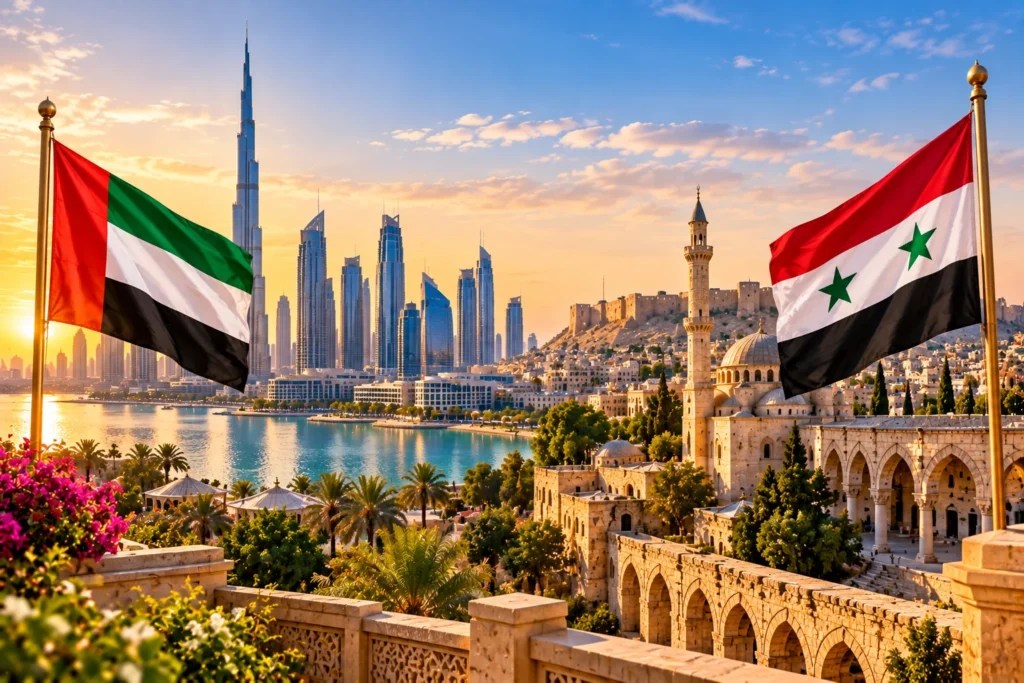
The preservation and expansion of Middle East cultural tourism rely fundamentally on sustained regional diplomacy, cooperative governance, and the safeguarding of peaceful international corridors. Following an official high-level telephone dialogue between the United Arab Emirates and the Syrian Arab Republic, regional authorities have reaffirmed their commitment to bilateral engagement, conflict de-escalation, and mutual prosperity. High Highness Sheikh Abdullah bin Zayed Al Nahyan, Deputy Prime Minister and Minister of Foreign Affairs of the United Arab Emirates, and Asaad Al Shaibani, Minister of Foreign Affairs and Expatriates of the Syrian Arab Republic, held constructive consultations focused on regional developments, cooperative stability measures, and expanded fraternal partnerships to advance economic well-being across both nations.
For the international travel and tourism sector, diplomatic coordination between Abu Dhabi and Damascus signals positive momentum for cultural heritage preservation and long-term travel normalization. The Levant and the Arabian Peninsula share deep historical, commercial, and artistic roots, and ongoing intergovernmental dialogue provides the foundational stability necessary to revive archaeological exploration, heritage restoration, and cross-border visitor corridors.
Diplomatic Foundations for Cultural Tourism and Heritage Preservation
Syria is globally recognized as one of the most historically significant cradles of civilization, home to extraordinary UNESCO World Heritage sites including Ancient Damascus, Palmyra, the Ancient City of Aleppo, Bosra, and the Crac des Chevaliers. Sustaining and reviving global interest in these ancient architectural marvels depends directly on regional tranquility and coordinated international diplomacy.
Official diplomatic exchanges that prioritize stability create the secure operating environment required for cultural tourism bodies, international conservation agencies, and archaeological foundations to resume crucial heritage safeguarding work. Bilateral dialogue with the United Arab Emirates—a nation widely recognized for its institutional expertise in cultural diplomacy, modern museum development, and international historic preservation funds—opens constructive pathways for collaborative conservation projects. By working alongside regional partners to rebuild cultural monuments, restore historic urban quarters, and protect ancient artifacts, tourism authorities can re-establish the historic Levant as an accessible classroom of world history for future generations of international travelers.
Strengthening Bilateral Travel Corridors and Aviation Links
Direct transportation networks and open civil aviation pathways serve as the lifeline of tourism growth across the Middle East. Constructive diplomatic talks between foreign ministries directly underpin discussions surrounding scheduled air route restoration, airport infrastructure safety, and bilateral transit agreements.
Connecting major Emirati international aviation hubs with Syrian urban centers establishes vital access routes for international leisure vacationers, cultural scholars, and expatriate communities visiting family. As commercial aviation channels expand, the United Arab Emirates serves as an essential global transit crossroads, connecting long-haul travelers from Europe, North America, and the Asia-Pacific region with ancient Silk Road destinations across Syria. Streamlined visa procedures, consistent flight timetables, and modern passenger terminal standards contribute to predictable travel planning, giving international travel agencies and tour operators the confidence to package multi-destination cultural itineraries combining modern Gulf city breaks with Levant heritage tours.
Economic Prosperity Through Visitor Economy Revitalization
The joint commitment voiced by ministerial leadership to achieve economic well-being and prosperity reflects the transformative potential of the visitor economy. Cultural tourism serves as a major driver of regional employment, generating direct livelihoods for tour guides, artisans, heritage conservators, independent transport providers, and boutique hospitality owners.
Restoring cross-border travel confidence stimulates domestic and regional private investment into boutique accommodation, regional culinary establishments, and sustainable eco-lodges along traditional caravan routes. By diversifying local economies through sustainable tourism, communities can protect their intangible cultural heritage—such as traditional textile weaving, damascene metalcraft, and culinary traditions—while generating foreign exchange earnings and long-term vocational opportunities for young professionals.
Cooperative tourism frameworks also encourage cross-border destination marketing. Collaborative regional roadshows, trade expositions, and familiarization trips organized for travel agencies allow tourism boards to highlight authentic cultural assets, ancient souks, and mountain retreats to an international travel trade eager for authentic, immersive cultural encounters.
Fostering Sustainable Tourism and Regional Stability
The link between regional peace and sustainable tourism development is undeniable. Intergovernmental dialogues that address security challenges directly insulate civilian transport infrastructure, hospitality hubs, and sacred sites from external instability. Tourism development thrives in environments built on dialogue, clear administrative protocols, and verified governmental communication.
Regional travel bodies continue to emphasize sustainable visitor management strategies to ensure that revived tourism flows do not overwhelm fragile archaeological sites. Investing in modern visitor centers, clear pedestrian pathways, and eco-friendly site logistics balances tourism revenue generation with stringent structural preservation.
By continuing to prioritize mutual respect, regional security, and bilateral cooperation, the United Arab Emirates and Syria are establishing a framework that benefits both economic recovery and cultural enrichment. For global travelers seeking to rediscover the timeless historical treasures of the Levant, coordinated regional diplomacy remains the true gateway to safe, sustainable, and unforgettable journeys across the Middle East.
For more travel news like this, keep reading Global Travel Wire