Morocco has emerged as a major cultural destination where heritage soundscapes and contemporary electronic music converge to attract international travelers. Positioned at the crossroads of North Africa, Europe, and the Atlantic, the kingdom leverages its rich artistic identity, historic cities, and scenic landscapes to support a booming cultural tourism sector. Official tourism initiatives and global cultural collaborations showcase how traditional rhythms and modern music festivals are reshaping the country’s travel profile.
The Heritage Foundation of Morocco’s Musical Landscape
The growing global interest in Morocco’s electronic music scene is deeply rooted in the nation’s indigenous heritage. Centuries of musical traditions provide the foundational rhythm for modern artistic expressions, giving Moroccan music tourism a distinct character that sets it apart from conventional nightlife hubs.
Key cultural elements driving visitor engagement include:
Traditional Trance and Spiritual Rhythms: The hypnotic polyrhythms of Gnawa music, Sufi chanting, and traditional Amazigh percussion have long served as communal and spiritual art forms.
Heritage Preservation: Public cultural programs and national festivals actively protect intangible cultural heritage, ensuring historical art forms remain vibrant components of the national identity.
Modern Integration: Contemporary artists and producers fuse acoustic heritage instruments with modern electronic production, creating a unique sound signature that resonates with global audiences.
This fusion of ancient heritage and modern creative expressions offers international travelers immersive cultural experiences that extend far beyond standard sightseeing.
From Local Venues to International Festival Destinations
Over the past two decades, Morocco’s hospitality and entertainment infrastructure has undergone a dramatic transformation. Early nightlife models centered primarily on localized hotel venues and traditional commercial lounges have expanded into a diverse ecosystem featuring international music gatherings, boutique eco-festivals, and urban creative hubs.
Public sector investment in tourism infrastructure has enabled destinations such as Marrakech, Casablanca, Essaouira, and coastal resort regions to host world-class international events:
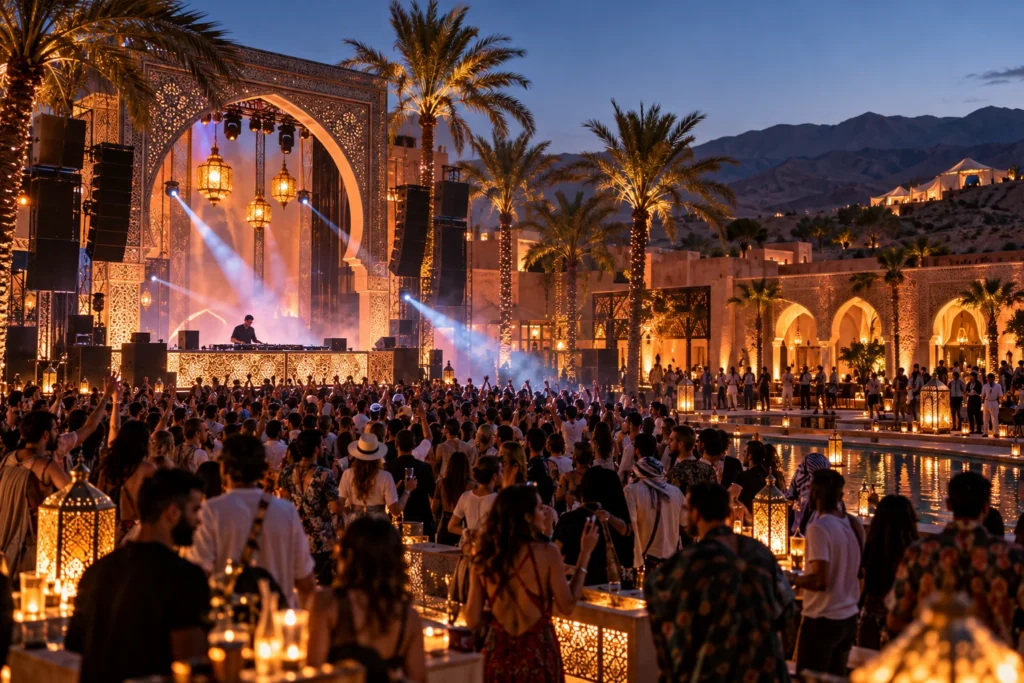
Boutique Destination Festivals: Multi-day events set against desert dunes, coastal medinas, and historic palm groves draw international visitors seeking immersive travel experiences.
Urban Cultural Hubs: Mainstream venues and venue spaces in commercial centers host collaborative global showcases, introducing emerging talent to international promoters and tourists.
Economic Impact: Large-scale cultural gatherings boost local economies by increasing hotel occupancy, supporting artisanal trades, and driving regional transport demand.
By supporting diverse event formats, tourism boards and municipal authorities continue to position Morocco as a leading destination for creative tourism in the Middle East and Africa region.
Global Diaspora and Cultural Diplomacy
The international appeal of Morocco’s music ecosystem is further amplified by its active global diaspora. Moroccan artists based in major international capitals act as cultural ambassadors, bridging local traditions with global dancefloors and encouraging international travelers to explore the source of these artistic movements.
Official tourism releases highlight how cultural diplomacy and international collaborations foster travel demand:
Cross-Border Partnerships: High-profile editorial and festival collaborations between Moroccan cultural platforms and European music institutions elevate the country’s artistic profile globally.
Talent Mobilization: Diaspora artists share traditional Moroccan heritage with worldwide audiences, stimulating curiosity and travel interest toward the kingdom.
Destination Marketing: Highlighting local talent alongside scenic natural landscapes reinforces Morocco’s reputation as a safe, vibrant, and multifaceted travel destination.
These combined efforts continue to attract a diverse demographic of international tourists interested in authentic cultural immersion.
Sustainable Tourism Growth and Future Outlook
As cultural tourism gains momentum, national ministries and tourism authorities remain focused on sustainable destination management. Preserving local community integrity, managing environmental impacts in delicate ecosystems, and ensuring equitable economic benefits across regional communities are central to long-term tourism policy.
Strategic focus areas for future growth include:
Regional Dispersal: Encouraging tourists to explore secondary destinations and rural regions beyond major metropolitan hubs.
Eco-Friendly Event Standards: Supporting sustainable festival practices that protect coastal, desert, and heritage environments.
Infrastructure Enhancement: Improving regional connectivity, public transit, and airport capacity to support growing international visitor volumes.
Through the strategic alignment of heritage preservation, creative arts promotion, and modern tourism infrastructure, Morocco continues to strengthen its position as a powerhouse of global cultural travel.
For more travel news like this, keep reading Global Travel Wire