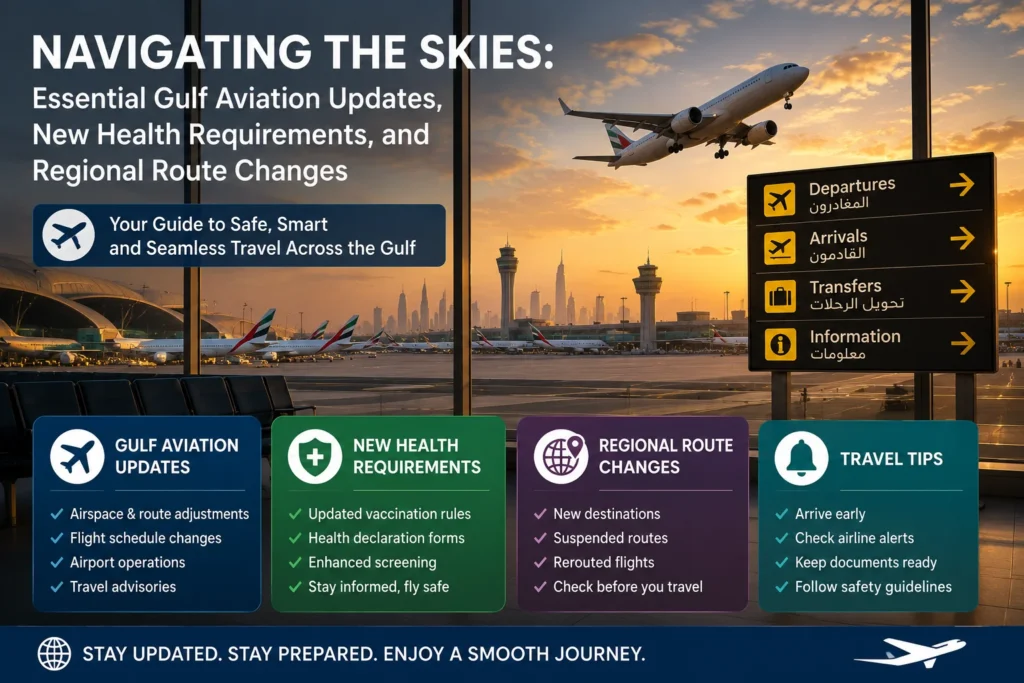
The global travel landscape is constantly shifting, requiring travelers and corporate mobility managers to remain exceptionally agile. Recently, a series of coordinated security updates and international health announcements have led to significant adjustments in air travel routes across the Middle East. With major regional carriers revising flight paths and destination countries updating entry rules, staying informed is the best way to ensure smooth journeys.
Whether you are preparing for a business trip across the Gulf or a leisure holiday to the Indian subcontinent, understanding these latest dynamic shifts will help you bypass bottlenecks and navigate regional airports with confidence.
Air Suvidha 2.0 Reinstated for All Travelers Bound for India
One of the most immediate procedural changes for travelers departing from the UAE and other global hubs is the official reactivation of India’s digital health declaration system. The Ministry of Civil Aviation and the Ministry of Health and Family Welfare of India have officially launched “Air Suvidha 2.0”. Under this updated public health mandate, all international passengers traveling to India must submit a digital self-declaration of health prior to boarding.
This decision follows the World Health Organization (WHO) declaring the Bundibugyo virus (Ebola) outbreak in East and Central Africa a Public Health Emergency of International Concern (PHEIC). While there are no cases within India, the Indian government has introduced this measure as a proactive screening protocol.
To comply with the new mandate, travelers must log onto the official Air Suvidha 2.0 portal at least 24 hours before their scheduled departure. The form requires passengers to outline their recent travel history over the past three weeks, specifically flagging any transit through or visits to Ebola-affected regions. Upon successful submission, travelers receive a QR-coded confirmation via email, which must be presented to immigration authorities upon arrival. All previous exemptions that allowed certain GCC travelers to bypass health declarations have been suspended, making this a mandatory step for everyone, regardless of nationality.
Regional Airspace Advisories and Flight Path Adjustments
Simultaneously, regional airspace has become more complex to navigate. Civil aviation authorities, including the European Union Aviation Safety Agency (EASA), have re-issued safety guidance for carriers operating in the southern corridors of the Arabian Peninsula. Airlines are advised to exercise extreme caution along portions of the Saudi-Yemen and Oman-Yemen borders, as well as avoid certain airspace zones in the region.
These warnings have been echoed by foreign ministries across North America and Europe, advising that security situations can fluctuate on short notice. In response, several international and regional carriers have proactively modified their flight paths. By utilizing alternative routings, airlines are bypassing sensitive air corridors entirely.
While these adjustments ensure the highest level of passenger safety, they have altered standard flight durations. Travelers should expect flight block times to increase by an average of 15 to 25 minutes per sector. While a 20-minute delay might seem minor, it can create a cascading effect for tight downstream connections. Passengers planning multi-leg journeys are highly encouraged to build wider layover buffers into their itineraries to absorb potential operational delays.
Furthermore, temporary flight disruptions have impacted specific regional routes. Following recent security alerts in southwestern Saudi Arabia, several scheduled flights connecting UAE hubs with Abha International Airport were temporarily suspended or rescheduled. While major hubs like Dubai and Abu Dhabi continue their standard operations, regional connections to smaller southwestern airports are subject to rapid timetable changes.
Record Summer Volumes at UAE Hubs Require Early Arrivals
Despite these regional challenges, passenger numbers at the UAE’s primary international gateways are hitting historic highs. Dubai International Airport (DXB) and Zayed International Airport (AUH) in Abu Dhabi are preparing for record-breaking summer passenger traffic.
To manage this immense volume, major airlines are deploying advanced digital tools and updated guidelines:
Emirates Operations: Anticipating high daily passenger departures, Emirates is urging passengers to utilize contactless technology. The airline highlights that using biometric Smart Gate channels at Dubai International can save travelers an average of nine minutes during the passport control process.
Etihad Airways Schedule: Operating its largest flight schedule to date, Etihad Airways advises passengers traveling to India, Saudi Arabia, or other destinations requiring extra document screening to arrive at the airport at least four hours prior to departure. This extra buffer ensures ample time to clear security and complete physical document verifications.
Strategic Tips for Smart Travelers
Navigating these changing dynamics requires a proactive approach. If you are planning a trip through the region soon, consider implementing these practical steps:
Verify Transits and Connections: Double-check your airline’s app for real-time status updates, particularly if your flight path includes transits through secondary regional airports.
Complete Digital Forms Early: Submit your Air Suvidha 2.0 self-declaration form as close to the 24-hour mark before departure as possible to avoid last-minute website loading issues at the gate.
Review Insurance Coverage: If you are traveling for business, consult with your corporate mobility team to ensure that your travel insurance remains valid and active under current government airspace advisories.
By staying updated on official aviation statements and utilizing digital airport channels, travelers can successfully navigate these complex adjustments while enjoying a safe, seamless summer travel experience.
For more travel news like this, keep reading Global Travel Wire