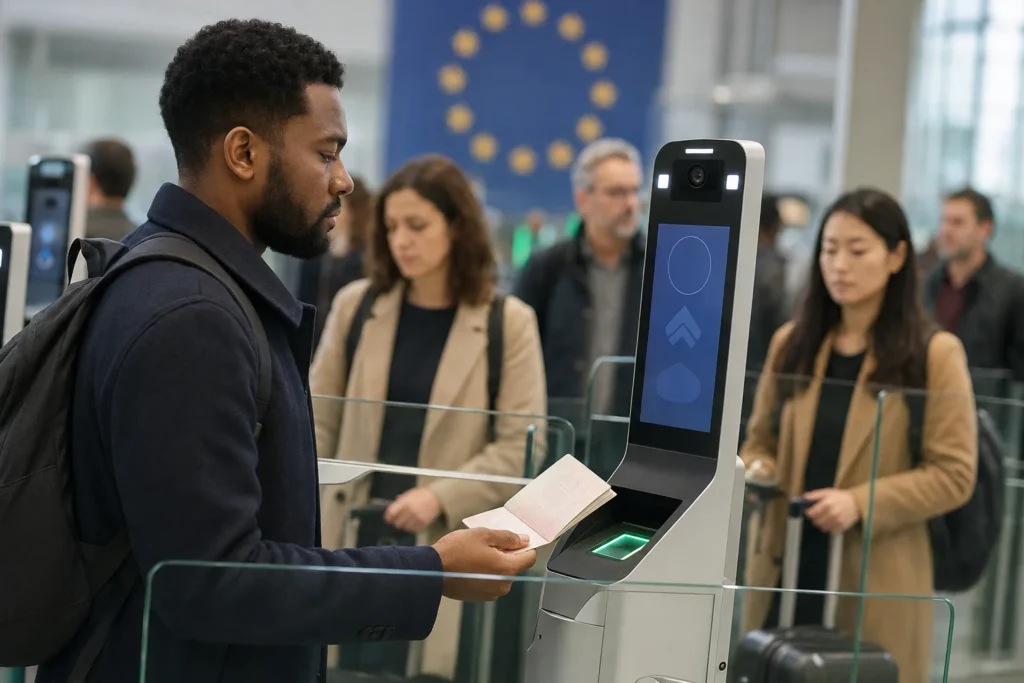
A sweeping transformation of continental border protocols is officially active across the European Union, permanently altering arrival workflows for millions of non-EU nationals. Major gateways across Western and Southern Europe are systematically deploying integrated tracking databases, enforcing significantly stricter Schengen border controls for all incoming third-country passengers. Under this extensive modern infrastructure, traditional manual ink passport stamps are being completely phased out in favor of standardized biometric verification systems and real-time electronic ledger tracking. For British holidaymakers, seasonal tourists, and corporate executives adjusting to post-Brexit international conditions, navigating these automated terminal updates requires an accurate awareness of modern European travel requirements.
Directives released by the European Commission and managed natively by the European Union Agency for the Operational Management of Large-Scale IT Systems confirm that this digitized border matrix represents the most significant procedural shift in continental transit security in modern aviation history. Designed to replace fragmented, slow-moving manual inspection queues, the automated framework registers short-stay travelers at every external entry and exit terminal across the zone. By synchronizing digital traveler profiles across a unified database, European interior ministries are prioritizing absolute border validation, automated identification defense, and instantaneous tracking of the standardized visa-free short-stay allowance.
The Technical Mechanics of the Biometric Entry/Exit System
At the absolute center of this regulatory transition is the comprehensive collection of biometric identities from all third-country arrivals, explicitly including citizens of the United Kingdom. Upon their initial crossing into a participating European territory, passengers face mandatory enrollment procedures at regional air, sea, and rail terminals. Travelers are required to submit high-resolution facial recognition scans alongside digital fingerprints via specialized electronic self-service kiosks or staffed immigration booths.
This initial biometric capture links directly to the passport document profile, generating a secure individual registration file within the centralized database. Once this digital identity is successfully recorded, it remains valid for a three-year window, eliminating the need for full enrollment during subsequent trips within that operational time horizon. For returning passengers, future arrivals will only necessitate a rapid biometric scan to verify their physical appearance against the active database record. Children under the age of twelve are exempt from the mandatory collection of fingerprints, though their legal guardians remain responsible for supervising document validation and facial capture protocols at the border.
Operational Footprint Across Major European Gateways
The mandatory processing framework has radically updated the physical infrastructure of top transit terminals throughout the Schengen Area, with major destination markets anchoring the localized deployment strategies:
In France, digital checkpoints are fully operational across high-density sea links, international Eurostar railway hubs, and the Channel Tunnel infrastructure. To maximize traffic flow, French border authorities conduct these pre-departure biometric reviews directly on the UK side of the border at key British transit facilities.
In Spain, extensive networks of biometric self-service terminals are active at mainland international aviation hubs, alongside coastal maritime ports managing traffic to the Costa del Sol, the Balearic Islands, and the Canary Islands.
In Italy and Greece, completely restructured terminal arrival halls and digital enrollment booths are functioning at international gateways in Rome, Milan, and Athens, as well as high-volume seasonal island airports across the Mediterranean.
In Germany, advanced automated passport control networks manage passenger profiles at major global aviation hubs like Frankfurt and Munich.
Furthermore, newer members of the Schengen framework, including Bulgaria and Romania, have successfully integrated these standardized electronic procedures, ensuring uniform border processing for tourists visiting regional mountain ski resorts and Black Sea maritime destinations.
Real-Time Stay Calculation and Passport Validity Rules
A vital structural component of the new tracking infrastructure is the automated monitoring of the standard short-stay visa exemption limit. The digital database logs individual entry and exit timestamps in real time, automatically calculating whether a traveler remains within the legal parameter of staying a maximum of 90 days within any single 180-day window. This centralized timeline calculation views the entire Schengen Zone as a single geographic block, removing the capacity for manual entry record errors and ensuring immediate enforcement of immigration limits.
Simultaneously, European border authorities are applying absolute compliance monitoring regarding passport age and remaining validity cushions. Under longstanding Schengen agreements, travel documents presented by non-EU passengers must have been issued within the previous ten years from the exact date of entry and must retain an active validity window of at least three months beyond the intended date of departure from Europe. Automated terminal scanners are configured to systematically reject documents that fail these technical criteria, making pre-flight document validation an essential step for international travelers.
Guidelines for a Seamless European Transit Experience
To minimize the risk of airport delays or boarding denials under the automated border checks, international travel advisors recommend several key preparatory habits:
Advance Chronological Auditing: Verify the precise issuance date of your passport booklet, confirming it falls within the decade rule, while ensuring the required three-month validity buffer post-departure is maintained.
Independent History Tracking: Keep a meticulous personal log of previous European visits to verify you remain fully compliant with the 90-day visa-free allowance before booking new itineraries.
Extended Transit Buffers: Arrive at domestic departure terminals and international rail stations significantly earlier than standard historical guidelines, particularly when routing through cross-Channel ferry lanes.
Physical Credential Backups: UK nationals who possess legal long-stay residency permits or specialized national visas should carry their physical documentation to ensure smooth routing past automated checkpoints.
Looking ahead, European home affairs authorities intend to integrate this operational framework with the upcoming European Travel Information and Authorisation System, which will require pre-travel online registration for visa-exempt global visitors. By prioritizing total structural preparedness and adhering to these verified public updates, international travelers can confidently navigate Europe’s modernized borders and enjoy clear, efficient journeys across the continent.
For more travel news like this, keep reading Global Travel Wire