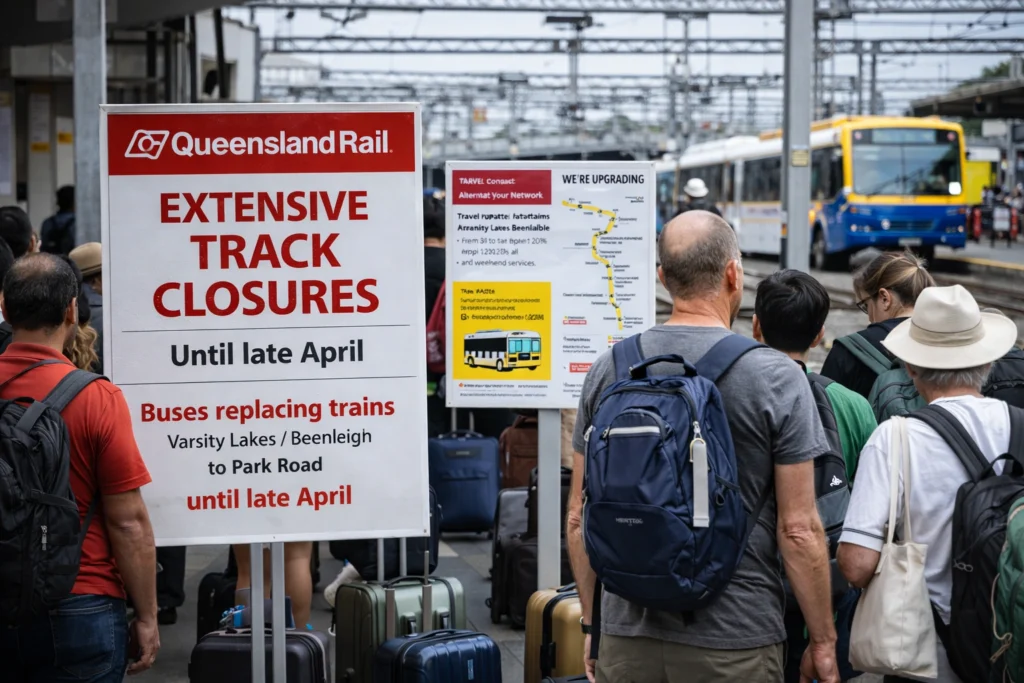
Queensland’s rail network is undergoing one of its biggest transformations in years, bringing major short-term travel disruption across key Brisbane and Gold Coast routes while laying the foundation for faster, more efficient journeys in the future. Extensive closures and altered services through late April are affecting both tourists and daily commuters as large-scale infrastructure projects reshape transport across one of Australia’s most visited regions.
The temporary inconvenience is significant, but so are the long-term gains. New tunnels, extra tracks, upgraded stations and modern signaling systems are expected to redefine mobility across southeast Queensland once construction is complete.
Brisbane to Gold Coast Travel Faces Major Changes
From mid to late April, passengers on the busy Gold Coast and Beenleigh lines have faced widespread service changes. During the first phase of works, buses replaced trains between Varsity Lakes and Boggo Road, increasing journey times and adding complexity for travelers heading toward Brisbane.
The Doomben line has also seen reduced operations, with trains running only between Doomben and Eagle Junction.
As closures progressed, services shifted again, with trains operating between Varsity Lakes and Banoon while direct rail links between Banoon and Boggo Road were removed. That has forced greater reliance on replacement transport and alternate journey planning.
Tourism Routes Under Pressure
The disruption has had a clear effect on tourism movement, especially along the Brisbane–Gold Coast corridor. This route is one of Queensland’s most important visitor pathways, linking city attractions, beaches, theme parks and major accommodation zones.
Visitors expecting seamless rail access have instead faced delays, route changes and longer transfers. Travelers unfamiliar with the network may find replacement buses and changing boarding points especially challenging.
Day-trip itineraries, airport transfers and hotel check-in schedules can all be affected when rail services become less predictable.
Weekend Journeys Take Longer
Weekend travel has also changed, with all-stop services replacing faster express trains on some corridors. While trains continue to operate, longer journey times can reduce convenience for leisure travelers trying to maximize time at attractions or coastal destinations.
For families and short-stay visitors, even modest increases in travel time can influence destination choices and same-day travel plans.
That makes real-time planning more important than ever during the construction phase.
Why the Disruptions Are Happening
The primary cause is a series of major transport projects designed to modernize Queensland’s rail system. At the center is Cross River Rail, one of Australia’s most significant urban transport developments, which includes new underground tunnels and stations through Brisbane, including a major interchange at Boggo Road.
The project is intended to increase capacity through the city center, reduce congestion and improve network resilience.
At the same time, the Logan and Gold Coast Faster Rail project is adding track capacity between Kuraby and Beenleigh, supporting faster and more frequent services in the future.
Smarter Signaling and Better Stations
Beyond tracks and tunnels, Queensland is also upgrading rail technology. New digital signaling systems based on the European Train Control System are being introduced to improve safety and allow more efficient train operations.
Several stations are also being modernized, including accessibility improvements and relocations that will better serve growing communities.
These upgrades are essential as population growth and tourism demand continue to rise across southeast Queensland.
More Changes Ahead
Further adjustments are expected from early May and throughout the year. During weekday peak periods, some trains are set to operate as express services skipping selected stations to keep the wider network moving during construction.
Stations including Dutton Park, Fairfield, Yeronga, Yeerongpilly, Rocklea and Salisbury may experience reduced peak-hour frequency at different stages.
For commuters, that means continued need for flexibility. For visitors, it reinforces the value of checking routes before departure.
What Travelers Should Do Now
Passengers using Queensland Rail during the upgrade period should plan ahead and allow extra time. Practical steps include:
- Check official journey planners before travel
- Reconfirm routes on the day of departure
- Allow more time for transfers
- Use replacement bus information carefully
- Consider earlier departures during peak periods
Being proactive can significantly reduce travel stress.
Long-Term Benefits for Tourism and Mobility
Although current disruption is substantial, the long-term outlook is strong. Once complete, the upgraded network is expected to deliver faster travel times, better reliability, increased capacity and a smoother visitor experience.
For tourism, stronger rail links between Brisbane, the Gold Coast and surrounding regions could support more day trips, higher visitor spending and easier movement between attractions.
Queensland’s current rail disruption is therefore more than a temporary transport story—it is the visible transition toward a more connected future.
For more travel news like this, keep reading Global Travel Wire