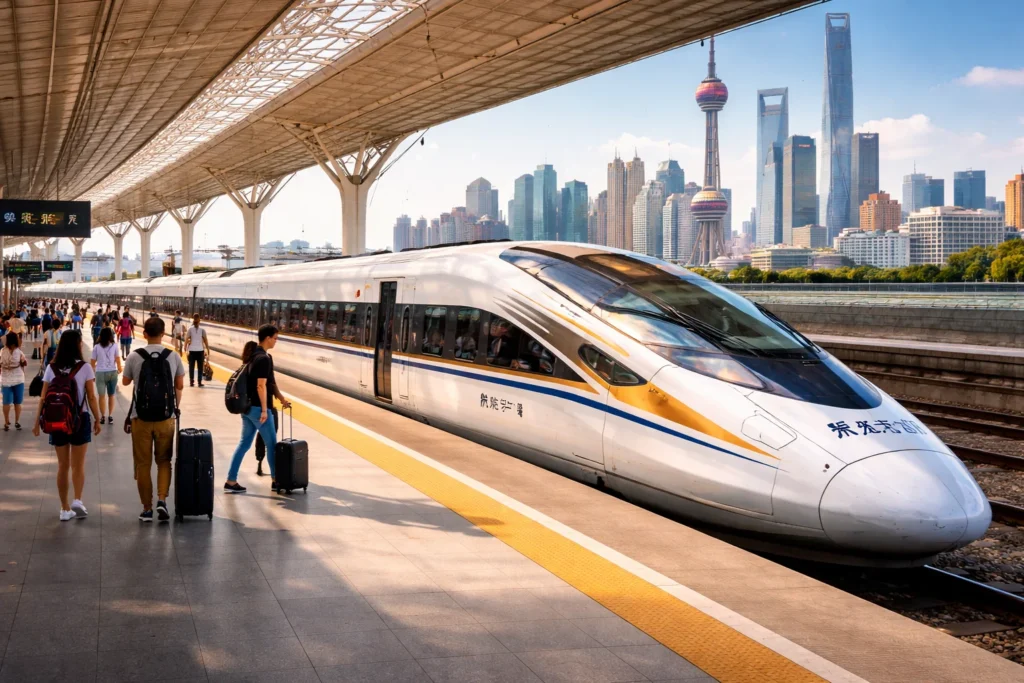
China’s high-speed rail network continues to capture international attention as one of the most transformative transport systems in modern tourism. With expanding routes, faster travel times, and seamless links between major cities and emerging destinations, the country’s bullet train system is reshaping how domestic and international visitors experience China.
The growing visibility of foreign dignitaries and international travelers choosing to ride China’s high-speed trains reflects a wider tourism reality: rail has become one of the most effective ways to explore the country. Beyond speed, the network offers convenience, comfort, and broad regional access that supports city tourism, cultural travel, business trips, and sustainable mobility.
As global tourism increasingly values efficient and lower-emission transport, China’s rail model is becoming an important example of how infrastructure can unlock large-scale travel growth.
A Rail Network Changing the Tourism Map
China now operates the world’s largest high-speed rail system, connecting major economic centers, secondary cities, and regional destinations across vast distances. What once required lengthy road journeys or multiple flights can now often be completed in just a few hours by train.
This has dramatically changed tourism patterns. Travelers can arrive in one city, continue by rail to another region, and build multi-destination itineraries with far greater ease.
For example, visitors can combine historic capitals, mountain landscapes, river cities, and coastal destinations in a single journey without the complexity of repeated airport transfers.
Such convenience encourages longer stays, wider regional exploration, and stronger tourism spending beyond the country’s largest gateways.
Why Travelers Choose High-Speed Rail
The popularity of China’s bullet trains goes far beyond impressive speed. High-speed rail offers a travel experience that aligns closely with what modern visitors want: punctuality, comfort, simplicity, and city-center access.
Unlike many airports located far from downtown areas, railway stations often provide easier access to hotels, attractions, and business districts. This saves time and reduces travel stress.
Passengers also benefit from spacious seating, digital ticketing systems, frequent departures, and predictable schedules. For families, business travelers, and independent tourists, these features can make rail more attractive than short-haul flights.
The result is a transport option that feels practical while still delivering a premium experience.
Tourism Benefits Beyond Major Cities
One of the most important tourism advantages of rail expansion is the way it supports secondary destinations. High-speed connections help smaller cities and regional attractions receive more visitors by making them easier to reach.
This can reduce pressure on overcrowded tourism hotspots while spreading economic benefits more widely.
Hotels, restaurants, local guides, cultural venues, and retail businesses in connected regions all stand to gain when visitor access improves.
For travelers, this creates opportunities to discover places that may once have felt too remote or time-consuming to include in a trip.
As more destinations join the network, the range of tourism experiences available across China continues to expand.
Sustainable Travel Gains Momentum
Sustainability is becoming a major factor in travel decisions, and rail is often seen as one of the most efficient lower-emission transport options for medium-distance journeys.
This is particularly important as governments and tourism boards worldwide encourage greener travel choices.
China’s investment in electric rail mobility supports this shift by offering an alternative to domestic air travel and long-distance road transport on many routes.
For environmentally conscious travelers, choosing rail can be part of a more responsible travel itinerary.
Destinations connected by efficient train services may also become more attractive as tourism moves toward sustainability-focused planning.
Rail Strengthens Business and Events Tourism
The impact of high-speed rail is not limited to leisure travel. Business tourism also benefits significantly from faster and more reliable transport links.
Executives can attend meetings in another city and return the same day. Conference delegates can reach event venues more easily. Regional trade fairs become more accessible to domestic and international participants.
This helps cities compete for meetings, exhibitions, and business events while generating wider tourism value through hotel stays, dining, and local transport spending.
In many markets, strong rail connectivity is now considered a major advantage for destination competitiveness.
Cultural Tourism Becomes Easier
China’s rich cultural heritage is spread across a wide geographic area, from ancient capitals and UNESCO sites to traditional towns and scenic landscapes. High-speed rail makes it easier for visitors to combine these experiences in one trip.
A traveler interested in history can move efficiently between museums, heritage districts, and historic landmarks. Nature-focused visitors can pair city stays with mountain or lake destinations. Food travelers can sample regional cuisines across multiple provinces.
This flexibility enhances the appeal of China as a multi-layered tourism destination rather than a single-city visit.
The easier it becomes to move between regions, the more diverse visitor itineraries can become.
International Influence of Rail Development
China’s rail experience is also attracting global attention because many countries are exploring how better train systems can improve mobility and tourism.
Fast, reliable rail links can strengthen regional integration, support airport connectivity, and reduce dependence on short-haul aviation.
As international destinations modernize transport systems, China’s large-scale experience in network development, technology deployment, and passenger volume management is increasingly relevant.
This influence extends beyond engineering. It demonstrates how transport investment can directly support tourism growth and economic development.
Future Growth Ahead
China’s rail expansion is expected to continue, with additional routes, upgraded stations, and deeper regional integration supporting future travel demand.
As networks become more comprehensive, travelers are likely to see even greater itinerary flexibility, faster access to emerging destinations, and stronger links between tourism hubs.
The combination of smart mobility, convenience, and scale positions rail as one of the most important pillars of China’s future tourism strategy.
For both domestic and inbound visitors, the opportunities created by continued rail development are substantial.
A Powerful Symbol of Modern Tourism
China’s high-speed rail story is ultimately about more than trains. It represents how infrastructure can transform travel experiences, strengthen destination access, and create new economic opportunities.
For tourists, it means faster and easier journeys. For cities and regions, it means greater visibility and visitor growth. For the global travel industry, it shows how transport innovation can reshape tourism at scale.
As rail tourism continues to rise worldwide, China’s high-speed network remains one of the strongest examples of travel mobility driving the future of tourism.
For more travel news like this, keep reading Global Travel Wire