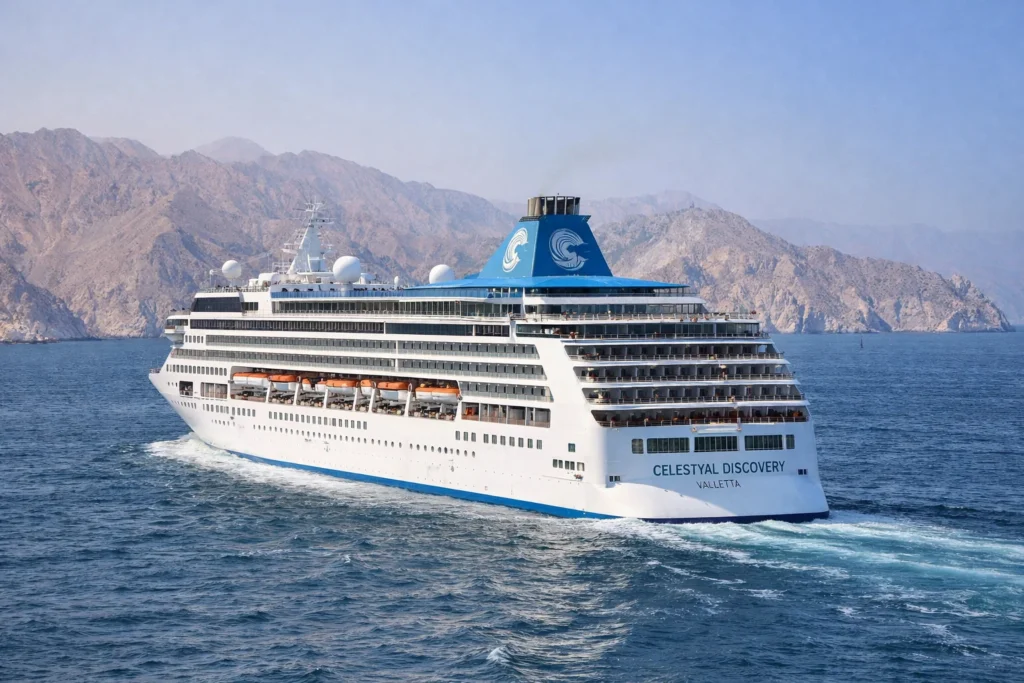
A significant milestone for regional tourism and maritime travel has emerged as the cruise vessel Celestyal Discovery successfully crossed the Strait of Hormuz, becoming the first passenger-class ship to make the transit since the outbreak of recent conflict in West Asia. The development is being closely watched by tourism stakeholders, cruise operators, and destination authorities across the Gulf region.
The vessel’s journey highlights the importance of maritime access routes for international tourism, especially in destinations where cruise travel plays a growing role in visitor arrivals and regional connectivity. Although the ship was reportedly sailing without passengers, the successful passage sends an important signal about operational possibilities in one of the world’s most strategically important waterways.
For Gulf tourism markets, the event may represent an early step toward restoring confidence in cruise itineraries that connect cities such as Dubai, Abu Dhabi, Doha, Muscat, and other ports across the Arabian Gulf.
Why the Strait of Hormuz Matters for Tourism
The Strait of Hormuz is one of the most important maritime corridors in the world. While it is widely known for energy shipping, it is also critical for passenger vessels, ferries, and cruise operations serving Gulf destinations.
For tourism, this route enables ships to move between the Gulf and the wider Indian Ocean, connecting cruise itineraries with destinations in Oman, the United Arab Emirates, Qatar, Bahrain, and beyond.
When normal maritime movement is disrupted, the effects can extend beyond shipping into travel planning, visitor confidence, and destination scheduling. Cruise operators often need certainty and safe passage to finalize itineraries, market voyages, and manage port operations.
A successful transit therefore carries significance not only for maritime logistics but also for regional tourism recovery.
Celestyal Discovery’s Voyage Draws Attention
The Celestyal Discovery had reportedly remained docked in Dubai for several weeks before resuming movement. Its passage through the Strait of Hormuz and onward route toward Muscat has drawn interest because it demonstrates that cruise-class vessels can once again navigate the route under current conditions.
Even without passengers onboard, such repositioning voyages are important for the industry. They allow operators to test schedules, relocate ships, maintain regional presence, and assess route viability for future commercial sailings.
Cruise companies often use these movements to prepare for future deployment once market conditions improve.
Gulf Cruise Tourism Has Strong Potential
The Arabian Gulf has steadily developed as a winter cruise destination, attracting travelers with sunshine, modern cities, luxury hospitality, shopping, cultural attractions, and short sailing distances between ports.
Popular regional highlights include:
- Iconic skylines and urban experiences
- Beach resorts and waterfront leisure
- Desert excursions and adventure tourism
- Heritage districts and museums
- Luxury retail and dining
- Family entertainment attractions
Cruise itineraries in the region appeal to both international guests and regional travelers seeking short breaks or multi-destination holidays.
As infrastructure and tourism offerings have expanded, Gulf cruise tourism has become an increasingly valuable segment of the wider visitor economy.
Dubai and Muscat Benefit from Cruise Connectivity
Dubai has established itself as a major cruise hub with strong air links, world-class hospitality, and advanced port facilities. Many Gulf itineraries either begin, end, or include calls in the city.
Muscat, meanwhile, offers a different style of destination experience with coastal beauty, cultural heritage, traditional markets, and scenic excursions. The route between Gulf ports and Oman remains especially attractive because it combines modern city tourism with natural and cultural exploration.
The movement of Celestyal Discovery toward Muscat underlines the continued importance of regional connectivity between these destinations.
Traveler Confidence Is Essential
Cruise tourism depends heavily on confidence. Travelers need assurance that itineraries are safe, well managed, and operationally reliable. Cruise lines also require stable conditions to plan schedules months or years in advance.
Even symbolic milestones such as the first successful transit after a period of disruption can help improve sentiment. They do not guarantee an immediate full-scale return, but they can support a gradual rebuilding process.
Tourism boards, ports, and operators often work together during such periods to restore trust through communication, flexible planning, and enhanced guest support.
Cruise Industry Known for Adaptability
One reason the cruise sector remains resilient is its ability to adapt. Ships can reposition between regions, adjust routes, modify port calls, and redesign itineraries in response to changing conditions.
This flexibility helps protect traveler choice and allows operators to continue serving demand in alternative markets when one region faces temporary disruption.
For the Gulf, future growth may depend on how quickly confidence stabilizes and how effectively destinations coordinate with industry partners to welcome ships again.
Wider Economic Value of Cruise Tourism
Cruise tourism creates benefits far beyond the vessel itself. Each port call can generate spending on:
- Shore excursions
- Transport services
- Restaurants and cafes
- Retail and souvenirs
- Cultural attractions
- Hotels for pre- and post-cruise stays
- Local guiding and hospitality jobs
For destinations investing in tourism diversification, cruise visitors can be an important source of revenue and global visibility.
The return of maritime tourism routes therefore matters to both national economies and local businesses.
Outlook for Regional Tourism
The successful Strait of Hormuz transit comes at a time when many destinations are working to strengthen resilience and maintain momentum in global travel. Gulf countries have invested heavily in tourism infrastructure, aviation growth, events, and hospitality over recent years.
Cruise travel can complement these efforts by bringing multi-destination visitors and increasing international exposure for regional ports.
While broader geopolitical developments will continue to shape operating conditions, the latest voyage provides a constructive sign that maritime tourism routes may gradually reopen.
Looking Ahead
The crossing of Celestyal Discovery through the Strait of Hormuz is more than a shipping update. It is a meaningful development for regional travel, cruise deployment, and tourism confidence across the Gulf.
For travelers, it suggests the possibility of future itineraries reconnecting popular destinations by sea. For tourism stakeholders, it highlights the importance of resilience, cooperation, and safe maritime access.
As the region watches next steps closely, this first transit may be remembered as the moment cruise tourism began cautiously moving forward again.
For more travel news like this, keep reading Global Travel Wire