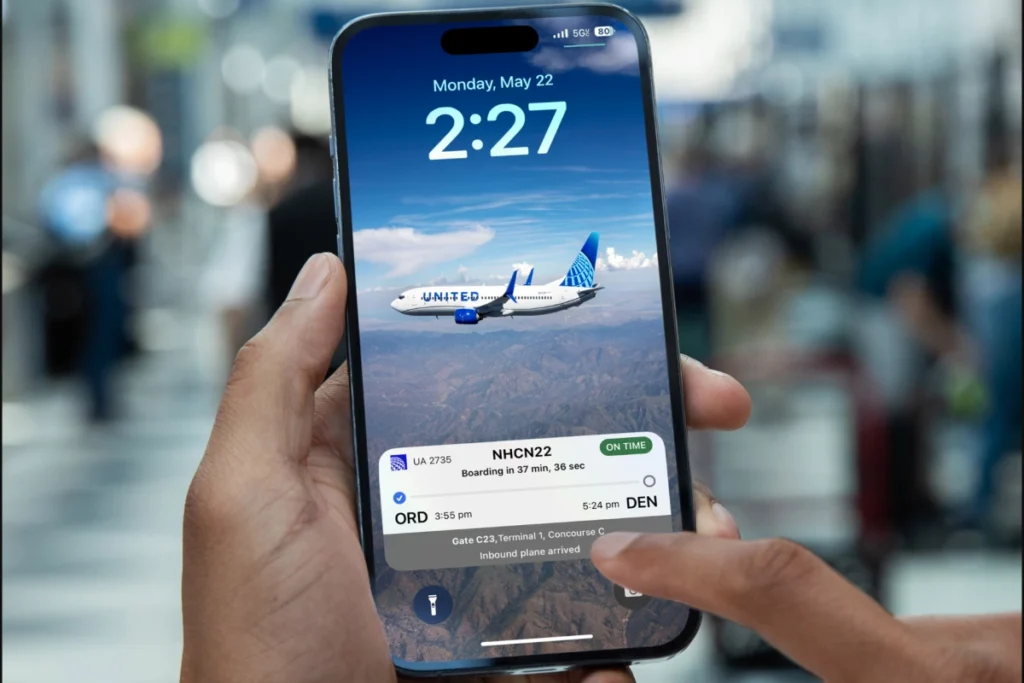
United Airlines has expanded deployment of its advanced AI-powered ConnectionSaver system across major US airport hubs, helping thousands of travelers make tight flight connections while improving operational efficiency and passenger satisfaction throughout its international network.
The airline confirmed that the technology has already helped save fifty-four thousand passenger connections this year at key airports including Denver International, Chicago O’Hare, and Newark Liberty International. The AI-driven platform assists airport operations teams in deciding whether to briefly delay departing flights for passengers at risk of missing connections without causing wider disruptions across the airline’s schedule.
The system is benefiting travelers from major international markets including France, Spain, the United Kingdom, Mexico, Canada, China, and Japan as global travel demand continues rising in 2026.
AI Technology Helps Reduce Missed Flight Connections
United Airlines developed ConnectionSaver to address one of the most common frustrations in modern air travel: missed connecting flights caused by delays, airport congestion, weather disruptions, and tight transfer schedules.
The AI platform analyzes massive volumes of operational data in real time, including aircraft routing, gate activity, crew availability, taxi times, weather conditions, and connecting passenger information. Using predictive analytics, the system determines whether holding a departing flight for a short period will allow delayed passengers to board without significantly affecting the wider network.
Traditionally, these decisions relied heavily on manual coordination by gate agents and operations teams, often creating inconsistencies and unnecessary delays. ConnectionSaver automates much of the decision-making process, enabling faster and more accurate responses during high-pressure operational periods.
United said pilots and airport staff still maintain final authority over flight decisions to ensure passenger safety and operational reliability remain the top priorities.
Major Airport Hubs Benefit From AI Expansion
The system is currently operating at several of United’s busiest hubs, including Denver International Airport, Chicago O’Hare International Airport, and Newark Liberty International Airport.
These airports handle large volumes of domestic and international connecting passengers daily, making them particularly vulnerable to cascading delays and missed transfers during peak travel periods.
Key international routes benefiting from the AI system include Denver to Paris, Chicago to Madrid, Newark to London, Denver to Mexico City, and Chicago to Toronto.
Travelers from high-volume inbound markets such as Canada, Mexico, and the United Kingdom are among those seeing improved connection reliability through the new system. According to official US tourism data, these countries remain some of the largest outbound travel markets to the United States.
Passenger Experience Improves Through Real-Time Decision Making
United Airlines said the AI technology is helping improve the passenger journey by increasing the likelihood of making tight connections while reducing involuntary rebookings and lengthy airport delays.
Passengers who still miss connections despite the AI intervention may also benefit from automatic rebooking services, allowing faster recovery during disruptions. In some situations, compensation for meals or hotel stays may also be offered depending on the nature of the delay.
Industry analysts say AI-powered operational systems are becoming increasingly important as airlines face rising passenger volumes, congested airports, and tighter scheduling pressures across global aviation networks.
Modern travelers increasingly expect real-time travel support, accurate notifications, and smoother transfer experiences, particularly during complex international itineraries involving multiple airports and long-haul flights.
Airlines Turn to AI as Global Travel Demand Rises
The aviation industry has been investing heavily in artificial intelligence and predictive analytics to improve operational resilience and customer experience as global travel rebounds strongly following years of disruption.
Airlines are increasingly using AI for revenue management, baggage tracking, crew scheduling, maintenance forecasting, customer service automation, and disruption management.
United Airlines is among the first major carriers to widely deploy AI specifically for flight-holding decisions at scale, giving the company an early advantage in operational optimization and passenger transfer management.
Competing airlines are reportedly monitoring the effectiveness of similar technologies but have not yet introduced large-scale AI systems dedicated to real-time connection management.
Airport operators at Denver, Chicago, and Newark have also supported the initiative as part of broader efforts to reduce congestion, improve traffic flow, and strengthen overall airport efficiency.
International Tourism and Business Travel Stand to Benefit
Tourism authorities and business travel organizations in countries including France, Spain, and the United Kingdom have welcomed technologies that improve travel reliability for international visitors entering the United States.
Reliable flight connections remain especially important for long-haul travelers navigating multi-segment itineraries across major international hubs. Missed connections often create costly delays, disrupted vacation schedules, and operational strain for airlines during peak travel seasons.
By reducing transfer failures, AI-driven systems may also support stronger tourism recovery and increased confidence in international air travel.
Travelers Still Encouraged to Plan Carefully
Despite the benefits of AI-supported operations, United Airlines continues encouraging passengers to allow sufficient connection time, monitor flight alerts through airline apps, and stay informed about potential disruptions during travel days.
Industry experts note that while AI can improve operational flexibility and decision-making, severe weather events, air traffic control restrictions, and infrastructure limitations can still impact flight schedules.
Nevertheless, ConnectionSaver represents a significant step toward more intelligent and responsive airline operations as the aviation industry increasingly integrates AI into daily travel management.
As international passenger demand continues growing across North America, Europe, and Asia, technologies like ConnectionSaver may play an increasingly important role in shaping faster, smoother, and more reliable air travel experiences worldwide.
For more travel news like this, keep reading Global Travel Wire