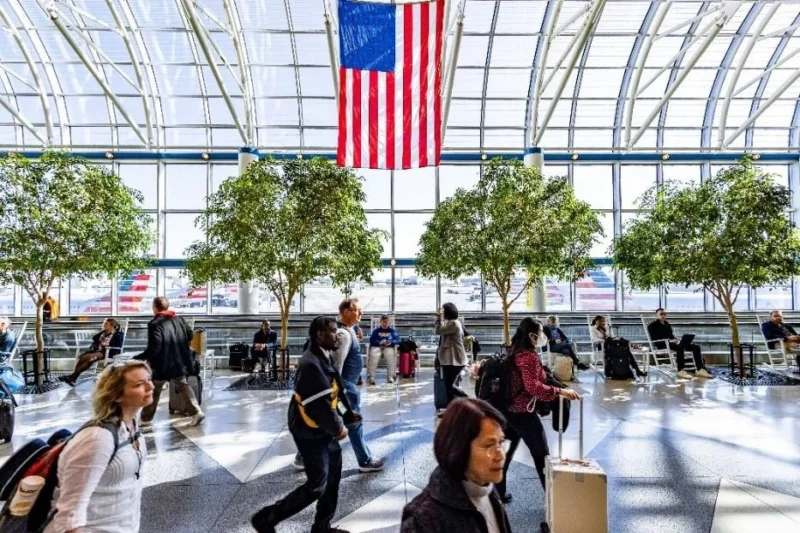
Operational strain has significantly impacted domestic air travel, as consecutive scheduling delays ripple through the nation’s primary hub-and-spoke transit systems. According to daily operational data monitored by the federal transportation authorities, a leading domestic carrier recorded over 400 distinct flight delays within a single 24-hour window. This operational bottleneck accounted for nearly 16% of all tracked flight disruptions across the United States, placing intense pressure on regional transit fluidity and passenger connection windows during a critical seasonal travel peak.
The structural breakdown was heavily concentrated across critical multi-regional intersection points, most notably at Charlotte Douglas International Airport (CLT) and Dallas-Fort Worth International Airport (DFW). Aviation logs confirm that Charlotte alone endured more than 210 delays and multiple cancellations, directly disrupting over 30% of the hub’s standard daily departures. Because a vast majority of passenger traffic moving through these primary facilities relies on immediate, multi-leg connections, the localized delays rapidly escalated into a national network challenge, stranding thousands of travelers across multiple time zones.
Interconnected Hub System Amplifies East Coast and Southern Route Disruption
The mechanics of modern aviation networks dictate that when a primary connector hub faces prolonged ground delays, secondary hubs must immediately absorb the operational overflow. On this tracking day, the simultaneous strain at both Charlotte and Dallas-Fort Worth effectively removed the carrier’s primary recovery mechanisms. With both major gateways experiencing high load factors and crew scheduling limits, dispatchers were unable to reroute aircraft efficiently, causing delays to cascade into Miami International Airport, Philadelphia International Airport, and New York’s John F. Kennedy International Airport.
The route disruptions severely impacted key domestic and international vacation corridors:
Primary Aviation Hub | Tracked Localized Delays | Core Affected Travel Corridors Charlotte Douglas (CLT) | 216 Delays | New York (JFK/LGA), Miami, London Heathrow, Frankfurt Dallas-Fort Worth (DFW) | Secondary Network Pressure | Los Angeles, Mexico City, Tokyo (HND), Charlotte Cross-Hub Miami International (MIA) | Cascading Downstream Delay | São Paulo, Buenos Aires, Bogotá, Caribbean Leisure Markets Philadelphia International | 29 Delays | Northeast Regional Feeders, Transatlantic European Routes
The regional feeder network faced compounding complications as the airline’s wholly owned regional subsidiary, PSA Airlines, recorded 16 cancellations—the highest single-carrier cancellation volume in the country for the day. This regional disruption created a secondary crisis, preventing passengers at smaller municipal airports from reaching major connection hubs and leaving regional aircraft out of position for subsequent morning departures.
Regulatory Realities and Consumer Safeguards Under Federal Directives
Under established Department of Transportation (DOT) guidelines and updated passenger protection frameworks, airlines are subject to strict transparency requirements when scheduling disruptions occur. Federal regulations stipulate that if a carrier cancels a flight or introduces a significant delay—defined as three hours or more for domestic itineraries—passengers retain the legal right to a full cash refund rather than a generic travel voucher, should they choose not to accept alternative transportation.
For travelers who opt to remain within the network, the airline’s published customer service commitments mandate specific amenities depending on the root cause of the delay. If a disruption is deemed “controllable”—meaning it stems from crew scheduling fatigue, maintenance backlog, or aircraft mispositioning rather than extraordinary weather events—the carrier is obligated to provide meal vouchers for delays exceeding three hours. Furthermore, if an operational delay forces an unexpected overnight stay at a transit hub, the airline must secure complimentary hotel accommodations and ground transport for the affected passengers.
Transportation safety boards note that accumulated crew fatigue is playing an increasingly prominent role in these multi-day network struggles. Following high-density holiday travel surges, such as Memorial Day weekend, flight crews routinely hit maximum regulatory duty-hour thresholds mandated by the Federal Aviation Administration (FAA). When voluntary or safety-related crew call-outs rise, airlines operating with minimal backup margins are forced to delay or cancel flights simply to remain compliant with federal safety laws.
Strategic Operational Outlook for Summer Holiday Infrastructure
Aviation market analysts and infrastructure reports from regional tourism boards suggest that network volatility may persist throughout the peak summer season. The high concentration of traffic through a limited number of mega-hubs leaves the broader transportation ecosystem highly vulnerable to localized thunderstorms and air traffic control capacity limits.
Long-term structural relief for key bottleneck locations is underway but remains months from deployment. For instance, Charlotte Douglas International Airport is currently advancing a 1 billion USD infrastructure expansion, which includes the construction of a fourth runway designed to boost overall gate and taxiway capacity by 20% to 25%. However, this project is not scheduled for final operational integration until 2027.
Until these physical infrastructure upgrades are realized, transport ministries advise international and domestic tourists to actively utilize mobile application tracking tools, which often refresh flight status metrics faster than terminal departure boards. By building realistic multi-hour buffers into connecting itineraries, securing comprehensive travel protection policies, and understanding their federal consumer rights, travelers can more effectively navigate the operational friction accompanying today’s high-density global aviation environment.
For more travel news like this, keep reading Global Travel Wire