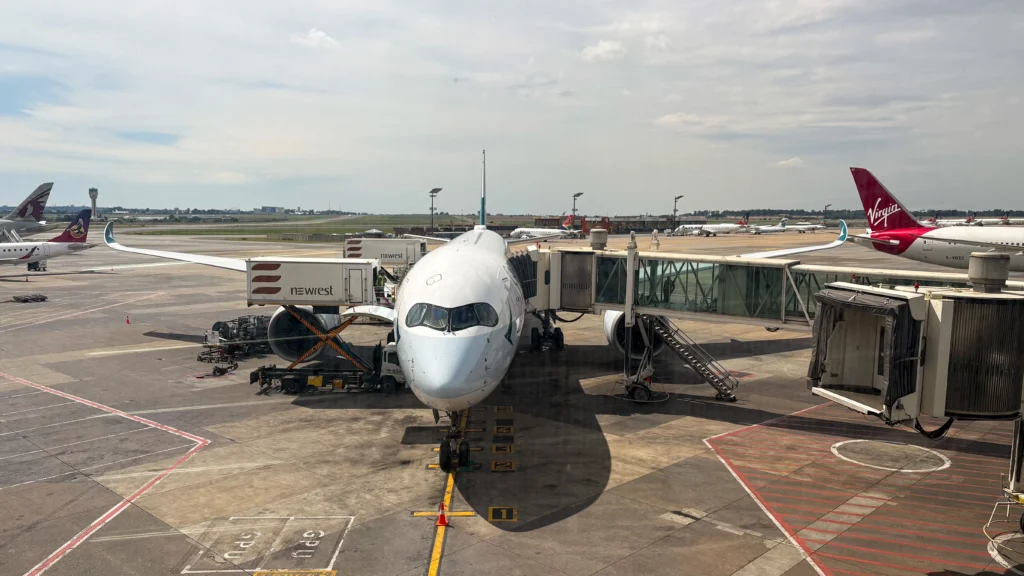
Official traffic statistics released by London Heathrow Airport reveal that geopolitical instability continues to reshape international aviation corridors. According to the airport’s passenger data for May, the UK’s primary aviation hub experienced a significant 31% year-on-year decline in passenger volumes originating from the Middle East. The downturn highlights the ongoing impact of regional conflict on major commercial flight paths connecting western Europe to key Gulf hubs and neighboring transit points.
Despite the localized contraction along Middle Eastern sectors, overall demand for air travel remains robust as the summer peak approaches. The facility managed to navigate these geopolitical headwinds by leveraging high domestic and transatlantic holiday volumes, marking a slight operational recovery compared to the sharper traffic drops recorded earlier in the spring.
Evaluating the May Passenger Metrics
The official performance summary indicates that Heathrow processed a total of 7.1 million passengers across its four active terminals during May. This aggregate volume represents a minor 1.2% year-on-year decrease. While a decline nonetheless, the figures demonstrate an improvement over April’s data, which suffered a more pronounced 5.3% reduction when initial route adjustments and airspace closures caused short-term operational friction.
A closer look at geographic market performance highlights a multi-tiered travel landscape. While long-haul traffic through Middle Eastern corridors retrenched significantly, domestic UK passenger numbers also experienced a slight dip of 1.9%. The data underscores a period of recalibration for airlines, many of which have had to alter flight frequencies or adjust flight planning to bypass affected geographical sectors, consequently shifting capacity to alternative international markets.
Mid-Term Holiday Peak Sets Single-Day Record
The overall reduction in monthly volume stood in stark contrast to concentrated peak demand periods. On May 22, Heathrow recorded its busiest single day ever for the month of May, processing an unprecedented 262,000 passengers in a single 24-hour window. This immense passenger surge coincided with the commencement of the school half-term holidays in the United Kingdom, demonstrating that consumer appetite for leisure and family tourism remains intensely resilient.
Managing such extreme peak single-day volumes requires the airport infrastructure to operate at absolute maximum throughput. The operational dichotomy—navigating a long-haul transit drop on one end while accommodating record-breaking daily terminal volumes on the other—presents a complex puzzle for airport logistics providers, ground handling agencies, and border processing teams tasked with keeping passenger wait times within standard service level agreements.
Infrastructure Reinvestment Amid Regulatory Disputes
To maintain long-term operational resilience and alleviate terminal congestion during these massive traffic surges, the airport group has proceeded with its internal capital investment plans. Key initiatives currently underway include extensive upgrades to terminal four infrastructure, specifically targeting modernizing check-in facilities and expanding parking capacities to enhance passenger processing efficiency.
However, the execution of these capital improvements has become a point of contention with national regulators. Heathrow management has raised formal concerns regarding recent investment parameters outlined by the Civil Aviation Authority (CAA). The airport authority claims that the regulator’s proposed caps on airport charges could limit the scope of future infrastructure funding, warning that a failure to invest adequately could weaken the UK aviation sector’s competitiveness against rapidly expanding rival European hub airports.
Capital Expansion and the Long-Term Hub Strategy
The long-term development strategy for the UK’s only major hub airport centers on permanent capacity relief. Because the facility is effectively operating at maximum runway capacity, even minor external disruptions can trigger cascading delays across the wider flight network. To address this structural limitation, the airport authority is actively advancing its planning permission framework for a proposed third runway, targeting a critical milestone execution date of 2029.
According to statements from Heathrow leadership, the ongoing volatility in global aviation underscores the necessity of a flexible, modern hub capable of absorbing unexpected route changes without compromising efficiency. As the airport marks 80 years since its first commercial flight, officials emphasized that maintaining strong, well-funded trade and travel connections is essential to support the long-term health of the UK economy, international tourism infrastructure, and corporate travel logistics.
For more travel news like this, keep reading Global Travel Wire