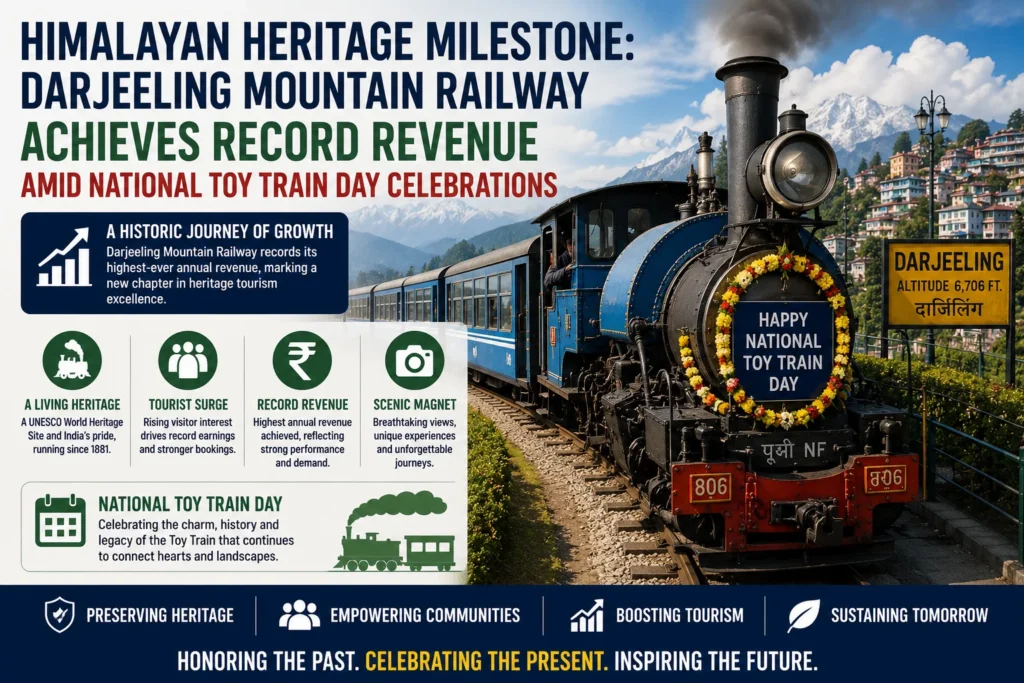
The sector for mountain heritage tourism has achieved a major milestone as the globally recognized Darjeeling Himalayan Railway delivered an exceptional operational performance. Official statements from the Northeast Frontier Railway branch of Indian Railways confirm that the legendary two-foot narrow-gauge line successfully combined record-breaking monthly revenue results with highly successful regional community programming. This dual success demonstrates how preservation-focused transport infrastructure can effectively manage the competing demands of structural heritage conservation and rising international travel interest.
According to formal financial notifications released by the Ministry of Railways, the Darjeeling Himalayan Railway generated an unprecedented single-month revenue total of ₹3.98 crore during June 2026. This historic milestone marks a substantial increase compared to the ₹3.25 crore recorded during the corresponding period last year, establishing the highest consecutive June earnings in the long history of the network. Public financial officials attribute this strong fiscal growth to the introduction of streamlined international digital booking channels, the expanded frequency of seasonal holiday departures, and targeted cultural travel campaigns designed to highlight the timeless appeal of the mountain corridor.
Strengthening Grassroots Bonds at Historic Sukna Station
The announcement of this historic financial performance directly coincided with the annual celebration of Toy Train Day, which marks the anniversary of the network’s first complete journey from Siliguri to Darjeeling in 1881. To honor this foundational event, the public railway administration coordinated a major community outreach initiative at the historic Sukna Heritage Station in West Bengal, working in close partnership with the North Bengal Painters Association.
This collaborative public program effectively transformed the scenic mountain station into an open-air creative venue. Local school students and young regional artists participated in live painting competitions and interactive workshops, capturing the distinctive aesthetics of vintage steam locomotives, classic station architecture, and the surrounding panoramic tea estate landscapes. A major highlight of the public exhibit was a highly detailed miniature replica of the iconic heritage steam engine designed by local artist Suman Roy, which served as an effective educational tool to teach incoming travelers and residents about the engineering traditions of the line.
Preserving Living History on an Operational Route
The Darjeeling Himalayan Railway has long held a prominent place in the annals of global transport engineering, securing formal statutory recognition as a UNESCO World Heritage Site. Climbing more than 2,200 meters from the lowlands of Siliguri to the high-altitude terminal at Darjeeling, the 88-kilometer narrow-gauge infrastructure relies on complex structural solutions—including specialized loop tracks and sharp Z-reverses—to navigate the steep gradients of the terrain without modern tunnel systems.
Rather than separating historic preservation from daily passenger schedules, the administration integrates living history directly into the modern tourist experience. Select scheduled departures utilize meticulously maintained, original coal-fired steam locomotives that trace their mechanical origins back several decades. To provide essential context for modern travelers, interactive museum spaces at key stations display archival operational documents, antique engineering tools, and vintage photography galleries. Furthermore, staff-led historical walks at elevated hubs like Kurseong and Ghum provide passengers with clear technical insights into famous landmarks, including the engineering layout of the Batasia Loop.
Strategic Capacity Planning for Long-Term Preservation
Managing a historic site of this scale requires a careful balance between maximizing short-term tourism revenue and protecting fragile infrastructure from the impacts of overtourism. To prevent overcrowding along sensitive mountain ridges, the Northeast Frontier Railway uses structured passenger quotas during high-occupancy vacation seasons, safely distributing foot traffic across multiple morning and afternoon departures.
Financially, the introduction of premium heritage experiences helps fund continuous engineering maintenance. Higher fares collected from specialized steam-driven joy rides are funneled directly into dedicated restoration funds, allowing authorities to rehabilitate century-old iron bridges and maintain rolling stock without increasing standard passenger fares for local residents. The public administration also conducts rigorous quarterly structural audits to ensure all modernization efforts—such as improved waiting areas and digital ticket kiosks—fully comply with international preservation guidelines.
Essential Passenger Information and Seasonal Planning
For international tourists and domestic rail enthusiasts looking to experience this mountain attraction, official transport bulletins recommend booking itineraries well in advance through the official Indian Railways passenger portal. Due to immense popularity during clear weather months, premium seats routinely fill up weeks before departure.
The highly popular two-hour loop journey from Darjeeling station to the high-altitude museum at Ghum remains a central focus for holiday planning, featuring a scenic stop at the Batasia Loop war memorial. Official rate sheets show that steam-hauled heritage joy rides are generally priced between ₹1,200 and ₹1,500, while modern diesel-powered alternatives offer a more budget-friendly route for standard transit. Travelers are reminded that maintaining valid identification is mandatory during the online registration process, and checking real-time weather updates through official meteorological portals remains essential during transition seasons.
The Future Landscape of Sustainable Heritage Travel
The outstanding performance achieved during the mid-2026 season confirms that historical transport networks remain incredibly powerful anchors for regional tourism development. By channeling increased fare revenue back into localized infrastructure and professional guide training programs, the railway administration has successfully turned a transport link into a sustainable source of regional employment.
Looking ahead, the continued popularity of the line ensures that the historic steam engines will keep operating along the steep ridges of the Himalayas. The combination of strict capacity management, creative youth outreach programs, and steady infrastructure reinvestment guarantees that this incredible engineering landmark will continue to serve global travelers for generations to come.
For more travel news like this, keep reading Global Travel Wire