The federal government of Mexico has set in motion a comprehensive framework aimed at modernizing its domestic travel infrastructure and diversifying visitor experiences beyond classic coastal corridors. Driven by the Secretariat of Tourism (SECTUR), the official sectoral master plan outlines a clear transition from isolated luxury resort zones to a highly connected, socially inclusive network of regional travel economies. This sweeping multi-regional strategy focuses public and private resources toward upgrading municipal transit systems, integrating certified ecological building models, and protecting regional biocultural heritage.
According to institutional data released by the National Institute of Statistics and Geography (INEGI), international arrivals and tourism-related gross domestic product have maintained steady year-over-year growth. By expanding travel infrastructure into secondary markets and upgrading high-density urban zones, federal authorities aim to distribute economic dividends more equitably across rural and indigenous communities while managing environmental footprints.
Orchestrating Progress Across the Major Tourism Hubs
The synchronized multi-city development plan directs capital into several key geographic regions, each tailored to distinct traveler profiles and economic needs:
Mexico City: Acting as the primary international gateway, the capital is undergoing substantial public transit modernization and urban optimization projects. Municipal initiatives prioritize the historical preservation and cultural marketing of traditional neighborhoods, aiming to extend the average duration of international visitor stays.
Guadalajara: Tourism authorities are channeling funds into expanding state-of-the-art convention centers and developing structural networks for cultural itineraries. These investments leverage regional designations of origin, such as authentic tequila heritage experiences and traditional musical arts festivals, to attract high-value corporate and leisure travelers.
Monterrey: Recognizing its historical role as a primary commercial hub, regional development boards are building modern urban mass transit systems and expanding business hotel capacities. This aligns with broader national efforts to capture the growing corporate-leisure segment.
Veracruz: Federal funding supports the construction of sustainable coastal facilities. By linking infrastructure growth with traditional maritime cultural festivals, the region is positioned to capture travelers seeking low-impact, ecologically responsible coastal excursions.
Nayarit: In alignment with national environmental directives, local planners are promoting responsible coastal development in small communities situated well outside the main commercial corridors. The focus remains on building small-scale tourist accommodations that safeguard fragile marine and coastal ecosystems.
Acapulco: Public redevelopment programs are accelerating the reconstruction of tourist facilities, public spaces, and coastal walkways. These targeted actions aim to restore institutional traveler confidence and revitalize local employment structures.
Cancún: To fulfill international green travel certifications, newly authorized premium resort properties must integrate energy-efficient smart grids and low-impact water treatment infrastructure under the national “Distintivo S” sustainability framework.
Riviera Maya: Multi-agency conservation groups are expanding eco-tourism paths, professional wellness clinics, and archeological protection programs. These initiatives are designed to safeguard historic Mayan monuments while providing structured community-based travel experiences.
Los Cabos: Premium tourism remains the driving force, supported by cruise ship terminal expansions and high-end hotel developments. Local municipal guidelines focus on managing water conservation models to ensure luxury projects do not deplete vital regional water tables.
Enhancing Interregional Air and Ground Connectivity Protocols
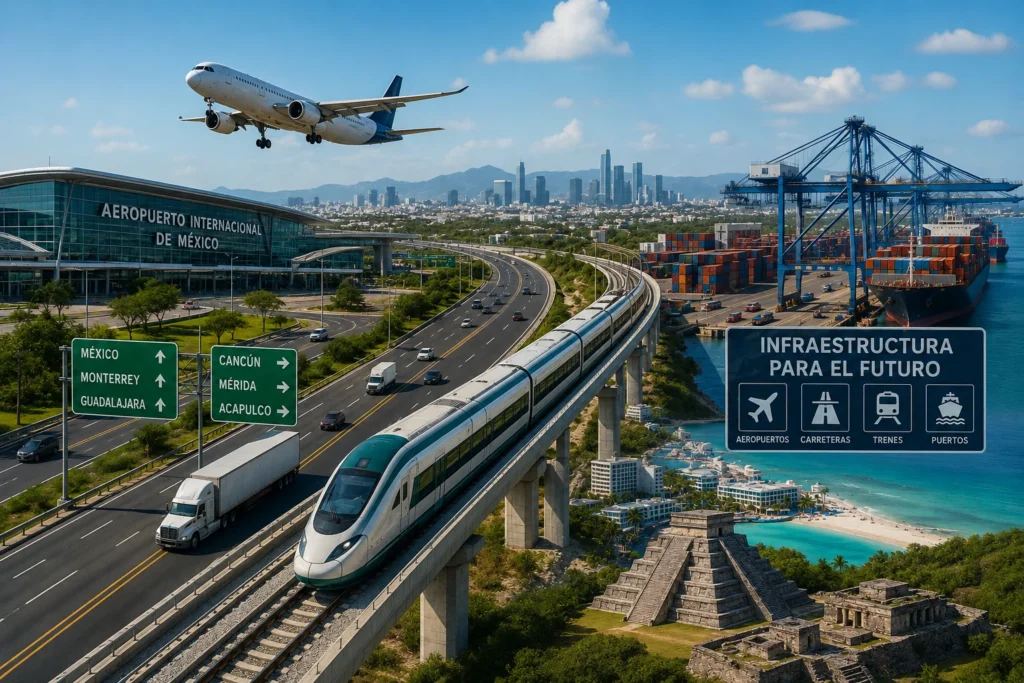
The structural foundation of this nationwide transformation relies on a complete modernization of transport networks. According to joint statements from the Ministry of Infrastructure, Communications, and Transportation, the expansion of interregional air networks allows travelers to combine distinct cultural and coastal hubs on a single itinerary.
Furthermore, extensive ground transit upgrades—including new multi-lane toll highways, modernized airport rail links, and specialized transit corridors—are systematically lowering travel times between major industrial hubs and remote ecological destinations. This integrated network helps mitigate the risks of localized overtourism in traditional hotspots while opening up secondary economies to global travel markets.
Comprehensive Matrix of Regional Growth Profiles
The structural priorities across the country’s primary tourism zones reflect a clear division of operational objectives:
Mexico City: Focuses on Gateway Tourism and Heritage Preservation, with the objective of extending visitor stays and enhancing inner-city transit connectivity.
Guadalajara: Prioritizes Cultural and Corporate Meetings, utilizing advanced convention venues and localized heritage branding.
Monterrey: Targets Business and Urban Leisure, expanding metropolitan transit capacity and corporate lodging availability.
Veracruz: Specializes in Sustainable Coastal Travel, funding low-impact beach facilities and regional folklore exhibitions.
Nayarit: Promotes Small-Scale Community Growth, implementing strict environmental protections for local marine biomes.
Acapulco: Drives Post-Disaster Redevelopment, focusing public capital on infrastructure restoration and municipal space recovery.
Cancún: Establishes Green Luxury Hospitality standards, mandating energy-efficient construction models.
Riviera Maya: Integrates Eco-Tourism and Wellness, expanding archaeological preservation and community-managed parks.
Los Cabos: Anchors Ultra-Luxury and Cruise Operations, increasing deep-water terminal capacities and premium hospitality assets.
Through this balanced allocation of capital and strict adherence to verified sustainability criteria, the nation is building long-term institutional resilience against shifting global travel dynamics. By elevating historical preservation alongside modern technical engineering, the federal strategy effectively establishes a competitive, long-lasting framework for the future of global leisure travel.
For more travel news like this, keep reading Global Travel Wire