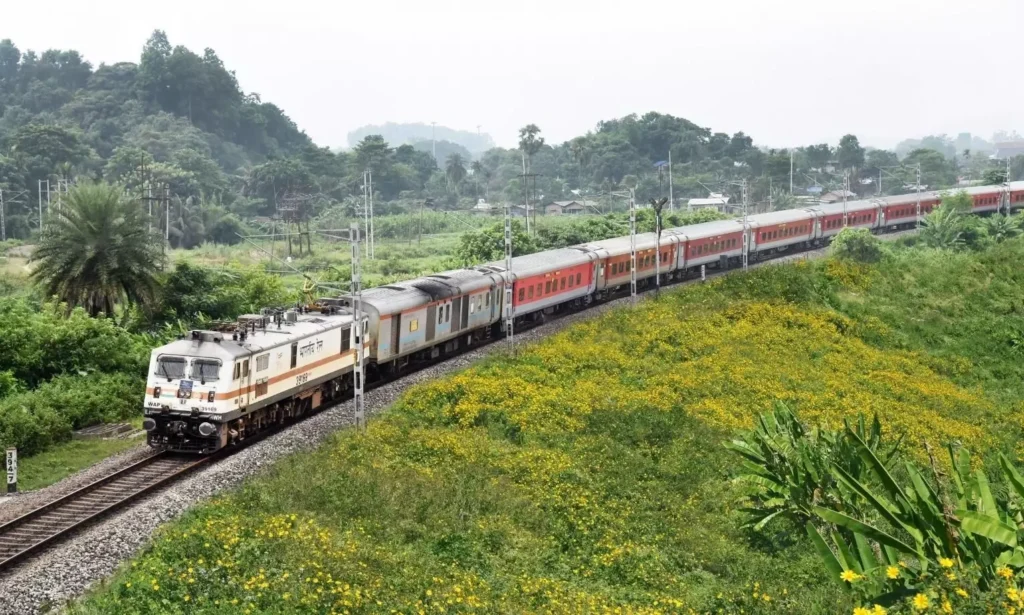
Rail connectivity across parts of Assam is moving closer to normal after Northeast Frontier Railway restored flood-damaged tracks in its Tinsukia Division, allowing train operations to resume with additional safety precautions.
The restoration reconnects communities and travellers dependent on rail services across Upper Assam and the wider northeastern region. Railway authorities have adopted a phased operational approach following severe weather damage, with diesel-powered train movements and enhanced track inspections forming part of the recovery process.
The reopening is especially important for passengers because railways remain one of the Northeast’s most important long-distance transport networks, connecting communities with major cities and onward services across India.
Northeast Frontier Railway has also continued wider track-modernisation and safety programmes across its network, including extensive track renewal, ultrasonic testing and infrastructure improvements during 2025-26.
Tinsukia Tracks Reopen After Flood Disruption
Flood conditions damaged railway infrastructure within the Tinsukia Division and disrupted normal train operations.
Engineering teams assessed affected sections, repaired damaged railway infrastructure and completed safety checks before allowing train movement to restart.
The restoration process has focused on maintaining safe operations while railway personnel continue monitoring the condition of recovered sections.
Diesel trains are initially being used as part of the operational arrangements. This provides additional flexibility while railway infrastructure returns progressively toward normal working conditions.
Designated railway staff are also expected to maintain close observation of restored tracks as operations stabilise.
Assam Travellers Regain an Essential Transport Link
The return of railway services provides an important mobility boost for residents, workers, students and visitors.
Long distances and challenging terrain make dependable transport particularly significant across northeastern India. Railway services provide affordable connections between cities, smaller communities and regional transport hubs.
For passengers affected by the flood disruption, restoration reduces dependence on alternative road journeys that may themselves be vulnerable to severe weather.
Rail connectivity also supports the movement of goods and essential supplies, strengthening the wider economic importance of restoring damaged infrastructure quickly.
Tourism Across Upper Assam Could Benefit
Restored train services are also positive for Assam’s tourism economy.
The state attracts visitors through its wildlife, tea landscapes, river experiences, cultural heritage and distinctive northeastern geography.
Upper Assam serves as an important tourism region, while railway stations across the state support journeys toward tea-growing areas, cultural destinations and gateways serving wildlife tourism.
Reliable transport can help visitors build more predictable itineraries while supporting hotels, tour operators, restaurants, guides and other local businesses.
Railway restoration is therefore about more than returning individual trains to service. It helps reconnect parts of the visitor economy following weather-related disruption.
Flood Resilience Becomes Increasingly Important
The disruption highlights the challenges railway infrastructure can face during periods of intense rainfall and flooding.
Tracks, embankments, bridges and associated railway equipment can require detailed inspection after severe weather before passenger services can safely return.
NFR’s broader infrastructure programme shows an increased emphasis on railway safety and track resilience. During the 2025-26 financial year, the railway reported completing 457 units of complete track renewal and 449.42 track kilometres of rail renewal. It also expanded ultrasonic testing and other track-safety monitoring measures.
Such investment becomes particularly important in regions where weather-related disruption can rapidly affect passenger and freight mobility.
Passengers Should Continue Checking Train Updates
Although services are returning, travellers using routes through Assam should continue checking operational information before starting their journeys.
Weather conditions can affect schedules during the monsoon period, while restored railway sections may remain subject to temporary operational precautions.
Passengers should confirm train timings through official railway channels and allow additional time when travelling through recently affected areas.
Travellers connecting to flights, long-distance trains or fixed tourism bookings should also consider extra journey margins until operations are fully stabilised.
Using official railway information is particularly important when schedules are changing quickly following weather disruption.
Regional Connectivity Supports Northeast Tourism
Assam functions as an important transport gateway for much of northeastern India.
Railways support journeys not only within the state but also connections toward other northeastern destinations and major Indian cities.
Continued restoration therefore strengthens regional accessibility for both residents and visitors.
Tourism growth across Northeast India depends heavily on dependable transport because travellers often combine several destinations within a single itinerary.
Improved railway reliability can encourage visitors to explore beyond major gateways, increasing opportunities for smaller destinations and local tourism enterprises.
Assam Railway Recovery Restores Travel Confidence
The restoration of flood-damaged railway infrastructure in the Tinsukia Division marks an important step toward normal travel conditions across Upper Assam.
The combination of repaired tracks, diesel operations and continued inspections allows passenger movement to restart while keeping safety at the centre of the recovery.
For communities, the reopening restores an essential everyday transport connection. For travellers, it improves access to Assam and the wider Northeast.
Most importantly, the recovery demonstrates how quickly restoring resilient railway infrastructure can help reconnect destinations, protect regional mobility and support tourism after severe weather disruption.
For more travel news like this, keep reading Global Travel Wire