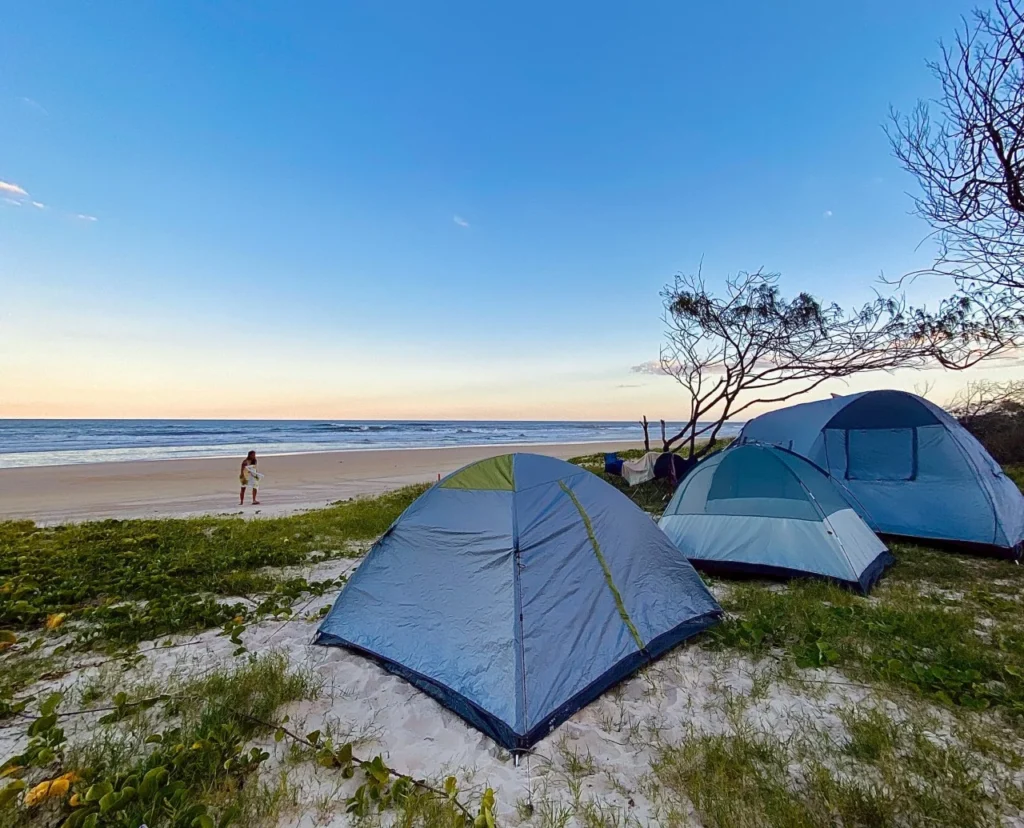
Australia has introduced temporary booking restrictions at a popular K’gari campground after authorities identified heightened risks involving a habituated dingo pack.
New campsite bookings at Waddy Point Beach Front Camping Area are restricted from August 14 until December 15, 2026. However, reservations made before August 14 remain valid.
The Queensland Government published the official park alert on August 24. It confirmed that the campground has not completely closed. Instead, Queensland Parks and Wildlife Service rangers are limiting new bookings while managing the animals and monitoring their behaviour.
The restrictions could disrupt spring camping holidays and early summer travel. Visitors may need to move to alternative campgrounds, adjust four-wheel-drive itineraries or seek commercial accommodation.
Camping along the K’gari Great Walk is not directly closed under this specific measure. Nevertheless, all travellers must follow island-wide wildlife safety requirements and monitor current park alerts.
Dingo behaviour raises safety concerns
Authorities introduced the controls after dingoes damaged camping property, tore tents and accessed food stored in unsecured iceboxes and refrigerators.
Habituation develops when wild animals become accustomed to people, vehicles and campsites. Easy access to food can accelerate this process by teaching dingoes to associate visitors and tents with meals.
Even apparently empty containers can retain smells that attract wildlife. Rubbish bags, bait, caught fish, cooking equipment and scented personal products can also draw animals into campsites.
Rangers will increase monitoring and undertake active behavioural management around the affected area. Visitors with valid bookings should expect a stronger ranger presence and must obey instructions, signs and temporary barriers.
Feeding, attracting or disturbing a dingo on K’gari is prohibited. Penalties can apply when visitors deliberately feed the animals or make food accessible through careless storage.
Families directed towards fenced campgrounds
Queensland authorities strongly encourage families with children to use campgrounds protected by dingo-deterrent fencing.
Suitable alternatives include Waddy Point Top, Dundubara, Eli Creek, One Tree Rocks, Cornwells and Wongai. These locations provide an additional physical barrier between campsites and roaming animals.
However, fencing does not replace responsible visitor behaviour. Campers must close gates, secure rubbish and store food correctly. They must also continue following ranger directions.
Parents and guardians should keep children within arm’s reach, including younger teenagers. Children may run, shout or move suddenly, potentially attracting an animal’s attention.
Travellers should check availability before cancelling an existing Waddy Point Beach Front reservation. Alternative sites could experience increased demand during weekends, school holidays and other busy periods.
Existing booking holders can retain their reservation, move to another available campground or request a refund through the official Queensland National Parks booking system.
Strict food storage remains essential
Campers must never store food or scented products inside tents. Iceboxes and food containers should remain securely locked, while rubbish, fishing equipment, bait and caught fish must be inaccessible to wildlife.
Visitors should travel in groups whenever possible and avoid running or jogging outside fenced areas. Authorities also advise carrying a long dingo safety stick to help maintain distance during an encounter.
Food should not be carried or consumed beside lakeshores, where smells can attract dingoes to locations used by swimmers and sightseers.
Anyone encountering a dingo should remain calm and avoid running. The incident should be reported to a ranger with the location and any identifying details. Visitors should call Triple Zero in an emergency.
These precautions apply throughout K’gari, not only at Waddy Point. The island remains a wild environment where dingoes can move across beaches, tracks and camping areas.
Tourism businesses prepare for booking changes
K’gari is the world’s largest sand island and a globally important nature-based destination. Its landscape features extensive beaches, freshwater lakes, coloured sand formations, dunes and rainforest growing on sand.
The booking restrictions affect one campground rather than the entire destination. Ferries, airports, organised tours and other camping areas are not restricted by this particular alert.
However, camping operators, four-wheel-drive rental companies and booking agents may receive more requests for fenced sites. Some visitors could also switch from camping to hotels or resorts if suitable alternatives become unavailable.
The wider Fraser Coast welcomed approximately 83,000 international overnight visitors during the year ending March 2025. Those travellers generated 493,000 visitor nights and stayed for an average of 5.9 nights.
These regional figures do not measure K’gari alone. Still, they demonstrate the importance of nature-based travel to accommodation, transport, retail and recreation businesses across the Fraser Coast.
No official forecast has estimated the restrictions’ effect on visitor spending, employment or accommodation demand.
Wildlife protection supports sustainable tourism
The temporary controls reflect the challenge of protecting visitors while preserving K’gari’s wild dingo population, commonly known as wongari.
Queensland’s management approach combines visitor education, deterrent fencing, ranger monitoring and enforcement. Restricting bookings gives officials more space to address unsafe animal behaviour without closing the wider island.
The measures also reinforce the role visitors play in conservation. Preventing dingoes from accessing human food helps reduce habituation and protects both animals and campers.
The restrictions are scheduled to conclude on December 15, 2026. However, travellers should not assume normal booking conditions will automatically resume that day.
Authorities will continue assessing the affected pack and campground conditions. Anyone planning a visit should confirm current restrictions, campsite availability and safety guidance before departure.
For more travel news like this, keep reading Global Travel Wire