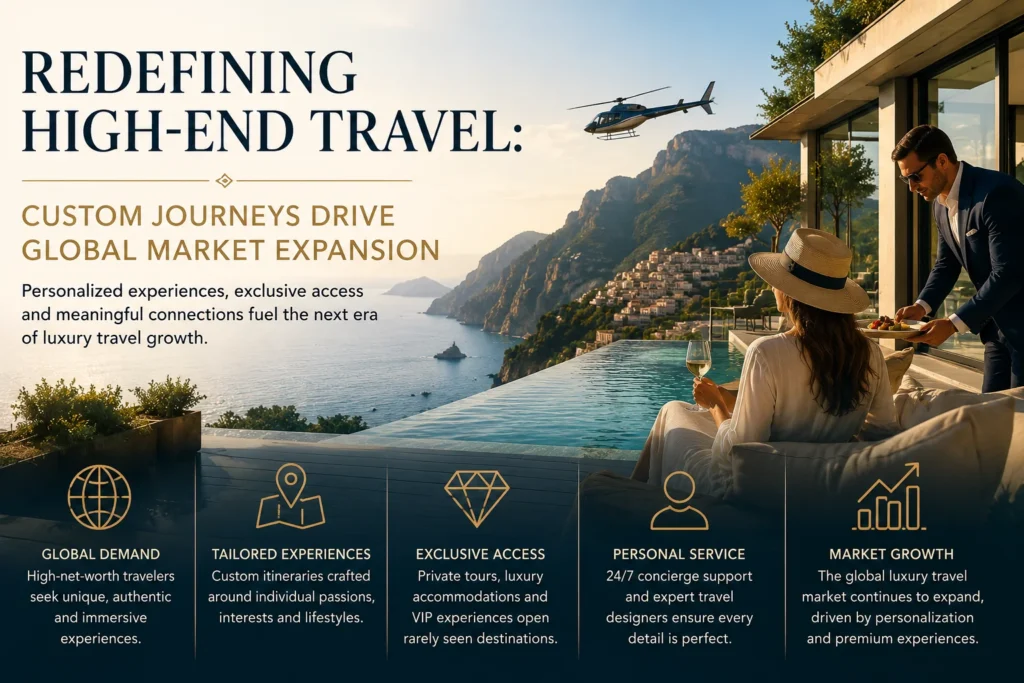
The global travel sector is witnessing a profound transformation in how affluent individuals define premium travel experiences. Modern high-net-worth travelers are moving away from traditional indicators of luxury, such as opulent hotel lobbies and standard VIP services. Instead, the focus has shifted toward hyper-personalized itineraries, complete privacy, exclusive destination access, and deep cultural immersion.
According to long-term projections by Market Research Future, the global luxury travel sector is expanding rapidly. Valued at $1,535.03 billion in 2024, the market is projected to reach $1,653.5 billion in 2025 before surging to $3,523.8 billion by 2035. This represents a steady compound annual growth rate of 7.87% between 2025 and 2035, underscoring the strong economic momentum surrounding high-value tourism.
This growth reflects changing consumer preferences. High-spending travelers are prioritizing tailored journeys, holistic health retreats, unique culinary explorations, private nature expeditions, and remote getaways. Beyond personal fulfillment, safety, cultural authenticity, and environmental sustainability have become essential priorities when planning high-end itineraries.
Key Drivers Behind High-End Market Expansion
A primary driver of this market shift is the expanding global population of affluent individuals, which expands demand for international trips, private aviation, luxury cruises, and exclusive-use properties. Today’s travelers are increasingly willing to dedicate more time and financial resources to extended journeys that seamlessly combine multiple destinations and unique experiences into a single, cohesive itinerary.
Wellness tourism has emerged as another powerful growth catalyst. Premium hospitality providers are expanding their offerings to integrate specialized health, fitness, nutrition, and restorative care into overall travel packages. Rather than treating wellness as an isolated spa amenity, operators are weaving comprehensive health programs into the core of the guest experience.
Several core trip categories are capturing high traveler demand, including:
Adventure and Safari Expeditions: Private wildlife tours, nature expeditions, and remote outdoor journeys that combine comfortable accommodations with environmental discovery.
Cultural and Heritage Journeys: Exclusive access to historical sites, private museum tours, and direct engagement with local craft communities.
Gastronomic and Culinary Experiences: Private dining experiences led by acclaimed chefs, specialized vineyard tours, and hyper-local farm-to-table culinary activities.
Wellness and Restoration Retreats: Tailored programs incorporating fitness, preventive care, mindfulness, and nutrition in secluded natural settings.
A Shift Toward Cultural Immersion and Sustainability
As the definition of luxury evolves, travelers are seeking deeper connections with the places they visit. While demand for adventure, beach, cruise, and safari travel remains high, the emphasis has shifted toward unique experiences that offer authentic cultural enrichment. High-spending tourists show a strong preference for private cultural guides, heritage activities, specialized expeditions, and lesser-known destinations that offer quiet exclusivity rather than mass tourism.
Concurrently, environmental and social responsibility are becoming central to trip planning. High-end travel programs increasingly incorporate sustainable practices, such as supporting local heritage conservation, benefiting host community economies, protecting fragile ecosystems, and reducing overcrowding in popular tourist hubs.
Unexplored Regions and Emerging Destinations Gain Traction
The pursuit of privacy and low tourist density is accelerating interest in non-traditional destinations. Emerging tourism markets are gaining visibility among travelers seeking distinct natural landscapes, rich regional heritage, and peaceful surroundings away from crowded cities.
From a geographical perspective, established regions like North America and Europe maintain a strong market position due to their advanced tourism infrastructure, historical sites, and high-end services. However, the Asia-Pacific region presents substantial growth potential, supported by expanding regional wealth and a rising volume of outbound travel.
At the same time, regions like South America are attracting greater international attention by showcasing rich biodiversity, world-class culinary traditions, vibrant local cultures, and specialized eco-expeditions in pristine wilderness environments. Across these regions, hyper-local activities centered on regional crafts, local agricultural traditions, and small-scale community tours are redefining luxury travel by emphasizing regional authenticity over standardized product offerings.
The Essential Role of Travel Advisors in the Digital Age
While digital booking engines and automated platforms make basic travel arrangements convenient, professional travel advisors remain essential in the high-value travel segment. Complex, multi-destination itineraries that involve private charter flights, exclusive property rentals, and custom logistics require deep regional knowledge, established industry connections, and direct support to handle unexpected changes.
Looking ahead to 2035, the combination of growing global wealth, high demand for personalized experiences, wellness-focused travel, and interest in unexplored destinations will continue to drive steady expansion across the luxury tourism sector. Hospitality providers that prioritize hyper-personalized service, cultural authenticity, and sustainable practices remain exceptionally well-positioned to lead the next generation of global travel.
For more travel news like this, keep reading Global Travel Wire