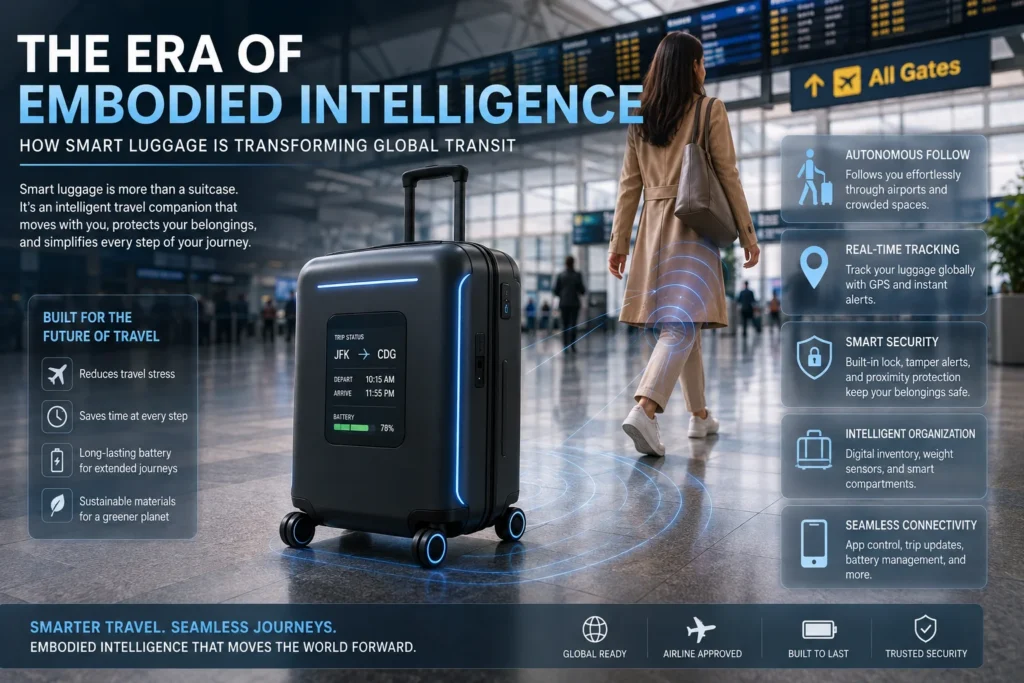
The evolution of personal transportation is entering an unprecedented phase within airport terminals and transit hubs worldwide. For decades, luggage design remained focused solely on material durability and manual mobility. However, as robotics and artificial intelligence shift from screen-based software into physical, real-world systems, everyday travel equipment is undergoing a major functional transformation.
By integrating automated mechanical movement, electric propulsion, and real-time connectivity, personal luggage is evolving from passive storage gear into an active mobility companion. This shift toward smart rideable luggage directly addresses a persistent travel challenge: reducing the physical strain associated with navigating expansive international airports, exhibition centers, and high-speed rail terminals.
The Rise of Physical AI in Personal Transportation
The application of embodied artificial intelligence marks a significant transition in how consumer products interact with physical environments. While traditional software applications process information digitally, physical AI endows mechanical systems with the ability to sense, adapt, and transform in response to user commands.
In personal transit, this engineering philosophy prioritizes reducing manual interaction. Rather than requiring users to manually assemble components or adjust mechanical levers to convert a suitcase into a vehicle, modern mobility solutions utilize integrated automated mechanisms.
Key advancements shaping this new generation of intelligent travel companions include:
Automated Structural Transformation: One-touch deployment mechanisms that extend motorized wheel systems and raise riding handles simultaneously without manual labor.
Integrated Electric Propulsion: High-efficiency, quiet brushless motor systems that deliver smooth acceleration across varied indoor floor surfaces.
Intuitive Dual-Control Interfaces: Standardized handlebar layouts utilizing straightforward acceleration and braking controls to eliminate steep learning curves.
Reinforced Structural Architecture: Composite body construction paired with aerospace-grade aluminum frames to balance lightweight portability with heavy load-bearing capabilities.
Elevating the Passenger Experience Across Airport Ecosystems
The integration of motorized personal transit into travel ecosystems aligns with broader efforts across the aviation and hospitality sectors to streamline passenger movement. Large international hubs continue to expand, often resulting in lengthy walking distances between security checkpoints, lounge facilities, and departure gates.
Smart mobility solutions offer a practical alternative for travelers seeking to conserve energy during long layovers or tight connections. Capable of reaching regulated riding speeds of up to 9.9 kilometers per hour, these units allow passengers to traverse terminal corridors effortlessly. Crucially, modern designs maintain a dual-purpose capability: operating as an electric riding platform when space permits, and instantly transitioning back to a standard pull-along carry-on in crowded environments.
Behind the mechanical propulsion is a focus on structural integrity. Advanced models feature composite shells crafted from impact-resistant materials combined with internal aluminum framing. This enables compact 20-inch cabin units to support adult rider weights up to 95 kilograms while fitting neatly into standard overhead storage bins.
Digital Ecosystem Integration and Compliance Standards
Beyond physical mobility, modern smart luggage functions as an active node within a traveler’s digital lifestyle. Smartphone applications compatible with major mobile operating systems allow users to monitor real-time operating metrics such as speed, total mileage, and remaining battery levels. Stepless speed adjustments enable riders to adapt their pace to match specific terminal environments, while custom ambient lighting and automated connection alerts add functional personalization.
Location visibility remains a vital priority for international travelers. To address luggage tracking concerns, next-generation travel gear incorporates global location networks, such as Apple Find My integration. This allows users to track their luggage in real time across busy transportation hubs and activate sound alerts to quickly locate their items in crowded areas. Additionally, built-in external USB power interfaces allow travelers to recharge smartphones and electronic devices on the go.
Navigating strict global aviation regulations is central to the deployment of rideable travel technology. To comply with international civil aviation and airport security standards, manufacturers design compliant cabin-ready models around specific engineering protocols:
Removable Lithium Battery Architecture: Utilizing modular, quick-detach batteries rated under 100 watt-hours (such as standard 73.26Wh units) that comply with airline carry-on regulations and permit swift removal during security inspections.
International Customs Compatibility: Equipping luggage with TSA-approved combination locks to allow seamless border agency inspections without structural damage.
Standardized Cabin Dimensions: Adhering strictly to standard 20-inch carry-on parameters to ensure compatibility with overhead baggage compartments across commercial airlines and passenger trains.
The Future of Connected Passenger Movement
As global travel volume continues to rise, the demand for technology that enhances personal comfort and efficiency will drive further innovation in personal mobility. The convergence of robotics, smart energy storage, and location-tracking networks is establishing a new benchmark for how travelers navigate global infrastructure.
Moving forward, the distinction between personal accessories and smart transportation will continue to blur. By combining automated mechanical performance with digital connectivity and strict regulatory compliance, smart rideable luggage is establishing itself as an essential tool for the modern, connected traveler.
For more travel news like this, keep reading Global Travel Wire