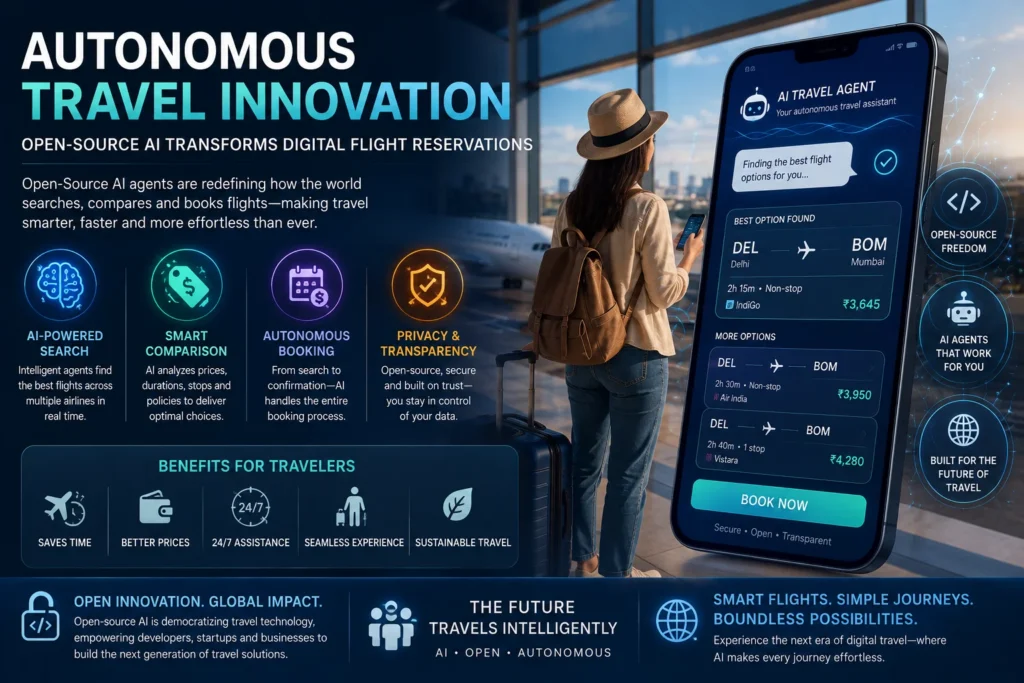
The global travel technology ecosystem is undergoing a fundamental shift as artificial intelligence evolves from generating basic trip itineraries to executing complex commercial transactions. For years, conversational AI assistants could parse user preferences, recommend destinations, and curate multi-day travel plans. However, when moving from planning to payment, these digital agents faced significant technical barriers, often returning static links that forced consumers to manually complete their bookings on third-party websites.
To bridge this operational gap, global travel-tech enterprise Atlas has officially released its open-source Atlas Flight Booking Skill. Licensed under Apache 2.0 and hosted across major public software repositories, the technology equips developers and AI product teams with the infrastructure needed to perform live fare searches, verify real-time inventory, and issue valid airline tickets without building complex backend integrations from scratch.
By unifying real-time data streams across more than 140 low-cost carriers (LCCs) worldwide, this software architecture enables digital agents to transition from passive advisory tools into secure, transaction-capable travel partners.
Bridging the Transaction Gap in Digital Travel
While large language models excel at understanding human intent, executing live travel reservations introduces significant operational complexity. Airline inventory fluctuates constantly, dynamic pricing algorithms adjust seat costs in real time, and ancillary add-ons like checked baggage or seat selection require precise, live calculations. Without direct, reliable API connections to carrier retailing systems, automated agents cannot guarantee that a quoted price remains bookable at the moment of purchase.
The open-source release directly addresses these technical friction points. Installed via a single command into compatible agent frameworks, the tool provides direct connectivity to live flight schedules, real-time pricing verification, and immediate ticket issuance protocols.
This development builds upon broader industry efforts to democratize travel distribution channels. By granting independent developers and travel platforms direct access to enterprise-grade airline inventory, the barriers to launching next-generation travel applications continue to fall.
Enforcing Human Oversight Through Human-in-the-Loop Architecture
Crucially, the architecture of modern transactional software prioritizes user control over total automation. Flight reservations involve significant financial commitments, strict cancellation policies, and precise passenger documentation. To prevent automated systems from making unauthorized financial decisions or guessing user preferences, the integration incorporates mandatory approval checkpoints.
Rather than allowing an AI agent to execute a booking end-to-end autonomously, the system embeds four mandatory human-in-the-loop validation stages:
Initial Booking Authorization: Explicit user confirmation permitting the digital agent to initiate a reservation with specific passenger details.
Price Variance Acceptance: Mandatory user review and approval if live airline inventory reflects a price change during session processing.
Ancillary and Seat Fallback Selection: Pre-approved user guidelines for seat assignments, luggage options, and optional service add-ons.
Final Payment Summary Confirmation: A clear, human-approved review of the total fare structure before final transaction settlement.
Industry leadership emphasizes that setting clear operational boundaries is essential when designing commercial AI systems. By building guardrails directly into software workflows, developers ensure that automated tools enhance the user experience while eliminating financial ambiguity.
Expanding Low-Cost Carrier Connectivity for Global Travel Sellers
The integration of open-source tools aligns with a broader transformation across the low-cost airline sector. Low-cost carriers represent a massive portion of global point-to-point air traffic, yet their legacy distribution networks have historically remained fragmented and difficult for third-party developers to access efficiently.
Centralizing content from over 140 budget carriers into unified digital frameworks allows independent travel sellers, corporate booking platforms, and software builders to offer comprehensive flight options. This expanded connectivity helps travelers compare budget airfares alongside traditional network carriers, increasing price transparency across regional and international routes.
Furthermore, software-driven fulfillment engines optimize search processing across daily global flight queries, giving travel platforms real-time visibility into inventory shifts, seasonal demand patterns, and route availability.
The Next Phase of Automated Travel Retailing
The initial release of open-source booking tools focuses primarily on core reservation functions, including live search, availability verification, price calculation, and ticket creation. As developer adoption grows, future software iterations are expected to address post-booking operations, such as automated flight modifications, itinerary cancellations, refund processing, and integrated corporate credit card handling.
The integration of AI agents into commercial travel workflows represents a permanent evolution in digital travel management. By combining open-source flexibility, comprehensive low-cost carrier inventory, and strict human-in-the-loop safeguards, the travel industry is establishing a transparent, secure foundation for modern passenger retailing.
For more travel news like this, keep reading Global Travel Wire