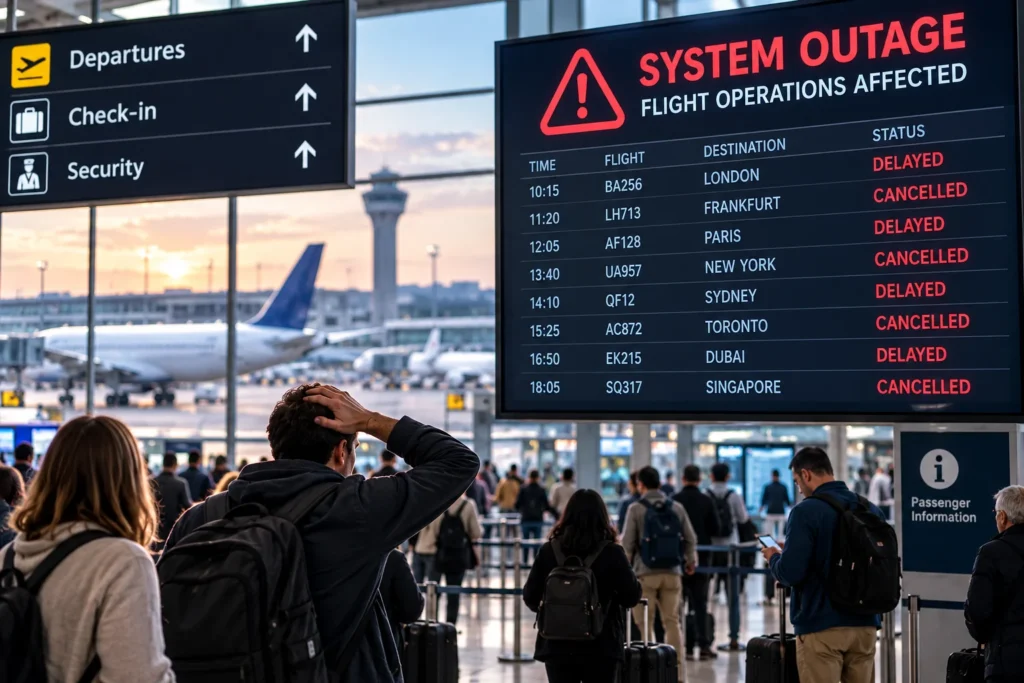
Critical technical failure within national air navigation infrastructure has sent shockwaves across international travel corridors, sparking widespread global aviation disruption. A severe glitch in the UK flight-data processing system forced air traffic controllers to implement strict flow management restrictions to safeguard national airspace. The administrative intervention led to hundreds of flight cancellations, extensive ground delays, and mid-air diversions across major international hubs including London Heathrow, Gatwick, Manchester, Stansted, and London City airports, stranding thousands of international travelers and disrupting global tourism schedules.
Official statements released by global flag carriers highlighted the far-reaching operational impact of the technical outage. International airlines operating long-haul routes into Europe confirmed that multiple scheduled services were diverted to alternate continental destinations or held at origin airports. Aviation authorities advised all outbound and incoming passengers to verify their current flight status with their respective carriers before setting off for airport terminals, as terminal halls experienced extreme congestion following schedule alterations.
Major European and transatlantic airlines reported operational strain across their flight networks. Operational managers confirmed that holding incoming aircraft on the ground created severe aircraft positioning conflicts and crew duty-time overruns. Because modern commercial air travel relies on tightly managed flight schedules, a temporary slowdown at a major regional transit hub generates a compounding effect across international air routes.
Systems Restored But Recovery Operations Face Delays
Technical engineering teams managed to locate and rectify the core software processing fault within hours of its emergence. Despite the system restoration, official statements from national air traffic services warned that restoring flight schedules back to normal operational capacity will require multiple days. The slow recovery pace stems from strict European slot allocation controls, mandatory crew rest requirements, and the complex challenge of re-positioning displaced aircraft and flight crews across global network stations.
Aviation management authorities stressed that national airspace remained open and secure throughout the emergency response period. However, departure flow rates were deliberately restricted to levels that controllers could process manually using backup procedures. Airport operational groups urged travelers not to gather inside terminal buildings without express confirmation from their airlines that their flights were confirmed for departure, citing safety considerations and passenger volume management inside public facilities.
The latest technical breakdown has reignited intense debate among international tourism bodies, airline executives, and transport regulators regarding infrastructure reliability. Major commercial carriers have renewed public demands for comprehensive operational overhauls and infrastructure investments to reinforce critical air navigation systems, arguing that system failures paralyze global travel corridors and inflict multi-million-dollar economic losses on the global tourism sector.
Regulatory Scrutiny and Passenger Protection Commitments
The national aviation regulator confirmed that it expects a detailed incident report detailing the root cause of the software processing failure. Regulatory officials indicated that they will evaluate the findings to determine if additional regulatory interventions or operational mandates are required to guarantee future infrastructure resilience. Official guidelines issued by consumer protection divisions reminded affected travelers of their statutory rights during major flight disruptions, including access to duty-of-care services, overnight accommodation arrangements, and rebooking provisions.
Travel industry stakeholders emphasize that unexpected system breakdowns undermine consumer confidence during key holiday travel windows. International tourism organizations noted that prolonged delays and terminal congestion disrupt onward cruise connections, hotel bookings, and guided tour itineraries, leaving hospitality operators to adjust to sudden cancellations and delayed guest arrivals.
To cushion the impact on international visitors, transport ministries and tourism boards are collaborating with regional transit operators to provide updated travel advisories and extended ground transport services where available. Airport authorities have deployed supplementary customer support personnel inside passenger terminals to assist stranded travelers with basic amenities, re-ticketing inquiries, and luggage retrieval processes.
Long-Term Infrastructure Challenges for International Travel
The operational breakdown underscores the extreme vulnerability of interconnected global transport networks to single-point technical failures. Air navigation service providers across neighboring jurisdictions were forced to coordinate flow management adjustments to prevent severe airspace congestion over Western Europe. Air traffic control centers in adjacent countries held numerous departing flights on the ground to manage the airspace bottleneck safely.
Industry experts emphasize that modernizing air traffic infrastructure remains a critical priority for sustaining international tourism growth. With air travel volumes reaching historic peaks, aging flight data architectures face heightened operational demands. Tourism ministers and aviation directors agree that building resilient air traffic systems is essential for safeguarding international commerce, maintaining seamless travel experiences, and preventing future technological breakdowns from destabilizing global tourism economies.
As airline operations gradually recover, public transport bodies and aviation agencies continue to monitor flight flow rates across international corridors. Passengers planning air travel over coming days are strongly advised to remain in close contact with their air carriers, utilize digital mobile tracking tools, and allow extra travel time when navigating major international airports.
For more travel news like this, keep reading Global Travel Wire