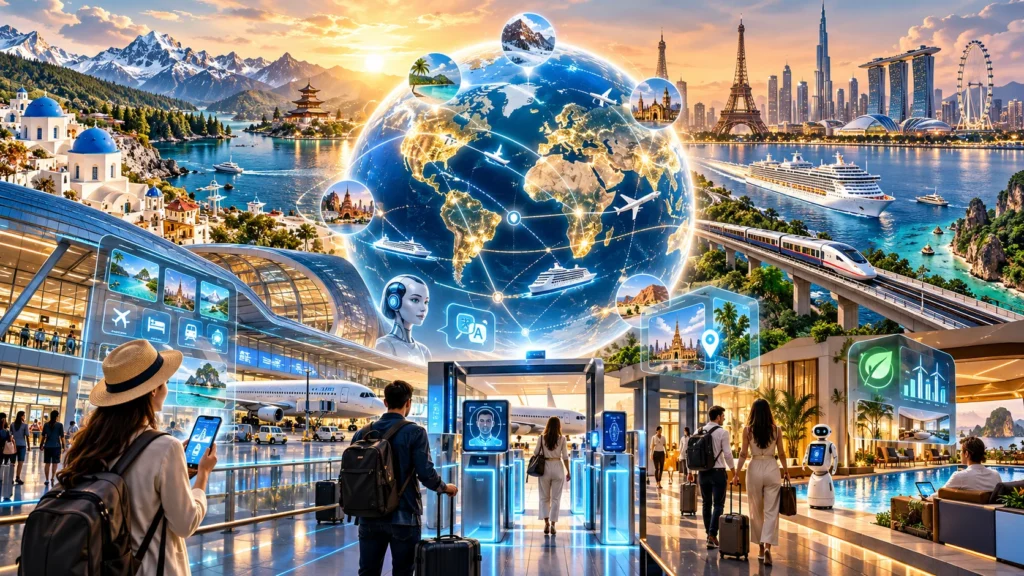
On World Tourism Day, celebrated annually across the globe on September 27, international attention centers on the economic, cultural, and technological forces shaping the future of global travel. Hosted in El Salvador under the official theme “Digital Agenda and Artificial Intelligence to Redesign Tourism,” the 2026 international summit explores how generative artificial intelligence, machine learning, and digital public infrastructure are fundamentally altering how destinations are discovered, managed, and experienced.
With global travel and tourism generating trillions of dollars in economic output and supporting hundreds of millions of livelihoods worldwide, the integration of artificial intelligence represents the fastest technological transition the sector has experienced in over a decade. As public tourism authorities, municipal governments, and travel enterprises adopt digital solutions, the global industry faces a pivotal transition: leveraging technology to build sustainable, inclusive, and efficient travel ecosystems while preserving the human connection at the heart of hospitality.
The Economic Powerhouse of Global Travel and Tourism
Official data from international travel and tourism bodies underlines the sector’s central role in global economic stability and post-pandemic resilience. Global visitor numbers have surpassed baseline pre-pandemic levels, with international tourist arrivals reaching 1.5 billion. The sector accounts for nearly ten percent of global Gross Domestic Product (GDP), while supporting one in every nine jobs worldwide.
Looking ahead over the coming decade, annual growth in travel and tourism GDP is projected to outpace broader economic growth, driven by expanded international flight capacity, streamlined digital visa frameworks, and surging demand for experiential travel. Capital investment in tourism infrastructure reached unprecedented levels in 2025, demonstrating strong institutional confidence in the long-term expansion of the visitor economy despite global economic headwinds.
Integrating Artificial Intelligence Across the Travel Value Chain
The rapid acceleration of AI adoption in tourism is visible across every stage of the traveler journey. Consumer research indicates that a majority of modern travelers have utilized artificial intelligence tools for trip research, itinerary generation, or destination discovery. Conversational AI assistants, integrated map tools, and algorithmic search engines are increasingly replacing traditional static guidebooks and manual web browsing.
Within commercial tourism operations, travel service providers and destination management organizations are deploying artificial intelligence across multiple key operational areas:
Personalized Itinerary Design: Generative AI models generate day-by-day itineraries tailored to traveler preferences, budget constraints, and real-time scheduling inputs.
Smart Destination Management: Municipalities utilize AI-powered data analytics and real-time foot-traffic monitoring to regulate visitor density at high-capacity landmarks, preserving delicate cultural heritage sites and preventing overcrowding.
Operational Efficiency: Hospitality brands, airlines, and tour operators deploy conversational AI platforms to manage booking queries, automate customer service workflows, and streamline back-office administrative tasks.
Dynamic Pricing Models: AI-driven data systems evaluate regional demand patterns, transport availability, and seasonal fluctuations to optimize pricing structures for accommodation and transit networks.
Government Initiatives and Digital Public Infrastructure
Governments worldwide are aligning national tourism policies with the digital agenda to enhance international competitiveness. In India, official announcements from the Ministry of Tourism highlight the expansion of digital public infrastructure through platforms such as the e-Visa framework—which now processes 95 percent of electronic visa applications within 72 hours—and comprehensive digital tourism databases.
Partnerships between public ministries and global technology platforms focus on data-driven destination marketing, digital capacity building for local tourism workers, and expanding visibility for lesser-known regional destinations. By connecting digital discovery with verified infrastructure investments—such as high-speed rail networks, upgraded regional airports, and homestay accreditation programs—public agencies ensure that digital discovery translates into real-world economic growth for local communities.
Ethical Frameworks and the Human Element in Modern Travel
While digital technologies offer unmatched efficiency, global policy discussions at World Tourism Day emphasize the necessity of ethical AI governance, data privacy protection, and inclusive access. Large-scale digital adoption requires investment in digital skills training for small and medium-sized tourism enterprises to prevent technological disparities between advanced and developing destinations.
Official statements from international leaders stress that technology must serve human wellbeing rather than replace human workers. Automated systems can calculate transit distances, optimize flight routes, and generate structured itineraries in seconds. However, the deeper value of travel—authentic cultural exchanges, local heritage storytelling, personal hospitality, and community relationships—remains fundamentally human.
As the global travel industry navigates this technological evolution, the successful integration of artificial intelligence will depend on maintaining a balanced approach. By utilizing smart digital tools to resolve logistical friction and manage environmental impacts, while relying on human expertise to deliver authentic experiences, the tourism sector can ensure a resilient, inclusive, and sustainable future for travelers and host communities alike.
For more travel news like this, keep reading Global Travel Wire