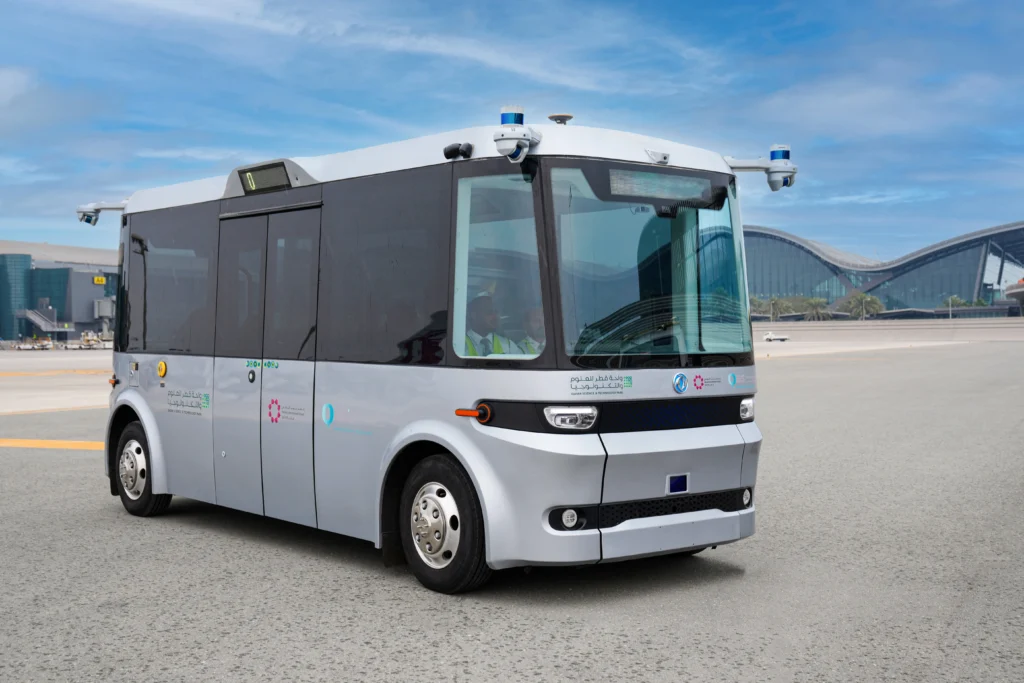
Singapore and the United Arab Emirates are advancing driverless airport transport, bringing autonomous vehicles into baggage handling and ground operations. Meanwhile, Amsterdam Schiphol is testing how self-driving buses can move employees around airport facilities.
The projects address different operational needs, from transferring luggage between terminals to transporting staff through restricted areas. Together, they demonstrate how airport automation is extending beyond passenger check-in and terminal services.
For travellers, the potential benefits include more consistent baggage transfers and better coordination around aircraft departures. However, deployment alone does not guarantee fewer delays or eliminate baggage problems.
The immediate development is a shift towards practical applications, supported by testing, remote supervision and coordination with airport authorities.
Singapore Introduces Autonomous Baggage Transfers
Changi Airport launched fully driverless autonomous tractors on 20 January 2026, marking an important step in its airside automation programme. changiairport.com
The tractors transfer passenger baggage between Terminal 1 and Terminal 4. Their introduction followed nearly a year of trials covering more than 5,000 test trips.
The vehicles use sensors to navigate their operating environment, while remote supervision provides support when intervention becomes necessary.
Changi plans to expand the fleet to 24 vehicles by 2027. Future applications include towing cargo and airport equipment alongside baggage.
For a major connecting airport, reliable luggage movement matters because passengers and bags may travel through different terminal facilities.
Automation can support this process, although loading, handling and wider flight coordination still require careful operational management.
Dubai Deployment Supports Ramp Operations
At Dubai World Central–Al Maktoum International Airport, dnata introduced six electric autonomous baggage tractors through an AED6 million investment.
The company announced the deployment in July 2025, making it an established project rather than a new 2026 launch. dnata.com
Developed with TractEasy, the vehicles can tow up to four standard unit load devices along predefined routes. Their controlled operating speed reaches 15 kilometres per hour.
The programme began with Level 3 autonomy. Dnata outlined plans to progress towards Level 4 operations by early 2026.
That target should remain distinct from confirmation that the transition has been completed.
The Dubai project illustrates how electric ground equipment and autonomous navigation can work together within a controlled airport environment.
Schiphol Tests Driverless Staff Mobility
Schiphol’s autonomous bus work focuses on transporting people rather than towing baggage.
Its programme selected Ohmio’s Lift vehicle for testing around an employee shuttle operation associated with Gate 60. The airport has also explored traffic coordination technology for autonomous vehicles.
These initiatives examine how self-driving transport can interact with conventional airport traffic. Autonomous Bus Initiative
Staff mobility has practical significance because airport employees often travel considerable distances between checkpoints and workplaces.
A dependable shuttle can help teams reach their assigned areas. However, trials must establish whether the technology performs consistently under different traffic and operating conditions.
Schiphol’s work therefore represents a testing pathway, rather than evidence that driverless buses have replaced airport transport generally.
Human Oversight Remains Central
Airside environments combine aircraft, service vehicles, equipment and personnel within tightly managed operating areas.
Introducing autonomous vehicles requires more than fitting sensors to existing machinery. Operators must define routes, monitor performance and prepare procedures for unexpected situations.
Remote supervision can create new responsibilities for staff previously engaged in routine driving. Training remains important as workers move towards monitoring and intervention roles.
Maintenance also changes when equipment depends on cameras, navigation systems and other sensors.
These requirements explain why airport automation progresses through controlled deployments. The objective is operational improvement supported by dependable systems and trained personnel.
Tourism Benefits Depend on Operational Results
Travellers may never see the vehicles moving their luggage behind the terminal. Nevertheless, ground operations form an essential part of their journey.
Baggage transfers, staff movements and aircraft servicing influence how efficiently airports manage departures and arrivals.
Improved coordination could benefit holidaymakers connecting through international hubs. It could also help airlines and tourism businesses manage itineraries involving hotels, tours and onward transport.
However, the available information does not quantify passenger time savings, reduced baggage mishandling or tourism revenue gains.
Those outcomes require performance evidence beyond fleet announcements. Weather, air traffic and other operational factors will continue to affect journeys.
Expansion Will Require Continued Testing
The next phase will depend on how airports translate individual projects into wider operational capability.
Changi’s planned fleet expansion offers one clear development to monitor. Dubai’s autonomy ambitions and Schiphol’s shuttle testing provide further indicators.
Each project serves a different purpose, so their progress should not imply that fully automated airports are imminent.
For international tourism, the significance lies in strengthening the infrastructure behind growing travel activity.
Driverless airport transport is becoming part of that effort, with measured deployment and operational performance determining its lasting value.
For more travel news like this, keep reading Global Travel Wire