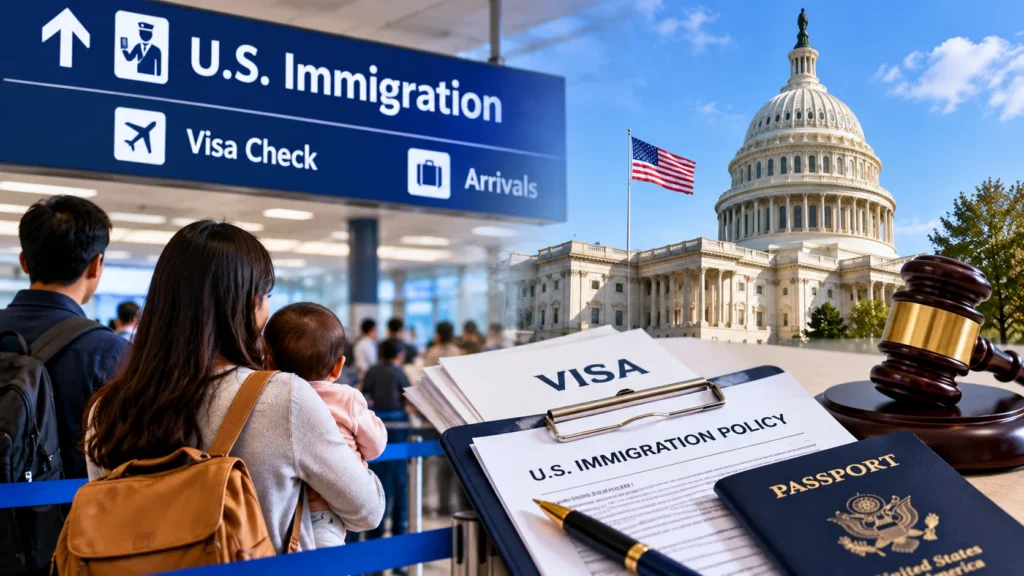
United States immigration enforcement agencies and state authorities have intensified regulatory measures surrounding temporary entry visas, focusing on commercial operations and visa misrepresentations associated with foreign nationals traveling to give birth on domestic soil.
While baseline non-immigrant visa regulations introduced in 2020 explicitly barred issuing tourist visas for the primary purpose of securing citizenship by birth, federal policy has shifted toward dismantling organized commercial networks, penalizing fraudulent application statements, and addressing citizenship eligibility frameworks.
The coordinated effort between immigration oversight bodies, federal law enforcement, and foreign diplomatic missions reflects a broader directive to preserve the integrity of national travel authorizations.
Evolution of Visa Oversight and Rebuttable Presumption Standards
Federal travel regulations dictate that visitor visa categories—specifically B1 business and B2 tourism visas—are reserved exclusively for temporary business, short-term recreation, or verified medical care. Under existing State Department guidelines, traveling to the country with the primary intent to deliver a child to obtain automatic citizenship is categorized as an impermissible use of a tourist visa.
Consular processing guidelines establish clear criteria for evaluating non-immigrant applications:
Rebuttable Presumption: If a consular official has reason to believe a applicant will give birth during their permitted stay, the applicant must demonstrate a legitimate primary purpose for travel unrelated to acquiring birthright citizenship.
Medical Care Verification: Applicants seeking legitimate medical treatment in connection with childbirth must prove that a domestic medical facility has formally agreed to provide care.
Financial Self-Sufficiency: Travelers seeking specialized medical care must present verified documentation showing sufficient lawful funds to cover all medical, lodging, and logistical costs without relying on public funding.
Mandatory Disclosure: Omitting pregnancy details or making false statements during consular interviews or border inspections constitutes willful misrepresentation, carrying severe legal consequences.
Federal enforcement emphasizes that non-disclosure or providing false justification during entry interviews creates long-term immigration penalties, including visa revocations and permanent travel bans.
Targeted Operations Against Commercial Birth Networks
Beyond individual traveler evaluations, federal authorities have centered compliance operations on commercial intermediaries, often referred to as “birth tourism agencies” or “maternity hotels”. These commercial enterprises often charge international clients substantial fees to arrange housing, medical care, legal services, and travel logistics.
Federal investigative agencies are targeting these commercial structures using several statutory mechanisms:
Fraud and Misrepresentation: Prosecuting intermediary agencies that coach foreign clients to falsify visa applications or deceive border patrol personnel regarding their travel intent.
Financial Crimes: Investigating commercial maternity operators for tax evasion, money laundering, and unbilled hospital debts incurred when foreign visitors default on medical payments.
Interagency Coordination: Tasking diplomatic missions and overseas embassies to flag organized commercial operations advertising foreign birth services.
Port-of-Entry Reviews: Homeland Security personnel at major international airports maintain authority to deny entry to foreign travelers found to have provided false information during travel authorization checks.
Official statements confirm that commercializing citizenship processes through organized birth travel violates federal immigration statutes.
Legal Context Surrounding Birthright Citizenship Frameworks
Discussions surrounding international travel for birth purposes remain tied to the constitutional doctrine of birthright citizenship under the Fourteenth Amendment. The constitutional provision guarantees that individuals born within domestic territory and subject to national jurisdiction are citizens at birth.
While legislative proposals and executive orders have sought to narrow how birthright citizenship applies to non-citizens present on temporary visas or without lawful status, structural alterations to the Fourteenth Amendment remain subject to federal judicial review and statutory interpretation.
The continuing expansion of border compliance checks, consular reviews, and commercial task forces underlines a sustained national strategy to enforce visa regulations and eliminate unauthorized commercial birth travel practices.
For more travel news like this, keep reading Global Travel Wire