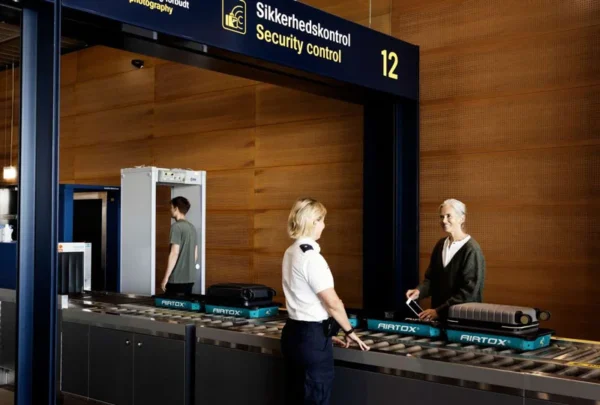
Additional security checks at Copenhagen Airport are putting departure plans under pressure, with longer queues complicating journeys through Denmark’s major gateway. For travellers, the disruption raises practical concerns about reaching boarding gates, maintaining connections and protecting holiday arrangements.
The screening changes follow regulatory oversight by the Danish Civil Aviation and Railway Authority, known as Trafikstyrelsen. However, detailed claims about inspection failures and specific screening procedures remain insufficiently established.
The immediate tourism concern is the time passengers need to complete their airport journey. Longer processing can affect travellers even when flights remain scheduled.
Screening Queues Complicate Airport Departures
Additional baggage inspections can slow passenger movement when screening capacity struggles to match the number of people arriving.
For passengers, the consequences extend beyond the security checkpoint. Time spent waiting reduces the margin available for reaching distant gates.
Travellers must also distinguish between departure times and boarding deadlines. Arriving before an aircraft’s scheduled departure does not guarantee admission to the flight.
Likewise, completing check-in does not mean every remaining airport procedure will be quick. Baggage drop, security and passport controls involve separate stages.
Passengers should follow current airport and airline instructions rather than assume previous processing times will apply.
Connecting Holidays Face Greater Uncertainty
A delayed journey through security can create difficulties for passengers whose first flight feeds into another departure.
The impact depends on whether they reach the gate, the connection interval and the available alternatives if they miss their flight.
A lengthy queue does not automatically produce a missed onward service. Nevertheless, it can remove the flexibility built into a carefully planned itinerary.
For holidaymakers, potential consequences include revised transfers, later hotel arrivals and changes to booked activities.
Travellers using separate tickets should pay particular attention to how their arrangements fit together. Each booking may carry different amendment conditions.
Denmark Tourism Businesses Monitor Travel Friction
Reliable airport access forms part of the visitor experience, alongside accommodation, attractions and local transport.
Departure uncertainty can shorten a traveller’s final day in Denmark if they decide to leave more time for airport procedures.
Hotels and transfer operators may receive requests to adjust departure arrangements. Tour providers could also face changes from customers with limited flexibility.
These possibilities describe how disruption can spread through a holiday. They do not establish a measured decline in Denmark’s tourism performance.
No verified financial estimate in the provided information quantifies losses for hotels, attractions or other visitor businesses.
The commercial priority is clear communication that helps customers make timely decisions.
International Comparisons Require Careful Distinction
The Copenhagen situation does not, by itself, establish a coordinated security change across several countries.
The supplied account also discusses the United Kingdom, Germany, Thailand and the United States. However, their screening systems involve different authorities and procedures.
Changes to liquid restrictions, equipment requirements and inspection practices need separate confirmation for each airport.
Travellers should therefore avoid assuming that instructions at one departure point apply throughout an international itinerary.
This matters particularly when a return journey begins elsewhere or a transfer requires another security check.
Checking the requirements for each relevant airport offers a more useful approach than relying on broad descriptions of global disruption.
Practical Preparation Can Reduce Confusion
Passengers should review current departure guidance before leaving their accommodation and monitor airline notifications throughout their journey.
They should allow time for reaching the airport, locating check-in facilities and completing the procedures relevant to their destination.
Cabin baggage should remain organised so that requested items are accessible. Travellers should follow the instructions given at their screening lane.
Moving every electronic device into checked baggage is not a suitable general response. Item-specific baggage restrictions still require attention.
Families and passengers requiring assistance should confirm arrangements beforehand and communicate any difficulty managing prolonged waits.
Missed Departures Need Prompt Follow-Up
Anyone unable to reach a flight should contact the airline promptly to establish the options available.
Keeping booking confirmations, relevant notifications and receipts can help explain the circumstances when requesting assistance or reviewing a claim.
Passengers should also contact accommodation and transport providers when their arrival plans change.
Rebooking, reimbursement and insurance arrangements depend on individual circumstances and booking conditions. Blanket promises about coverage would be unreliable.
For travellers using Copenhagen Airport, preparation centres on checking current instructions and preserving realistic time between each stage.
The wider tourism challenge is maintaining confidence while helping visitors navigate a journey whose airport processing time may be less predictable.
For more travel news like this, keep reading Global Travel Wire