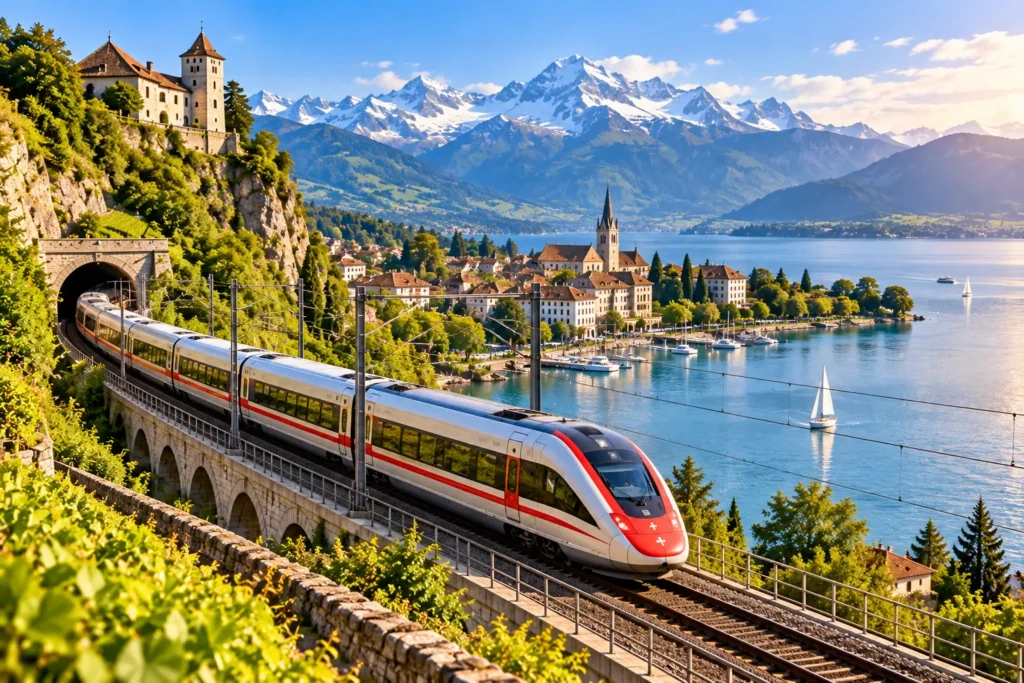
The long-term development of European cross-border rail tourism is facing a defining operational test as transport authorities, infrastructure managers, and operators grapple with the delivery of unified rail signalling frameworks across the continent. Official transport policy assessments from European governing bodies emphasize that shifting international leisure journeys away from congested road corridors and short-haul flights depends directly on high-capacity, dependable rail networks. Central to this continental ambition is the complete deployment of the European Rail Traffic Management System, an intergovernmental digital standard engineered to replace fragmented national legacy systems with a single interoperable command and safety protocol.
While European regional tourism boards and environmental ministries have highlighted international passenger trains as the cornerstone of low-carbon holidays, operational rollouts continue to encounter substantial delivery frictions. Rising implementation expenses, scheduling postponements, and divided jurisdictional accountability between track authorities, rolling stock owners, and equipment manufacturers have slowed the pace of network-wide deployment. Transportation analysts and policy observers point out that establishing decisive administrative co-ordination and institutional direction will be essential to turn this technical rail programme into an achievable, pan-European passenger benefit.
Fragmented Signalling and the Challenge for Continental Leisure Travel
Historically, international train voyages across Europe have been constrained by divergent national operating environments. The continental network developed over decades with dozens of distinct national train protection and signalling systems, necessitating expensive adaptations for locomotives traversing sovereign borders. Cross-border tourist services linking premier cultural destinations have often required specialized rolling stock fitted with multiple legacy onboard control systems, creating operational bottlenecks, vehicle shortages, and inflated ticket costs for leisure travelers.
The European Rail Traffic Management System was conceived by public transport directorates to eliminate these systemic barriers. By standardizing continuous speed supervision via the European Train Control System and integrating digital communications, trains can cross borders without stopping to change locomotives or operational crews. For international holidaymakers, this transition promises shorter journey times, heightened departure frequencies, and direct overnight connections linking northern and southern European tourism centers.
Yet, the deployment path has proven complex. Trackside installation timelines differ considerably across Member States, creating inconsistent segments where modernized track encounters obsolete legacy lines. Transport ministries face the financial challenge of equipping hundreds of thousands of route kilometers while train operators navigate high capital expenditures to retrofit passenger carriages. Without synchronized timelines, passenger operators struggle to unlock the promised capacity improvements, leaving cross-border vacationers to contend with service delays, substituted routes, and limited timetable flexibility during peak holiday periods.
Unlocking Capacity for High-Speed and Sleeper Rail Corridors
The successful delivery of synchronized signalling is intrinsically linked to the revival of long-distance passenger travel and night train networks. Tourism agencies report sustained consumer demand for scenic, climate-friendly overland journeys connecting major historic capitals with alpine regions, Mediterranean coasts, and regional heritage sites. However, operating international passenger routes on mixed-traffic lines requires high precision and real-time operational reliability.
Modern digital signalling increases line capacity without requiring the physical construction of new track beds, allowing passenger services to run with tighter, safer headway intervals. This expanded capacity is vital for welcoming independent travelers, cultural tour groups, and seasonal vacationers during high-traffic summer and winter getaway seasons. When fully unified, automated speed supervision and coordinated scheduling ensure that high-speed holiday charters and trans-European night trains operate with consistent punctuality, cementing consumer trust in rail as a dependable alternative to point-to-point aviation.
Moreover, interoperable standards lower the barriers for new open-access operators to introduce competitive, budget-conscious passenger routes. By reducing the regulatory burden and technical equipment costs associated with national homologation, public transport authorities aim to foster an open rail marketplace where diverse travel providers can introduce direct regional holiday links, expanding affordable tourism access to secondary towns and rural destinations.
Stronger Governance and Unified Financial Commitments
Resolving the delivery backlog demands closer alignment between public transport ministries, rail safety regulators, and infrastructure providers. European institutions continue to channel substantial grant mechanisms and recovery funding toward key trans-European transport corridors to support both trackside infrastructure and onboard vehicle retrofits.
Transport strategists emphasize that financial investment must be paired with streamlined oversight. Establishing clear, enforceable deadlines for trackside conversions and harmonizing vehicle authorization procedures through centralized regulatory authorities like the European Union Agency for Railways are identified as critical measures. By removing administrative hurdles and standardizing industrial supply contracts, transport authorities can lower procurement expenses and accelerate delivery timetables.
Decisive leadership across national borders is required to ensure that regional infrastructure plans align with broader international transport corridors. Rather than treating signalling upgrades as isolated engineering obligations, government bodies are urged to view the program as a comprehensive economic enabler that directly supports regional hospitality, cultural exchange, and sustainable regional development.
Shaping the Future of Sustainable European Exploration
The trajectory of European visitor mobility rests on building seamless, integrated ground transport. With travelers actively pursuing sustainable itineraries that minimize ecological impacts, the passenger railway represents Europe’s most effective vehicle for broad economic and geographic visitor dispersal.
Achieving this continental vision requires moving beyond fragmented technical solutions. By coordinating regulatory standards, unifying financing commitments, and prioritizing network-wide delivery, public authorities have the opportunity to transform rail into an agile, borderless transit web. For millions of international visitors seeking to experience Europe’s diverse cultural and natural landscapes, the successful implementation of modern signalling will transform sustainable, border-free rail travel from an intermittent luxury into an everyday reality.
For more travel news like this, keep reading Global Travel Wire