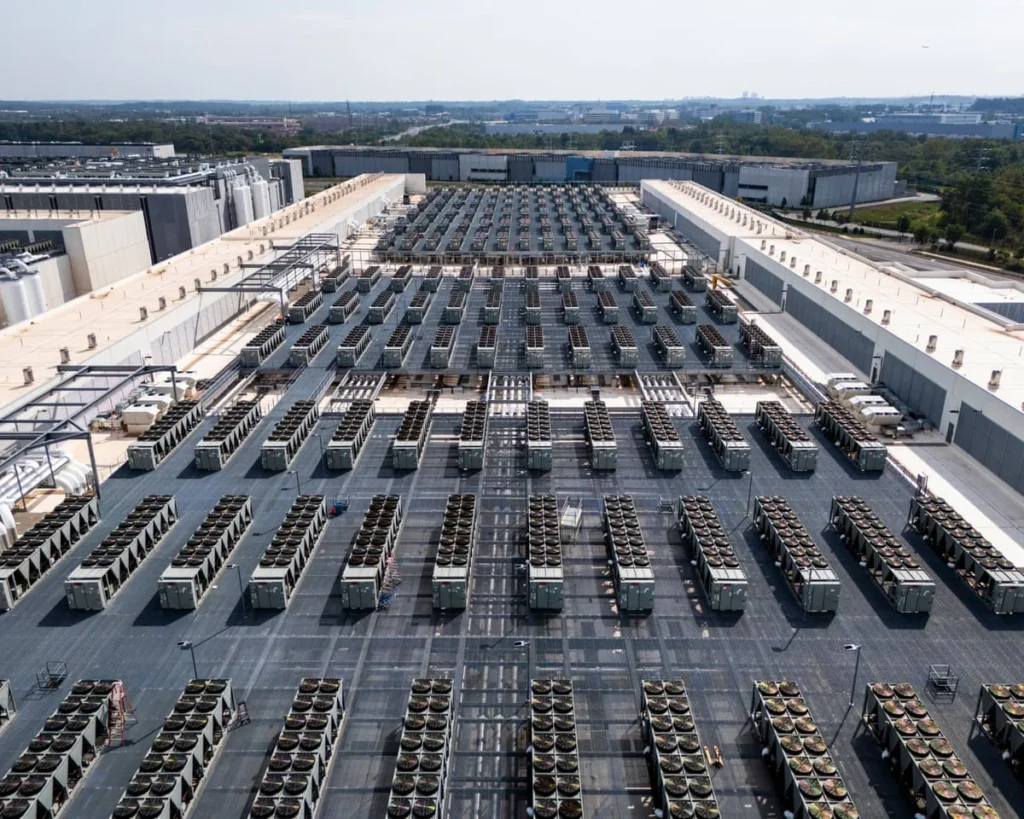
America’s expanding data centre footprint is bringing potential business travel opportunities to communities beyond established technology hubs. Virginia leads the facility listings supplied for this analysis, while Wyoming, Iowa and Oregon feature prominently when population is considered.
For hotels, transport providers and restaurants, the opportunity lies in journeys associated with construction, engineering and specialist services. However, the rankings do not measure visitor spending, room bookings or tourism employment.
The distinction matters as communities assess whether digital infrastructure investment could support their local hospitality economies. Construction activity can generate travel requirements, but completed facilities may sustain a substantially smaller workforce.
Virginia Leads Listings While Smaller States Stand Out
The supplied September 2026 directory snapshot places Virginia first with 674 listed facilities, followed by Texas with 537 and California with 296.
These figures include operating, planned, under-construction and land-banked locations. They therefore describe a development footprint rather than a count of functioning data centres.
Virginia also leads the population-adjusted comparison, recording 7.59 listings per 100,000 residents. Wyoming follows with 31 facilities and a rate of 5.27.
Iowa ranks third by density, with 116 listings and 3.58 facilities per 100,000 residents. Oregon follows with 135 listings and a rate of 3.16.
These supplied rankings have not been independently verified against the underlying directory. They offer context for examining regional opportunities, rather than an official infrastructure census.
Construction Offers the Clearest Economic Connection
Virginia’s Joint Legislative Audit and Review Commission provides an official basis for understanding how data centre investment affects local economies.
Its December 2024 assessment found that the industry’s principal economic benefits arise during initial construction. Building projects support substantially more workers than ongoing facility operations.
Industry representatives told the commission that an individual building typically takes approximately 12 to 18 months to construct. At peak activity, around 1,500 workers may be onsite.
By comparison, a typical 250,000-square-foot operating facility may employ approximately 50 full-time workers, including contractors.
These examples are not universal project forecasts. Nevertheless, they explain why hospitality businesses should distinguish temporary construction demand from longer-term operating requirements.
Hotels Could Benefit From Visiting Specialists
Large infrastructure developments can involve travelling engineers, equipment suppliers, consultants and construction specialists. Where those workers come from outside the area, projects could create demand for temporary accommodation.
Extended-stay hotels, serviced accommodation and vehicle rental providers may find opportunities linked to individual developments. Restaurants and local transport businesses could also serve visiting teams.
However, workforce numbers alone cannot establish hotel demand. Some employees may live locally, commute from neighbouring communities or use accommodation arranged through contractors.
Hospitality operators should therefore examine project schedules, workforce origins and purchasing arrangements before committing additional capacity.
Confirmed bookings and contractor agreements provide stronger commercial evidence than statewide facility rankings.
Smaller Markets Require Careful Demand Assessment
Wyoming’s high population-adjusted position illustrates how smaller states can feature prominently despite relatively modest facility totals.
However, density does not establish the scale of construction spending or the number of visiting workers. A listing may represent a future proposal rather than an active development.
Similarly, Iowa’s position ahead of Oregon by population-adjusted concentration does not demonstrate greater hotel demand or business travel expenditure.
For destination organisations, the useful question concerns specific projects approaching construction or expansion. Local accommodation supply, transport access and distance from worksites will influence potential benefits.
Business travel opportunities should consequently be assessed at community level, alongside existing leisure tourism and other corporate demand.
Electricity Planning Shapes Development Prospects
Power availability remains central to data centre development and the timing of associated investment.
The US Energy Information Administration reported new summer electricity demand records across PJM, ERCOT and Southwest Power Pool in October 2026.
Those records should not be attributed solely to data centres. Summer temperatures and other electricity needs also influence peak demand.
Nevertheless, growing infrastructure requirements make generation and transmission planning relevant to future project delivery.
Facility counts cannot establish electricity consumption because buildings differ in size, computing capacity and operating status. Delays involving power connections could also change construction schedules and any related accommodation requirements.
Regional Hospitality Needs Project-Level Evidence
The US data centre boom creates a potential additional customer base for hospitality businesses across established and emerging markets.
However, infrastructure investment and tourism growth remain separate measures. Neither directory density nor a proposed development proves increased overnight stays.
For hotels and destination planners, the practical opportunity involves tracking confirmed projects, engaging contractors and matching services to documented travel needs. That approach can help communities capture business spending while avoiding assumptions about permanent demand.
For more travel news like this, keep reading Global Travel Wire