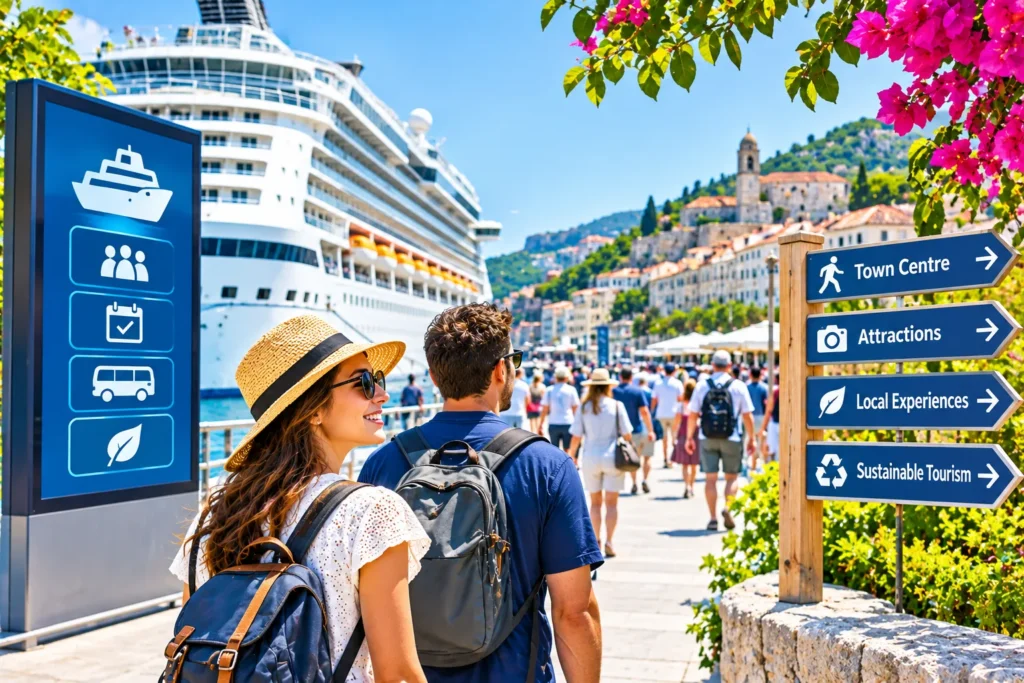
Global maritime tourism represents an intricate, interdependent mobility ecosystem where cruise ships, maritime terminals, municipal transit corridors, commercial districts, and local residential communities function as a single connected system. Across traditional coastal gateways, unchecked passenger concentration has demonstrated that isolated operational planning produces urban bottlenecking and community strain. In response, ministerial authorities, national port administrations, and official destination management organizations are restructuring their strategic policies. Official policy frameworks released by international and state tourism bodies confirm that sustainable visitor flow management has become an indispensable imperative, transforming how port cities regulate disembarkation, manage urban traffic, and distribute the economic benefits of maritime travel.
According to global monitoring releases from international tourism organizations and national maritime boards, ocean and river cruise itineraries are expanding rapidly across major maritime corridors. While historical benchmarks prioritized raw passenger headcounts as the single indicator of sector health, state tourism directors emphasize that uncoordinated visitor distribution imposes disproportionate pressure on physical municipal infrastructure. When mega-vessels dock simultaneously during peak operating windows, thousands of excursionists converge simultaneously upon narrow historic districts, municipal landmarks, and public transport systems. Consequently, official planning releases from maritime and municipal councils emphasize that destination health requires synchronized operational management connecting harbor masters, terminal operators, regional coach networks, and cultural site managers.
To address these spatial pressures, official government strategies are moving away from isolated port operations toward comprehensive digital flow monitoring. Port authorities across key coastal regions have introduced unified digital arrival dashboards and berthing allocation software. By coordinating ship arrival schedules, stagger-booking disembarkation windows, and capping simultaneous onshore passenger counts, municipal leaders are systematically smoothing passenger distribution throughout the operating day. Official releases from national tourism ministries emphasize that digital reservation systems for premier cultural monuments, historic churches, and national museums now integrate directly with shore excursion timetables, preventing overcrowding while securing a superior, safer visitor experience.
Regional distribution forms another central pillar of official tourism policies. Municipal destination releases note that traditional cruise calls frequently confine economic expenditure to a concentrated radius surrounding waterfront terminals, leaving surrounding inland districts bypassed. In counteracting this imbalance, regional transport departments and provincial tourism development agencies are investing directly in multi-modal transit corridors that seamlessly transfer arriving passengers from harbor docks to rural heritage circuits, agricultural estates, and secondary historic towns. By developing specialized rail links, electric feeder bus networks, and dedicated bicycle infrastructure, official transport strategies ensure that maritime tourism stimulates provincial hospitality providers, regional food growers, and family-owned artisans far beyond harbor perimeters.
Official statements from state maritime agencies also highlight modern regulatory mechanisms designed to align commercial cruise operations with civic carrying capacities. National and municipal administrations are implementing structural environmental standards, shore-to-ship clean electrical power connections, and rationalized port tariff structures that reward modern, sustainable vessels while penalizing peak-hour port congestion. In several major maritime jurisdictions, statutory port regulations now restrict daily passenger debarkations to established municipal carrying limits, ensuring that local services, waste management systems, and public spaces remain accessible and comfortable for resident populations.
In parallel with physical infrastructure, official tourism statistical agencies are transforming how the economic footprint of the cruise sector is measured. State economic assessments increasingly prioritize net regional yield, length of onshore stay, and local supply chain engagement over aggregate tourist arrivals. Official research demonstrates that when cruise operations procure provisions directly from domestic agricultural producers, contract verified local tour guides, and foster evening dining onshore through extended port stays, the return to local municipal economies increases significantly. Extending vessel docking times into late evening hours allows visitors to experience local performing arts, regional gastronomy, and retail markets, converting fleeting day excursions into high-value cultural immersion.
Public consultation frameworks published by municipal tourism boards reinforce that community participation is vital to the long-term viability of maritime travel. State guidelines require port operators and tourism planners to engage regularly with civic associations, business chambers, and neighborhood councils. By establishing permanent municipal liaison forums, port cities ensure that residents have direct oversight regarding waterfront zoning, pedestrian traffic management, and municipal heritage protection.
As maritime tourism continues its structured global expansion, official tourism and transport policies prove that the future of the sector depends upon unified, system-wide governance. By ending fragmented planning and establishing deep operational integration among port facilities, municipal logistics, cultural attractions, and local enterprise networks, coastal destinations are building a balanced model where maritime visitation generates enduring socio-economic value, preserves delicate urban heritage, and enhances the daily lives of host communities.
For more travel news like this, keep reading Global Travel Wire