The landscape of global air travel is preparing for its most significant structural shift as the United Arab Emirates prepares to consolidate its civil aviation operations. Dubai International Airport, which has served as a central global gateway since 1960, will permanently cease operations in 2035. According to official strategies outlines by Dubai Airports, all commercial flights will transition to Al Maktoum International Airport at Dubai World Central, establishing a singular, hyper-modern aviation hub designed to handle unprecedented passenger volumes.
Official performance data released by Dubai Airports indicates that the current gateway welcomed 95.2 million international guests in 2025, securing its position as the world’s busiest international hub. Despite this record-breaking performance, the physical footprint of the site is constrained by surrounding urban developments and arterial highways. The facility faces an absolute structural maximum capacity of approximately 114 million passengers annually. Rather than attempting minor, high-cost adjustments on a physically limited site, government leadership has committed to a complete infrastructure relocation to accommodate long-term tourism and logistics growth.
A Mega-Project Reimagining the Passenger Experience
The massive transition project operates under an approved budget of AED 128 billion (approximately $35 to $38 billion). The comprehensive master plan, endorsed by His Highness Sheikh Mohammed bin Rashid Al Maktoum, Vice President and Prime Minister of the UAE and Ruler of Dubai, dictates that the newly expanded Al Maktoum International Airport will eventually span 70 square kilometers. Upon reaching full operational capacity, the new aerotropolis will be five times larger than the current primary airport, utilizing five parallel runways and 400 aircraft gates to manage up to 260 million passengers every year.
Engineering blueprints managed by Dubai Aviation Engineering Projects show that development is advancing through a phased timeline. The initial phase focuses heavily on the construction of the West Terminal Building and Concourse 1. This initial phase will feature 100 contact gates and four integrated underground transport stations, providing an interim capacity for 150 million annual passengers by the time the initial transition phase commences in 2032. Subsequent phases will introduce Concourses 3 and 4 alongside the East Terminal, linked internally by an extensive 14-station automated people mover system designed to transfer passengers across terminals within 15 to 20 minutes.
Seamless Transit Integration Across the Emirates
The new aviation hub is designed to move away from legacy airport processes by integrating next-generation transit and security technologies. Leadership statements from Dubai Airports indicate that traditional manual check-in desks will be entirely replaced by biometric scanning and advanced frictionless passenger flow systems.
Ground transportation will be deeply integrated with national infrastructure. Passengers will have the ability to drop their luggage directly at regional Etihad Rail stations before boarding high-speed trains bound for the airport terminal. The national rail network will connect the airport precinct to major hubs across Abu Dhabi, Dubai, Sharjah, Ras Al Khaimah, Fujairah, and Al Ain, while cross-border connections will extend to Saudi Arabia and Oman via the upcoming Hafeet Rail project. Furthermore, the master plan includes a dedicated urban vertiport within the airport grounds to accommodate electric vertical take-off and landing aircraft, providing an advanced air taxi option for premium travelers looking to access key commercial zones.
Strategic Relocation of Flagship Carriers
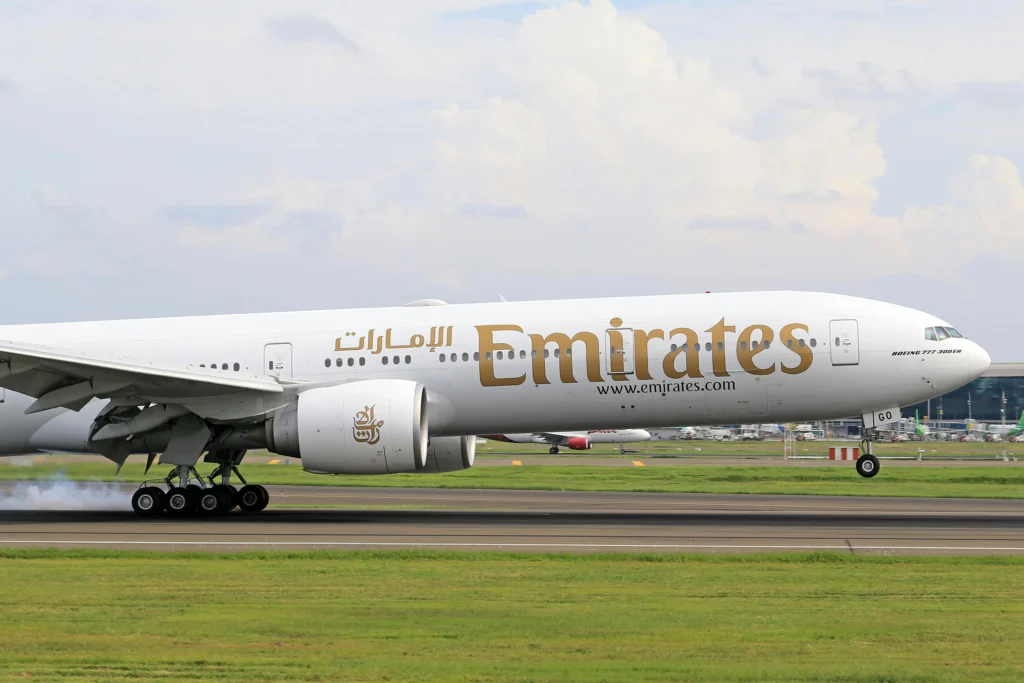
The planned transition will fundamentally alter operational environments for home-grown carriers and international airlines alike. Emirates, which carried more than 53 million passengers during its recent financial year, along with regional low-cost operator flydubai, will transfer their entire operational bases to the new facility.
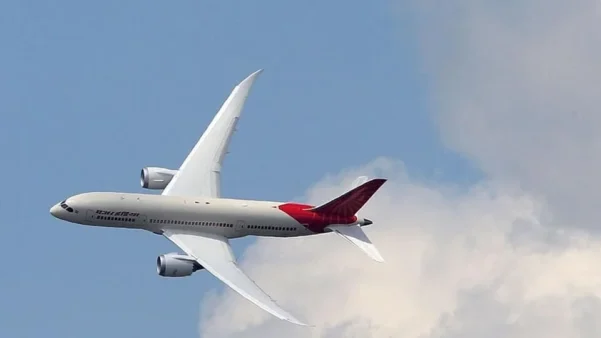
Major international operators—including Air India, British Airways, Saudia, and Pakistan International Airlines—will also shift their regional operations. The Dubai Civil Aviation Authority notes that the increased runway availability and expanded terminal spaces at the new site will grant these airlines operational flexibilities that are impossible to achieve within the congested airspace of the current facility.
Architectural Vision and Economic Impact
The architectural aesthetics for the massive terminal complex are being developed by Coop Himmelblau, with the concourse buildings alone encompassing a footprint of 2.3 million square meters. Beyond the immediate runways and terminals, the site forms the core of Dubai South, an integrated urban development designed to accommodate a residential and commercial workforce of over one million people. This specialized aerotropolis will host dedicated commercial free zones, retail developments, leisure attractions, and medical facilities.
His Highness Sheikh Ahmed bin Saeed Al Maktoum, President of the Dubai Civil Aviation Authority and Chairman of the Emirates Group, confirmed that Phase 1 of the facility is scheduled to accommodate 150 million passengers within the decade. The systematic consolidation of all international civil flights is expected to be finalized, bringing more than seven decades of aviation history at the original site to a calculated close.
Frequently Asked Questions
Why is the primary airport in Dubai transitioning to a new location?
The current site has reached its physical expansion limits due to surrounding highway systems and residential developments. Moving operations allows the emirate to build a purpose-designed hub capable of handling long-term passenger growth without spatial restrictions.
What is the projected passenger capacity of the new aviation facility?
Upon the completion of all construction phases, the new airport complex will feature five parallel runways capable of processing up to 260 million passengers and 12 million tonnes of cargo annually.
How will regional rail networks integrate with the new airport?
The facility will connect directly to the Etihad Rail network, allowing travelers to complete baggage check-in procedures at various domestic and international rail stations prior to arriving at the airport terminal.
When will commercial airlines begin moving their flights?
The initial transfer of flight services is scheduled to begin around 2032 as the current airport nears its maximum capacity threshold, with a complete operational consolidation finalized by the mid-2030s.
For more travel news like this, keep reading Global Travel Wire