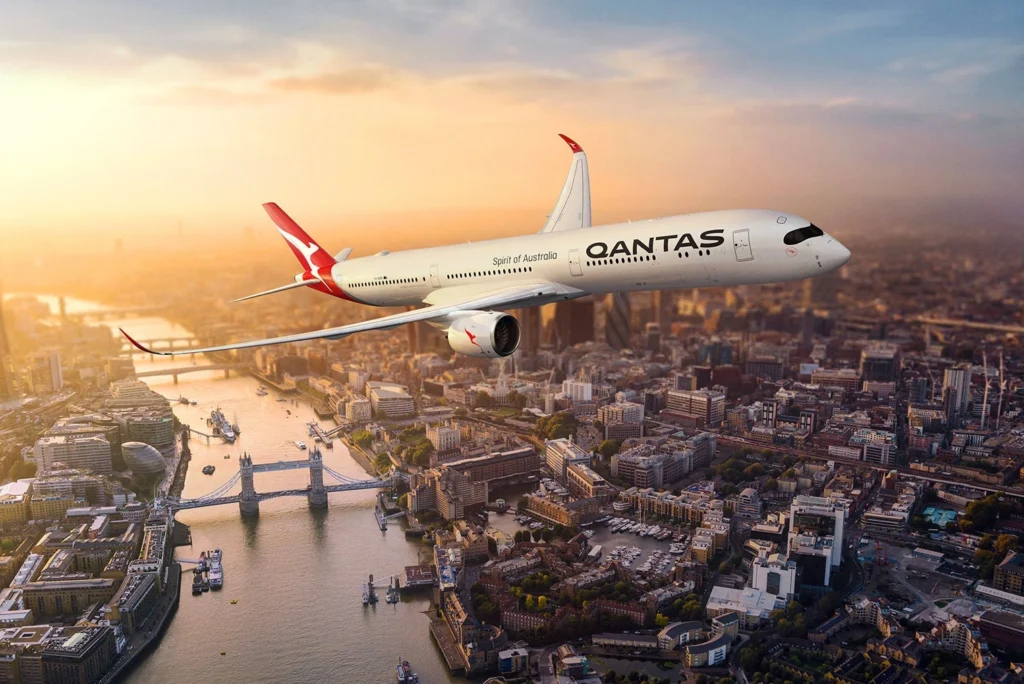
Qantas is preparing to transform international aviation with the launch of the first scheduled non-stop passenger flights between Sydney and London, bringing one of the world’s most ambitious air travel projects closer to reality.
The Australian carrier has confirmed that its Project Sunrise services are scheduled to begin in October 2027. The daily flights will eliminate the traditional stopover between Australia’s east coast and the United Kingdom, significantly changing the historic Kangaroo Route that has connected the two countries for generations.
Tickets are expected to go on sale in February 2027, opening a new booking window for business travelers, premium leisure passengers and international visitors seeking a more seamless journey between Australia and Europe.
The service will cover almost 17,000 kilometers and could remain airborne for close to 20 hours, depending on weather conditions and operational routing. It is expected to become the world’s longest scheduled passenger flight when operations begin.
A Direct Australia–Europe Link Years in Development
Qantas first introduced Project Sunrise in 2017 as part of its effort to overcome one of commercial aviation’s final major distance barriers.
Although the airline has successfully operated non-stop flights between Perth and London since 2018, flying directly from Sydney requires greater range, additional fuel capacity and more complex crew and aircraft planning.
Development was slowed by the COVID-19 pandemic, which disrupted global aircraft production, supply chains and airline investment. However, progress accelerated as Airbus advanced construction and testing of the specially designed aircraft.
The first Project Sunrise Airbus A350-1000ULR completed its maiden flight in June 2026, marking a major milestone toward certification, delivery and commercial operations.
Special Airbus Aircraft Makes the Journey Possible
Qantas has ordered 12 Airbus A350-1000ULR aircraft for Project Sunrise. The model has been adapted specifically for extremely long routes between eastern Australia and destinations including London and New York.
The aircraft incorporates additional fuel capacity, aerodynamic efficiency, advanced flight systems and dedicated crew-rest facilities. Its design allows Qantas to operate greater distances while maintaining the safety reserves and performance standards required for international commercial services.
Passenger capacity has been limited to 238 seats, giving the aircraft the lowest seating density of any Airbus A350 currently planned for commercial operation.
The reduced capacity provides more personal space while helping Qantas manage aircraft weight and fuel requirements. It also supports the airline’s strategy of attracting passengers who value time savings, comfort and direct access over lower-cost connecting journeys.
Cabin Designed Around Passenger Wellbeing
Qantas has placed passenger health and comfort at the center of the Project Sunrise cabin design.
The airline worked with researchers from the University of Sydney’s Charles Perkins Centre, alongside aviation specialists, designers and technology partners, to examine how extended flights affect sleep, hydration, movement and the body’s natural rhythms.
Cabin lighting will change throughout the journey to support rest and help passengers adjust to their destination time zone. Meal timing and onboard service patterns will also be coordinated to reduce disruption to sleep cycles.
A dedicated Wellbeing Zone will provide passengers with space to stretch, move and complete simple exercises during the flight. The area is designed to reduce stiffness and improve comfort during a journey lasting most of a full day.
First Class will include six enclosed suites arranged in a 1-1-1 configuration. Business, Premium Economy and Economy cabins will also feature designs developed specifically for long-duration travel.
Crew Planning Adds Another Operational Challenge
Operating close to 20 hours without landing requires more than an aircraft with additional range.
Multiple pilots and cabin crew members will rotate duties during the journey, using dedicated rest compartments between working periods. These arrangements must comply with strict fatigue-management and flight-time regulations.
Qantas will also need to coordinate aircraft maintenance, emergency planning, catering, airport operations and alternative routing options across a flight path extending between two distant continents.
Seasonal winds may affect travel time and fuel consumption, meaning each service will require detailed flight planning before departure.
Tourism and Business Travel Could Benefit
The non-stop Sydney–London service is expected to strengthen tourism and commercial links between Australia, the United Kingdom and wider Europe.
Removing an intermediate stop could make Australia more attractive to European visitors concerned about complex connections and extended airport transit times. Australian travelers will similarly gain a simpler route to London, with onward access to destinations throughout Britain and continental Europe.
The flights could support demand for Australian hotels, attractions, tours and domestic aviation by improving the international visitor journey. London’s tourism, hospitality and business sectors may also benefit from more convenient access to the Australian market.
Corporate passengers are expected to form an important part of demand, particularly among travelers who place a high value on shorter elapsed travel times and uninterrupted journeys.
A New Era for the Kangaroo Route
For decades, flights between Australia and Europe have relied on stops in destinations such as Singapore, Bangkok, Dubai and Doha.
Project Sunrise will not replace every connecting itinerary, but it will create an entirely new premium travel option for passengers prioritizing speed and convenience.
The service also demonstrates how aircraft engineering, sleep research, cabin innovation and international regulation are reshaping long-distance aviation.
Once the final aircraft testing, crew preparation and regulatory approvals are completed, Qantas Project Sunrise will move from an ambitious concept to a scheduled daily service. Its launch in October 2027 will mark a defining moment for global connectivity and bring Australia and Europe closer than ever before.
For more travel news like this, keep reading Global Travel Wire