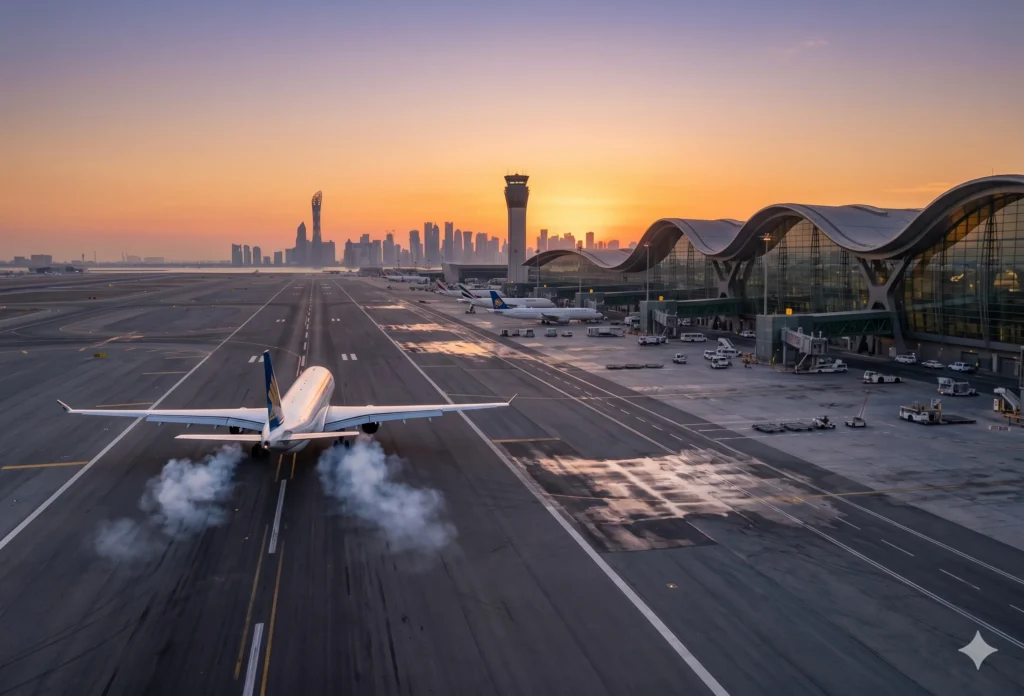
The horizon over Doha is looking significantly busier this week as the Qatar Civil Aviation Authority (QCAA) officially initiated a phased restoration of international flight operations. This landmark decision marks the end of a restrictive period for the nation’s airspace, signaling a robust return to form for one of the world’s most critical transit hubs. For travelers, expatriates, and the global tourism industry, the “gradual resumption” of foreign carrier services at Hamad International Airport (HIA) represents a pivotal shift toward regional stability and renewed connectivity.
Following a period of redirected traffic and restricted access primarily limited to the national flag carrier, the QCAA’s latest Notice to Airmen (NOTAM) provides the green light for foreign technical and commercial operators to reintegrate Doha into their networks. This move is not merely a logistical update; it is a calculated step by the Qatari government to reaffirm its position as a leading destination for international business and leisure travel.
A Data-Driven Return to the Skies
The decision to reopen the gates to foreign airlines was not made in haste. According to official statements from the QCAA, the resumption follows a “comprehensive assessment of the situation,” with a primary focus on the safety and security of the Qatari flight information region. By prioritizing a “gradual” approach, authorities are ensuring that the influx of international traffic meets the rigorous safety standards that have historically earned Hamad International Airport its numerous “World’s Best Airport” accolades.
Official tourism statistics previously highlighted a surge in visitor arrivals during the first quarter of the year, a momentum that was temporarily cooled by necessary airspace closures. With the re-entry of global carriers, the Qatar Tourism board anticipates a rapid recovery in visitor numbers. The diversification of airlines landing in Doha means more competitive pricing, increased frequency of flights from Europe, Asia, and the Americas, and a smoother experience for transit passengers connecting through the Gulf.
Enhancing the Qatar Tourism Experience
The reopening comes at a strategic time for Qatar Tourism. The nation has been investing heavily in its “Vision 2030” goals, which aim to position the country as a world-class cultural and sporting destination. With foreign airlines returning, the accessibility of Qatar’s premier attractions is once again seamless.
Visitors can look forward to exploring the Museum of Islamic Art, the winding corridors of Souq Waqif, and the ultra-modern architecture of Lusail City without the hurdles of limited flight options. The Ministry of Transport has emphasized that the infrastructure at Hamad International Airport is fully prepared to handle the increased capacity. The airport’s recent expansions, including the lush indoor tropical garden known as “The Orchard,” are designed to accommodate millions of passengers with an emphasis on tranquility and efficiency.
Strengthening Global Connectivity
Qatar’s geography makes it a natural bridge between the East and the West. The absence of foreign carriers was felt throughout the global aviation supply chain, impacting everything from cargo logistics to multi-city vacation bookings. By welcoming back international partners, Qatar is restoring a vital link in the global travel ecosystem.
Government announcements indicate that the resumption will happen in stages. Initial phases will likely see the return of major regional partners and long-haul carriers that maintain bilateral aviation agreements with the State of Qatar. This systematic rollout allows air traffic control and ground handling services to scale operations safely while maintaining the high service standards passengers expect in Doha.
Economic Impact and Future Outlook
The aviation sector is a cornerstone of the Qatari economy. Beyond the direct revenue from landing fees and airport services, the presence of foreign airlines fuels the hospitality and retail sectors. Official ministry statements suggest that the reopening will provide a significant boost to the local economy, particularly for luxury hotels and the burgeoning MICE (Meetings, Incentives, Conferences, and Exhibitions) industry.
As foreign jets once again touch down on the runways of Hamad International, the message from the QCAA is clear: Qatar is open, safe, and ready to host the world. The gradual nature of the reopening ensures that every flight is monitored with the highest level of scrutiny, maintaining the integrity of the nation’s borders while embracing the spirit of international cooperation.
For the global traveler, this update is an invitation to rediscover the unique blend of tradition and modernity that defines the Qatari experience. Whether it is a stopover in a world-class lounge or a week-long exploration of the desert dunes and coastal resorts, the return of international airlines makes reaching the heart of the Gulf easier than ever.
As the QCAA continues to monitor regional developments, the aviation community remains optimistic that this phased reopening will lead to a full restoration of pre-interruption flight volumes. The skies above Doha are clearing, and with them, the path to a vibrant, interconnected future for Qatar tourism is more certain than ever. Stay tuned to official government channels for further updates on specific airline schedules and travel requirements as the resumption progresses.
For more travel news like this, keep reading Global Travel Wire