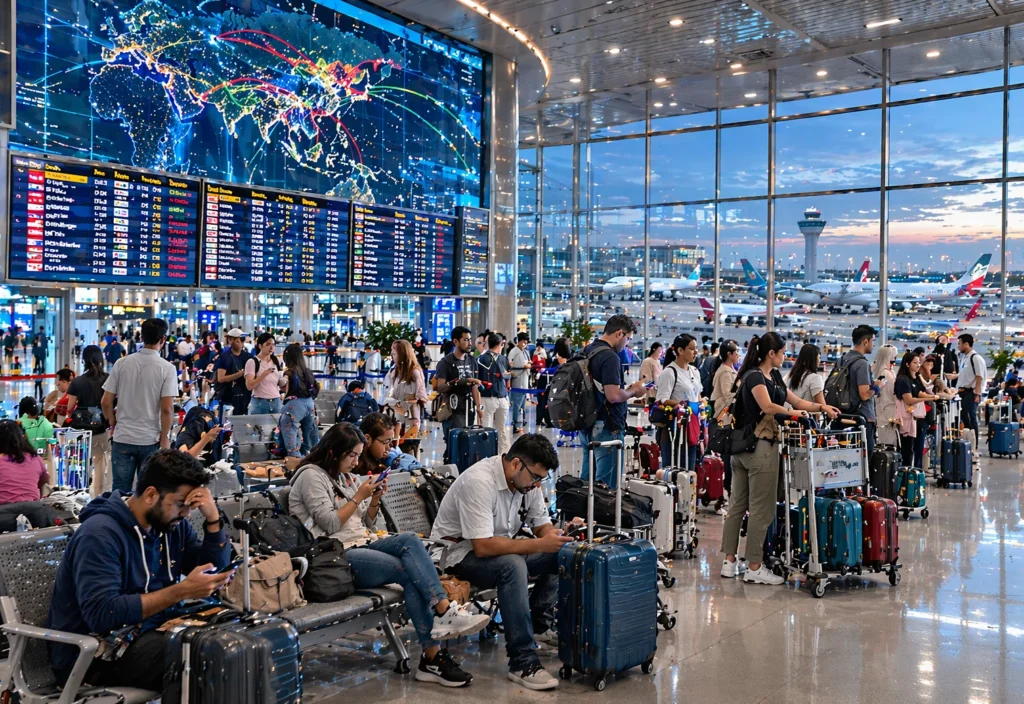
Air travellers across Asia are facing widespread disruption as airspace restrictions linked to Middle East tensions continue to affect schedules, connections, and airport operations. Major gateways including Mumbai, Delhi, Singapore, Bangkok, and other leading hubs are reporting delays, rerouting pressures, and cancellations that are impacting both leisure and business passengers.
The latest wave of disruption highlights how closely connected global aviation networks have become. When critical international corridors are restricted, the impact quickly spreads far beyond the affected region, creating delays across multiple countries and travel markets.
For tourism destinations across Asia, the situation comes during an important travel period when families, holidaymakers, and business travellers are moving across the region in high numbers.
Why Airspace Closures Affect Asia So Quickly
Many flights operating from Asia to Europe, the Middle East, and Africa depend on efficient westbound air corridors. When portions of that airspace become restricted, airlines must redesign routes in real time.
These changes often require longer flight paths, additional fuel planning, altered crew schedules, and revised aircraft rotations. Even if only a limited number of flights are directly affected, the knock-on effect can disrupt dozens of later services.
Aircraft arriving late may delay onward departures. Crews reaching duty time limits may need replacement. Passengers missing connections create rebooking pressure across networks.
This is why one regional airspace issue can rapidly become a wider operational challenge across Asia.
India’s Major Airports Under Pressure
India’s busiest international airports, especially Mumbai and Delhi, are among the most closely watched during the current disruption period.
Both cities are major hubs for travel between Asia, Europe, the Gulf, and North America. When westbound services face delays or route changes, schedules in these airports can tighten quickly.
Passengers have reported longer waiting times, schedule changes, and revised departure slots as airlines adjust operations. Tourism traffic is especially sensitive during these periods, as many travellers are connecting onward to holidays, family visits, and international business trips.
Airlines continue advising passengers to check flight status before leaving for the airport and to allow extra time for check-in and security processing.
Southeast Asia Feels the Ripple Effect
The disruption is not limited to South Asia. Leading airports in Southeast Asia, including Singapore and Bangkok, are also affected by schedule adjustments and connection pressure.
These hubs serve as major interchange points for travellers moving between Asia-Pacific destinations and the rest of the world. When inbound aircraft arrive late or routes are modified, onward flights may be delayed to accommodate connecting passengers and crew changes.
For tourists, this can mean longer layovers, revised itineraries, or overnight stops that were not originally planned.
Despite the challenges, airport authorities and airlines continue working to maintain services and reduce disruption wherever possible.
Impact on Tourism Across the Region
Tourism economies depend heavily on predictable air access. Delays and cancellations can affect hotel bookings, tours, cruises, transfers, and event schedules.
Holidaymakers may postpone trips, switch destinations, or choose alternate travel dates when uncertainty increases. Travel advisors say flexible bookings and travel insurance are especially valuable during periods of operational instability.
Destinations that rely on connecting traffic through major hubs may also see temporary booking shifts as passengers choose more direct routes or wait for schedules to stabilise.
However, strong demand for travel across Asia remains an encouraging factor. Many travellers are still willing to adjust plans rather than cancel holidays entirely.
How Airlines Are Responding
Airlines across the region are using several strategies to manage the current environment:
They are adjusting departure times to align with revised airspace access.
They are deploying larger aircraft on selected routes to recover lost capacity.
They are offering rebooking options and travel waivers on affected sectors.
They are increasing customer notifications through apps and digital channels.
They are reviewing alternate hub connections where possible.
While these measures cannot remove all disruption, they help reduce uncertainty and support passengers during rapidly changing conditions.
Advice for Travellers
Passengers flying in the coming days and weeks can reduce stress by preparing early.
Check flight status directly with your airline before leaving for the airport.
Keep notifications enabled on airline apps.
Arrive earlier than usual at major hubs.
Carry essential items in hand luggage in case of delays.
Allow extra time for connections.
Choose flexible fares when possible.
Review travel insurance coverage for disruptions.
Travellers with important onward plans such as cruises, weddings, or major events may benefit from building extra buffer time into itineraries.
Long-Term Lessons for Global Aviation
The current situation also reminds the travel industry of the importance of resilient route networks and diversified hub options.
As global travel demand grows, airlines and airports increasingly need systems that can adapt quickly to weather events, geopolitical developments, and operational restrictions.
Investments in smarter scheduling, digital passenger communication, and flexible fleet planning are becoming more important than ever.
For tourism boards and destinations, maintaining strong links with multiple airline partners can also help reduce dependency on any single corridor or hub.
Looking Ahead
Recovery will depend largely on how quickly normal airspace access returns and how efficiently airlines can rebuild schedules. Some disruptions may ease gradually, while others could continue as networks rebalance.
Even so, Asia remains one of the world’s most dynamic travel markets, with strong demand, expanding tourism sectors, and world-class airport infrastructure.
While current challenges are causing inconvenience, the region’s long-term travel outlook remains positive. For now, informed planning and flexible travel choices are the best tools for passengers navigating the latest phase of Asia flight chaos.