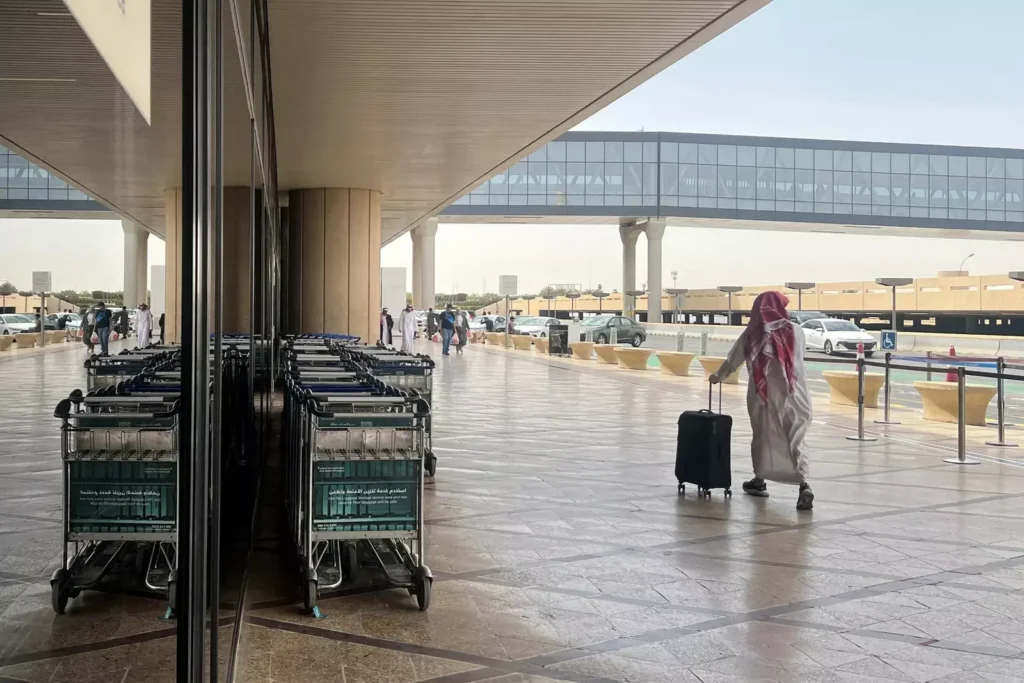
King Khalid International Airport in Riyadh is reopening designated terminals from Sunday, October 25, following major disruption earlier this month. The move creates a pathway towards restoring connections serving Saudi Arabia’s capital and its wider tourism economy.
Under the announced arrangements, Terminal 1 will handle domestic flights. Terminal 2 will accommodate international services operated by Saudi national carriers.
The Riyadh airport reopening marks an important operational step. However, passengers should confirm individual flights before travelling, as terminal availability does not guarantee that every airline has resumed services.
For hotels, tour operators and business visitors, the immediate priority is reliable access. Recovery will depend on operating schedules, available seats and passengers’ ability to complete connecting journeys.
Terminal Changes Shape the Initial Recovery
The revised terminal arrangements give travellers a clearer starting point when planning departures and arrivals during the recovery period.
Domestic passengers will use Terminal 1, while international travellers flying with national carriers should check their booking details for Terminal 2.
These allocations do not establish a universal restart date for foreign airlines. Passengers using other operators will need confirmation directly from their carrier.
Likewise, an existing reservation should not replace a current flight check. Airlines may adjust departure times, routing or booking arrangements as operating conditions change.
Travellers arranging airport transfers should also verify their terminal before departure. Clear coordination between airlines, transport providers and accommodation businesses can help reduce avoidable confusion.
Safety Checks Remain Central to Operations
The airport’s disruption followed attacks earlier in October. Saudi aviation authorities subsequently extended the operational suspension while teams assessed damage and checked airport facilities.
Those inspections placed passenger safety and operational readiness at the centre of the recovery process.
The reopening therefore represents a stage in restoring airport access. It does not, by itself, establish that the entire network has returned to its previous capacity.
Claims of unrestricted domestic operations, complete airline restoration or guaranteed security would require further confirmation.
For visitors, the practical distinction matters. A functioning terminal supports travel, but each journey still depends on an operating flight and confirmed onward arrangements.
Tourism Businesses Look Towards Restored Access
Riyadh’s hospitality sector benefits from air connections carrying leisure visitors, business travellers and people attending meetings and exhibitions.
Disrupted access can complicate hotel stays, airport transfers, guided excursions and event attendance. Restored flights can help businesses accommodate postponed journeys and reconnect with prospective guests.
However, the scale of any tourism recovery remains uncertain. The reopening announcement does not establish an immediate increase in arrivals, hotel occupancy or visitor spending.
Hotels and travel companies can support returning customers through accurate arrival information and clear communication about booking changes.
For international visitors, confidence will depend partly on predictable journeys. Consistent flight operations and timely updates will therefore matter alongside the reopening itself.
Domestic Flights Support Wider Saudi Itineraries
Riyadh also serves travellers combining the capital with other Saudi destinations. Domestic connectivity can support itineraries involving heritage attractions, mountain destinations and coastal holidays.
Visitors planning journeys towards AlUla, Asir or the Red Sea should verify every flight sector separately. An available international arrival does not automatically secure a domestic connection.
Tour operators may also need to reconsider transfer windows when rebuilding disrupted itineraries. Longer connections can offer flexibility where schedules remain subject to adjustment.
The tourism benefit extends beyond airport activity. Completed journeys can generate spending across accommodation, restaurants, transport services and attractions.
Nevertheless, those benefits depend on passengers reaching their destinations and maintaining their planned stays.
Aviation Recovery Matters for Vision 2030
Saudi Arabia’s wider development strategy places aviation and tourism among the drivers of economic diversification.
National ambitions include accommodating 330 million air passengers annually and attracting 150 million domestic and international tourism visits by 2030.
These figures describe different measures. Passenger throughput includes aviation movements, while tourism visits track travel activity across the visitor economy.
Riyadh’s connectivity supports these ambitions by linking the capital with domestic destinations and overseas markets.
However, the current reopening cannot establish whether disruption will affect longer-term targets. That assessment will require subsequent traffic figures, airline capacity information and tourism performance data.
Travellers Await Broader Schedule Certainty
The next phase will depend on airlines confirming services and passengers receiving dependable information about their bookings.
Travellers should check flight status, terminal assignments and onward connections before leaving for the airport. Those with disrupted reservations should also confirm applicable rebooking or refund arrangements.
For Saudi tourism, the reopening provides an opportunity to rebuild access after a difficult interruption. Its lasting value will emerge through sustained operations, completed journeys and the gradual restoration of visitor confidence.
For more travel news like this, keep reading Global Travel Wire