Major U.S. airlines are preparing to introduce a new numbered boarding system from April 2026, replacing traditional lettered boarding groups with a simpler format designed to speed up boarding and reduce confusion for domestic and international travelers. The shift, involving carriers such as JetBlue, United, Delta, American and Southwest, is expected to improve the airport experience for passengers arriving from key markets including Mexico, Canada, France, Germany, Brazil, Costa Rica, Italy and many more.
The change reflects a broader airline industry push to modernize passenger journeys and remove friction points that can create stress before departure. Boarding remains one of the most visible and sometimes chaotic parts of air travel, especially for infrequent flyers or travelers unfamiliar with airline-specific systems. By moving to clearly numbered groups, airlines aim to create a process that is easier to understand at a glance.
What Is Changing in 2026
For decades, many U.S. airlines have used branded or lettered groups such as Group A, Group B or other variations to organize passengers entering the aircraft. While familiar to frequent domestic flyers, these systems can be unclear for first-time travelers, foreign visitors and passengers connecting through large U.S. hubs.
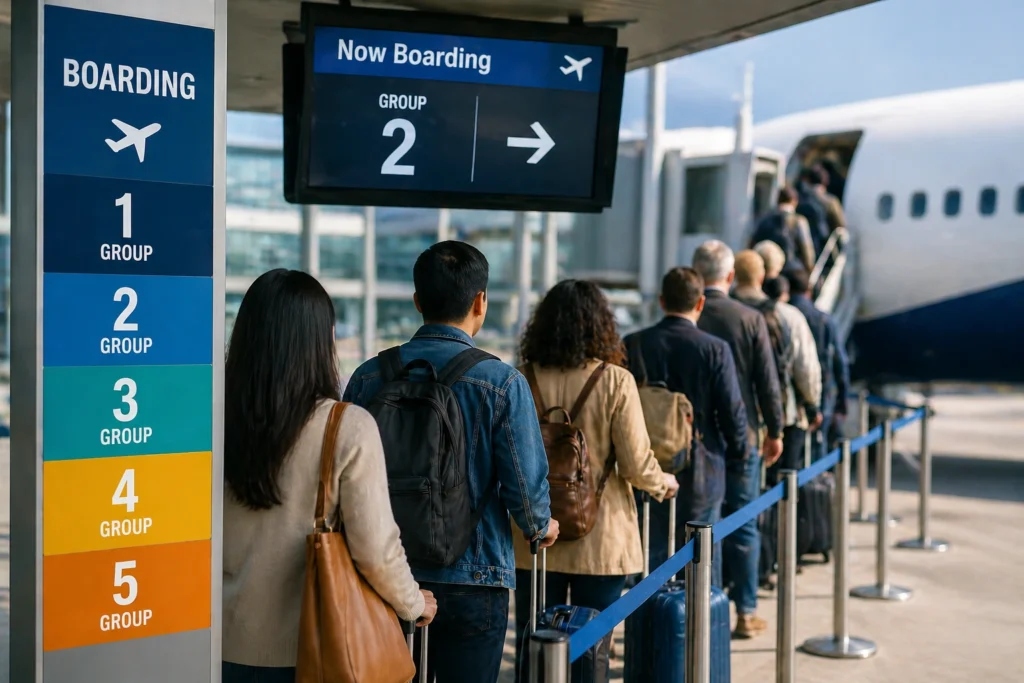
Under the new approach, passengers will instead receive boarding positions labeled Group 1, Group 2 and onward. The numbering system is more intuitive and mirrors formats already used in many parts of the global aviation market. Airlines expect the simpler structure to reduce repeated gate announcements, crowding near boarding lanes and last-minute confusion at departure gates.
Why International Travelers Benefit Most
The impact could be strongest for overseas travelers flying into or through the United States. Millions of passengers from Mexico, Canada, Europe, Latin America and Asia use U.S. carriers each year for direct travel or onward connections. Clear numbering removes the need to interpret unfamiliar airline branding or letter sequences.
A traveler flying from Mexico City to Miami, Toronto to New York or Paris to Boston may now immediately understand when to board simply by watching the group numbers being called. This can lower stress, particularly for families, leisure travelers and those with limited English proficiency.
Strong Impact Across Key Tourism Markets
Mexico is one of the most important cross-border aviation markets for the United States, supported by strong leisure, family and business demand. Easier boarding could enhance the experience for passengers traveling between major city pairs and resort gateways.
Canada is another major beneficiary, with heavy traffic linking cities such as Toronto, Vancouver, Montreal, New York, Chicago and Los Angeles. Frequent business travelers may appreciate a faster and more predictable gate process, while leisure passengers gain greater clarity.
European markets including France, Germany and Italy are also expected to benefit. These routes often carry long-haul passengers arriving at busy terminals where smooth boarding can significantly improve the overall perception of the journey. For premium travelers and first-time visitors alike, a simplified system adds confidence before departure.
Brazil and Costa Rica, both important leisure and business markets, could see similar advantages as passengers transit through U.S. airports or travel nonstop on high-demand routes.
Benefits for Airlines and Airports
For airlines, a more efficient boarding process can deliver measurable operational gains. Faster boarding supports on-time departures, improves aircraft utilization and can reduce gate congestion during peak periods. Even small time savings across hundreds of daily departures can create network-wide efficiency improvements.
Airports may also benefit from calmer gate areas and smoother passenger flows. When travelers know exactly when to board, fewer people tend to queue early around the gate, helping terminals feel less crowded and more organized. This can be especially valuable during holiday surges and summer travel peaks.
A Better Passenger Experience
The new numbered boarding system is ultimately about customer experience. Travelers increasingly compare journeys not only on fares and schedules, but also on ease, transparency and convenience. Simple improvements at the airport can influence satisfaction, repeat bookings and brand loyalty.
For families, seniors and occasional travelers, clearer instructions reduce uncertainty. For business travelers, faster boarding means less waiting and more predictability. For international visitors, it creates a friendlier first impression of U.S. travel systems.
The Future of Boarding
As airlines continue investing in biometrics, mobile check-in, digital bag tracking and smarter gate technology, numbered boarding fits into a larger trend toward frictionless travel. The April 2026 rollout may appear simple, but it represents a meaningful operational upgrade for millions of passengers.
With JetBlue, United, Delta, American, Southwest and other carriers embracing the change, air travel across the United States and its international network is set to become easier, faster and more intuitive from the moment boarding begins.
For more travel news like this, keep reading Global Travel Wire