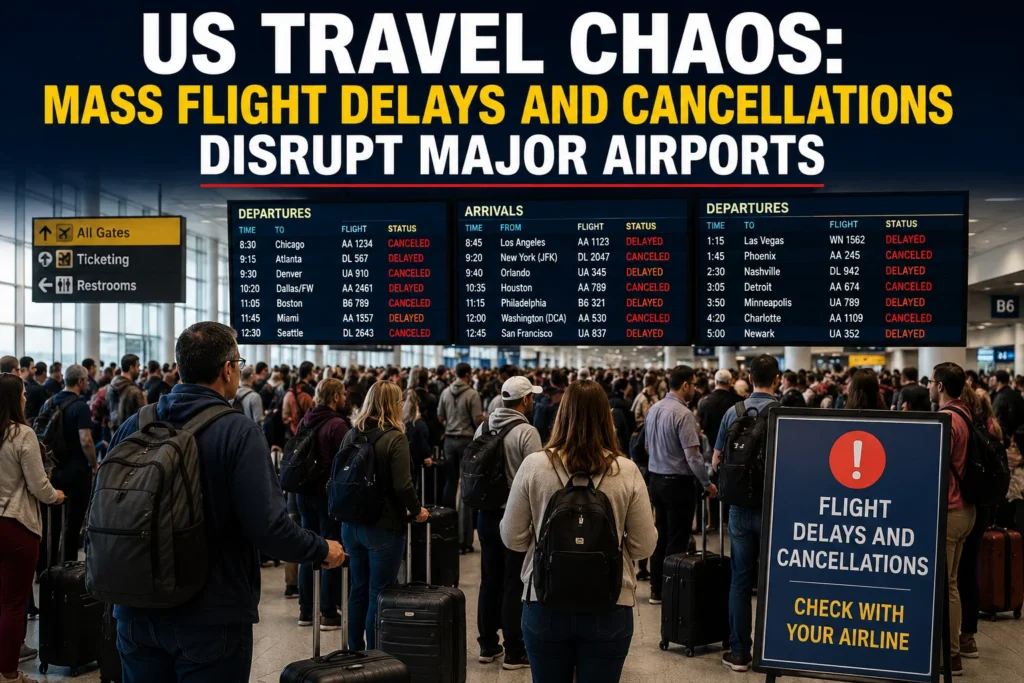
A sweeping operational disruption has paralyzed the United States domestic transit grid, triggering widespread airport disruptions from coast to coast. Travelers facing the sudden wave of flight cancellations and severe delays are encountering a highly volatile summer travel landscape. Official aviation monitoring data confirms that the domestic aviation sector is enduring significant system-wide travel chaos, impacting key tourist corridors and transit hubs across California, Texas, Florida, and Illinois.
According to official flight tracking and airport authority logs, a compounding series of logistical challenges triggered exactly 100 flight cancellations and an unprecedented 4,525 flight delays nationwide on June 27, 2026. This extensive systemic failure has restricted operations across major tourism and business gateways. The operational strain remains heavily concentrated among the country’s largest commercial carriers, with Southwest Airlines recording the highest overall delay count, followed closely by operational slowdowns at American Airlines, United Airlines, Delta Air Lines, and SkyWest.
The Scale of the National Transit Disruption
The current US travel chaos is not isolated to a single metropolitan area. Because the domestic aviation grid relies heavily on a deeply interconnected hub-and-spoke infrastructure, severe delays at a single mega-hub quickly ripple across the entire national network. Today, that operational stress has spread rapidly, impacting critical tourism arteries stretching from Dallas/Fort Worth and Chicago O’Hare to Los Angeles International and Harry Reid International in Las Vegas.
For international and domestic tourists currently navigating these airport disruptions, the unexpected operational halt presents immediate logistical challenges. Affected travelers are dealing with missed cruise departures, delayed resort check-ins, disrupted international connections, and the sudden necessity of securing emergency hotel accommodations during peak travel season.
Major Airport Disruptions: Regional Breakdown
The logistical strain heavily targeted specific high-traffic metropolitan airports, creating substantial bottlenecks for vacationers and business travelers alike.
Texas and Illinois Gateways: In Texas, Dallas/Fort Worth International Airport suffered the highest total delay count in the nation, recording 381 delayed flights alongside three cancellations, fracturing connecting schedules for thousands of passengers. Simultaneously in Illinois, Chicago O’Hare International Airport emerged as a major disruption point in the Midwest, logging 356 delays and eight outright flight cancellations.
West Coast and Nevada Tourism Corridors: On the West Coast, Los Angeles International Airport recorded 270 delayed flights and two cancellations, causing significant travel chaos across Southern California. Further north, San Francisco International Airport reported 239 delays and five cancellations. In neighboring Nevada, Harry Reid International Airport in Las Vegas witnessed 253 delays and one cancellation, disrupting arrival schedules for weekend tourists.
Florida and East Coast Hubs: In Florida, Orlando International Airport experienced 194 delays and two cancellations, affecting family vacation travel. Meanwhile, Miami International Airport registered the highest total of flight cancellations among all US airports, logging 10 outright cancellations alongside 148 severe delays. Up the East Coast, Newark Liberty International Airport in New Jersey experienced 124 delays and two cancellations, while Washington Dulles International Airport in Virginia logged 102 delays and six cancellations.
Inland Transit Points: Further inland, Nashville International Airport in Tennessee recorded 173 delayed flights and two cancellations, while Minneapolis–Saint Paul International Airport in Minnesota managed 80 delays and two cancellations.
US Aviation Network Disruption Matrix
The operational telemetry outlining this national transit disruption details specific passenger delays and flight cancellations across major airlines and airports.
| Airline / Airport | Flight Delays | Flight Cancellations |
| Southwest Airlines | 1,062 | 2 |
| American Airlines | 687 | 5 |
| United Airlines | 374 | 11 |
| Delta Air Lines | 356 | 10 |
| SkyWest Airlines | 301 | 2 |
| JetBlue Airways | 201 | 2 |
| Frontier Airlines | 105 | 2 |
| Alaska Airlines | 97 | 4 |
| Dallas/Fort Worth (DFW) | 381 | 3 |
| Chicago O’Hare (ORD) | 356 | 8 |
| Los Angeles (LAX) | 270 | 2 |
| Harry Reid (LAS) | 253 | 1 |
| San Francisco (SFO) | 239 | 5 |
| Orlando (MCO) | 194 | 2 |
| Nashville (BNA) | 173 | 2 |
| Miami (MIA) | 148 | 10 |
| Newark Liberty (EWR) | 124 | 2 |
| Washington Dulles (IAD) | 102 | 6 |
Understanding the Roots of the Disruption
Aviation analysts and federal transport advisories indicate that today’s 4,525 delays and 100 cancellations stem from compounding logistical constraints. The disruptions occurred due to a combination of aircraft rotation issues and crew scheduling limitations, meaning flight crews were displaced and unable to legally operate scheduled routes within regulated duty hours.
These internal carrier issues were further intensified by localized air traffic management initiatives, unexpected fleet maintenance requirements, and heavy airport congestion. Because multiple primary hubs were impacted simultaneously, localized delays quickly cascaded into systemic challenges affecting regional and low-cost carriers, including Frontier Airlines, JetBlue, and Alaska Airlines.
Essential Passenger Survival Strategy
For tourists and business travelers currently caught in this wave of flight cancellations, transport officials recommend immediate, proactive steps to mitigate travel disruptions:
Verify Flight Status Early: Check your flight status via official airline mobile applications or website portals before leaving for the airport.
Utilize Digital Rebooking Tools: If a flight is canceled or significantly delayed, utilize the airline’s mobile app to view alternative routing options, which is often faster than waiting at physical customer service desks.
Keep Essentials Close: Pack crucial medications, electronic chargers, and vital travel documents strictly in your carry-on baggage rather than checked luggage.
Monitor Real-Time Alerts: Enable push notifications for SMS, email, and app alerts to receive immediate updates regarding gate changes or schedule adjustments.
Review Passenger Rights: Familiarize yourself with your carrier’s official customer service plan regarding complimentary rebooking, meal vouchers, and overnight accommodation provisions during extended delays.
The current infrastructure strain underscores the importance of buildable buffer time when planning domestic and international itineraries during peak travel seasons. Navigating these airport disruptions effectively requires patience, digital preparedness, and quick communication with operating carriers.
For more travel news like this, keep reading Global Travel Wire