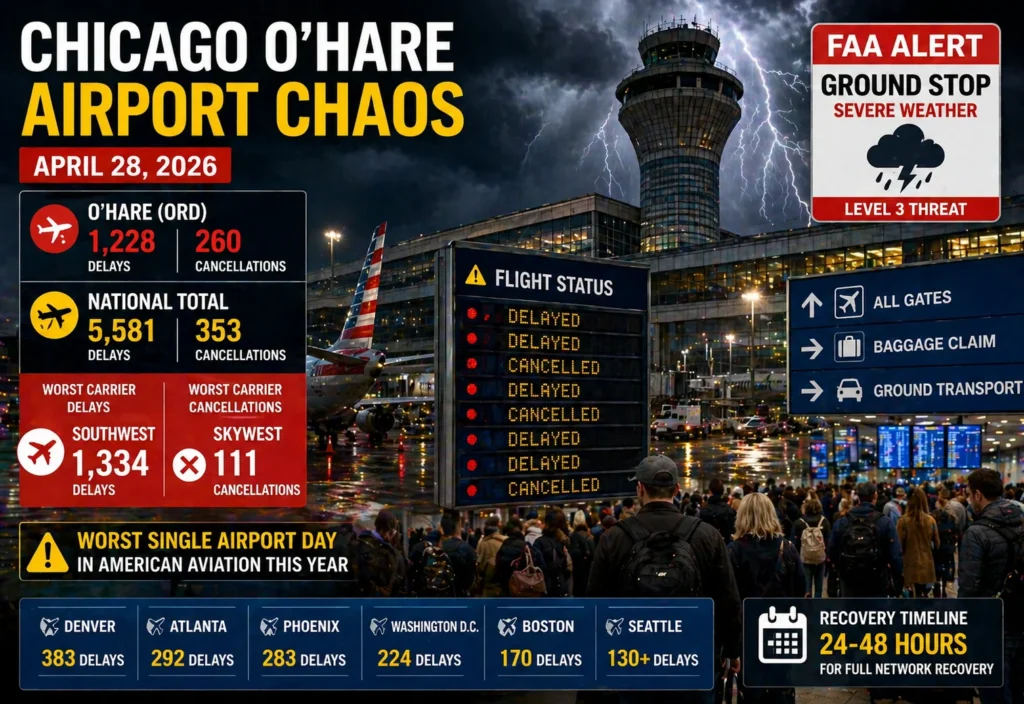
Chicago O’Hare International Airport faced one of the most severe travel disruption days of 2026 after powerful storms swept across the Midwest, triggering widespread delays, cancellations, and ripple effects throughout the United States aviation network. The disruption affected thousands of passengers, strained airline schedules, and created fresh concern for travelers heading into the busy summer tourism season.
As one of America’s busiest airports and a critical domestic and international hub, O’Hare plays a central role in connecting travelers to destinations across North America, Europe, Asia, and beyond. When operations slow dramatically in Chicago, the impact is rarely local. It spreads quickly through aircraft rotations, crew schedules, and connecting itineraries nationwide.
Severe Weather Triggers Airport Disruption
The latest disruption was linked to a dangerous weather system moving across the Chicago region. Forecasts warned of damaging winds, hail, heavy rain, localized flooding, and tornado risk, prompting aviation safety measures and traffic restrictions.
When severe weather enters the airspace around a major airport, operations can be slowed or temporarily paused to protect passengers, crews, and aircraft. Safety remains the top priority, particularly when storms threaten visibility, runway conditions, or air traffic flow.
At O’Hare, these weather challenges quickly translated into long delays and a significant number of cancellations, creating one of the airport’s most difficult operational days this year.
Why Chicago O’Hare Matters So Much
Chicago O’Hare is one of the most important aviation hubs in the world. It serves as a major gateway for domestic connections and international travel while handling large volumes of passengers every day.
Because so many aircraft pass through Chicago, delays at O’Hare can impact flights far beyond Illinois. A plane delayed in Chicago may be scheduled next for Denver, New York, Dallas, Los Angeles, Toronto, or London. If it does not depart on time, the next route may also be delayed.
This chain reaction is known as a network ripple effect, and it is one reason weather events at large hubs can disrupt travel across the country within hours.
Other US Airports Feel the Impact
As Chicago delays grew, other major airports began experiencing knock-on effects. Busy hubs in Denver, Atlanta, Phoenix, Washington, Boston, Seattle, and other cities also reported rising delays.
The reason is simple: aviation networks are interconnected. Aircraft, flight crews, baggage systems, and passenger connections depend on precise timing. When one key hub slows down, the rest of the system absorbs pressure.
For travelers, this means even passengers not flying to Chicago may still face delays if their aircraft or crew was scheduled through O’Hare earlier in the day.
What Travelers Experienced
Passengers at affected airports likely faced crowded terminals, longer customer service lines, gate changes, and uncertain departure times. Many travelers were forced to rebook, wait for standby seats, or adjust onward plans.
Common impacts during large disruptions include:
Missed connections
Extended airport waits
Hotel stays after cancellations
Late arrivals for vacations or business trips
Limited same-day rebooking options
Pressure on rental cars and ground transport
For families, international travelers, and passengers with tight schedules, these disruptions can be especially stressful.
Summer Tourism Season Faces Fresh Pressure
The timing of major disruptions matters. With summer travel approaching, airports and airlines are preparing for one of the busiest periods of the year.
Millions of Americans travel during school breaks, holiday weekends, and peak vacation months. Popular destinations such as Florida, California, Las Vegas, Hawaii, national parks, beach resorts, and major cities all depend on reliable flight schedules.
When a large hub like Chicago experiences severe disruption, it reminds travelers that summer trips require planning flexibility. Even weather events in one city can affect holiday plans elsewhere.
How Airlines Usually Recover
Although the immediate disruption may feel dramatic, airlines typically begin recovery as soon as weather conditions improve.
The process often includes:
Repositioning delayed aircraft
Reassigning crews
Reopening normal arrival and departure rates
Protecting connecting passengers on later flights
Offering digital rebooking options
Adding recovery flights where possible
However, full recovery can take time. Aircraft and crews may be out of place long after skies clear, which is why delays sometimes continue into the next day.
Travelers flying shortly after a major weather event should still monitor schedules closely.
Smart Advice for Passengers Right Now
Anyone traveling through Chicago or connecting through major US hubs should take proactive steps.
Best actions include:
Check flight status before leaving for the airport
Use airline mobile apps for real-time updates
Accept rebooking options quickly if offered
Pack essentials in hand luggage
Allow extra connection time
Review flexible fare rules
Keep receipts if overnight expenses occur
Consider alternate airports when practical
Passengers who act early often have more options than those waiting in airport lines.
Why Weather Will Always Affect Aviation
Even with advanced forecasting, modern radar, and sophisticated scheduling systems, weather remains one of aviation’s biggest operational challenges.
Thunderstorms, snow, fog, hurricanes, strong winds, and flooding can all reduce airport capacity or force temporary pauses. Safety regulations are designed to prevent unnecessary risk, which is why airlines and controllers may slow operations even when passengers see only light rain at the terminal.
This can be frustrating, but it is a core part of safe aviation management.
What It Means for Tourism Businesses
Air travel disruption does not only affect passengers. Hotels, attractions, tour operators, conference organizers, and cruise departures can all feel the impact when visitors arrive late or cancel plans.
Destinations with strong domestic tourism often recover quickly, but repeated disruption during peak periods can influence traveler confidence.
That is why airports continue investing in resilience, better passenger communication, and smarter traffic management systems.
Outlook for Travelers in 2026
Despite major storm-related disruptions, the broader outlook for US tourism remains positive. Demand for travel is strong, airlines continue operating extensive networks, and most disruptions are temporary.
The key lesson from Chicago O’Hare travel chaos is preparation. Flexible bookings, early check-ins, travel alerts, and realistic expectations help passengers navigate busy seasons more smoothly.
For now, travelers heading through Chicago or any major US hub should stay informed, plan ahead, and remember that once weather clears, the system usually returns to normal quickly.
Even on difficult days, America’s aviation network keeps moving—and so does tourism.