The global landscape for high-end hospitality and international transit is undergoing a profound structural evolution. According to recent quarterly data published in the UN Tourism World Tourism Barometer, international tourist arrivals have sustained their upward momentum, reinforcing a broader expansion across the premium vacation sector. However, the true story of modern travel is not merely found in total passenger volume, but in the rapidly shifting priorities of the world’s most affluent voyagers.
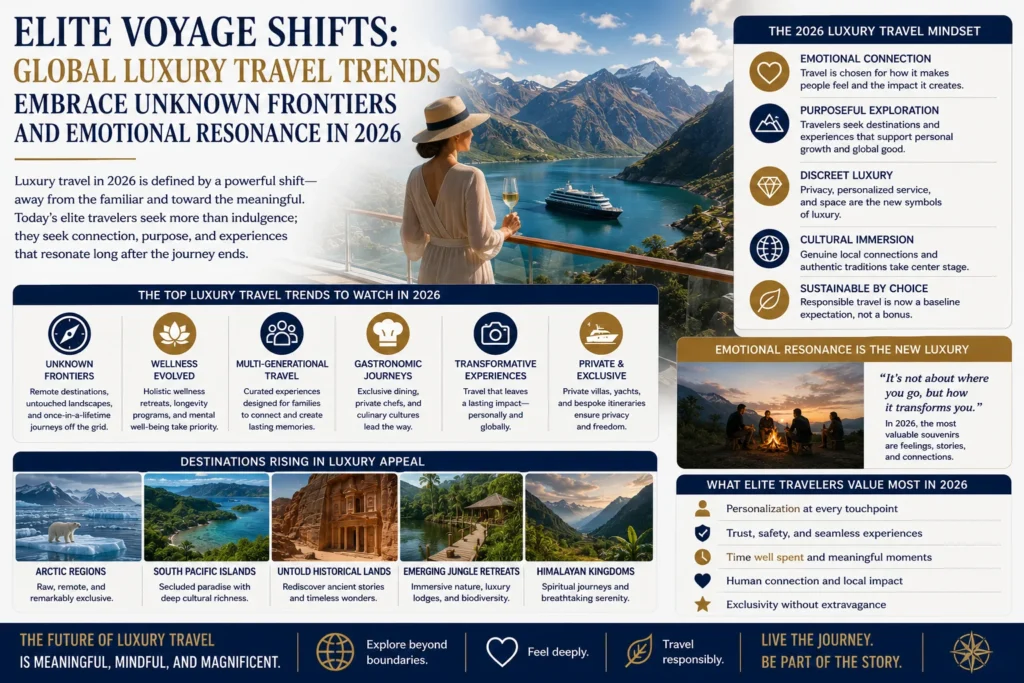
Official analytical reports from international tourism ministries indicate that traditional landmark-driven itineraries are losing market share to highly personalized, low-density excursions. Empowered by advanced digital discovery platforms and algorithmic scheduling networks, modern travelers possess unprecedented access to the most remote corners of the globe. Rather than utilizing this access to check off highly exposed global attractions, elite travelers are intentionally reallocating their resources toward trips focused on emotional wellness, personal hobbies, and genuine digital disconnection.
The Ascent of Evening Stillness and Intentional Natural Integration
A core development within the modern hospitality framework is the emergence of specialized, time-restricted wellness itineraries. Data released by the Global Wellness Institute highlights that the global wellness tourism market is projected to reach 1,085.6 billion dollars, driven by an increasing consumer demand for nervous system regulation and physical restoration. A primary manifestation of this trend is the rapid adoption of specialized evening scheduling, frequently termed “dusking” by contemporary travel designers.
Rather than scheduling intense, high-energy excursions during peak daytime hours—when historical cities and natural reserves experience maximum density and elevated temperatures—affluent travelers are structuring entire vacation segments around the transition from day to night. This operational shift is characterized by a deliberate pause in connectivity, prioritizing quiet observation and presence during the cooler twilight hours.
Tourism development boards are responding to this trend by expanding access to low-density spaces that offer exceptional atmospheric clarity. Certified dark-sky regions, secluded coastal promontories, and private wilderness eco-lodges are seeing unprecedented demand. Regional travel research confirms that high-income travelers are actively prioritizing these protected environments to establish healthier circadian rhythms, utilizing natural twilight and dark skies as functional tools for physical recovery.
Cinematic Landscapes and the Financial Impact of Location-Based Travel
Concurrently, the intersection of global entertainment and international vacation planning is generating massive economic impacts for regional economies. Verified data from international tourism bureaus indicates that the global film tourism sector has expanded to a valuation of 71.6 billion dollars. This rapid acceleration is heavily influenced by the global consumption of streaming media, which introduces diverse international backdrops directly to global audiences.
Operational updates from the Thailand Tourism Department illustrate this dynamic perfectly. Following record-setting revenues generated from foreign film productions, the ministry established aggressive growth targets to leverage upcoming high-profile streaming releases. This style of cinematic travel has evolved far beyond casual day tours or simple souvenir photos at historical filming locations. Contemporary luxury voyagers are seeking to fully immerse themselves in the specific atmosphere, design aesthetic, and cultural mood depicted on screen.
Whether booking extended stays at historic five-star hotels featured in popular television dramas, securing private villa rentals along windswept northern coastlines, or coordinating custom horseback expeditions through dramatic mountain valleys, travelers are utilizing entertainment media as a blueprint for fantasy fulfillment. This trend is providing significant, sustained economic windfalls to lesser-known rural villages and secondary municipalities that feature unique cinematic charm, effectively decentralizing tourism traffic away from over-saturated urban centers.
Privacy and Intention Redefine the Metrics of High-End Hospitality
Ultimately, the overarching narrative governing the current travel year centers on the luxury of absolute privacy. Official surveys conducted by leading international hospitality institutes reveal that over 40 percent of high-income travelers are explicitly factoring specialized wellness, low density, and personal privacy into their primary booking considerations. The modern luxury metric has successfully shifted away from ostentatious displays of status toward emotional relief, space, and quiet discretion.
To align with these clear demand signals, premier resorts and global tour operators are fundamentally restructuring their service portfolios. Rigid, heavily structured daily itineraries are being systematically replaced by flexible, open-ended travel windows that allow for spontaneous exploration and deep rest. By emphasizing soft adventure, localized culinary sourcing, and science-backed environmental wellness, the global tourism industry is successfully establishing a more sustainable, highly rewarding blueprint for international exploration.
For more travel news like this, keep reading Global Travel Wire