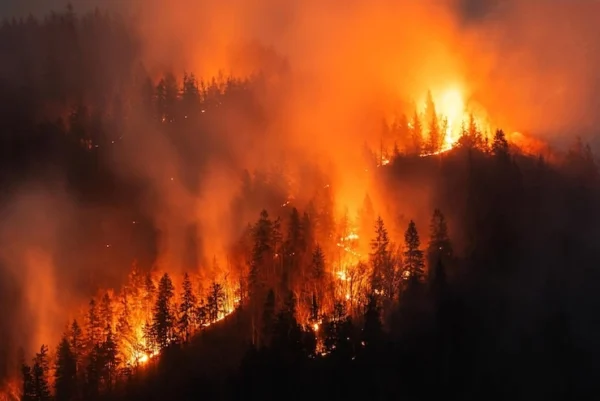
A severe wildfire emergency in southwestern France has disrupted the peak summer holiday season around Le Porge and the Gironde coast, forcing evacuations from vulnerable tourism areas and placing one of the country’s busiest coastal regions under heightened emergency measures.
The fire erupted during a period of exceptional wildfire danger across Gironde, where prolonged heat and extremely dry vegetation have created highly combustible conditions.
French authorities confirmed that Gironde was placed under red wildfire vigilance as a severe fire beginning on July 22 required the mobilisation of more than 500 firefighters. Strict restrictions were introduced across forest-dominated municipalities to prevent additional ignitions while emergency operations continued.
The crisis has significant implications for summer tourism around Le Porge, the Atlantic coastline and destinations west of Bordeaux, where campsites, holiday accommodation and outdoor recreation attract large numbers of visitors.
Holidaymakers evacuated from vulnerable coastal areas
Precautionary evacuations have affected thousands of tourists and residents as emergency teams worked to protect people staying near forested zones.
Le Porge sits within a tourism landscape characterised by Atlantic beaches, extensive pine forests, campsites and holiday communities. During July, visitor populations rise substantially as domestic and international travellers arrive for beach holidays.
Wildfire conditions can therefore create immediate logistical challenges.
Evacuated holidaymakers may need emergency accommodation, alternative campsites or revised travel arrangements. Road controls can also affect access to beaches, resorts and neighbouring communities.
For tourism businesses, the disruption arrives during one of the most commercially important periods of the year.
Extreme conditions accelerate wildfire danger
The broader environmental conditions have made firefighting particularly difficult.
Météo-France has warned that intense heat and exceptional soil dryness have created a major wildfire threat across large parts of France.
Earlier in July, the national weather service reported that average soil moisture across France had fallen to a record low for the time of year. Conditions in a broad section of southwestern France were particularly dry.
By July 23, wildfire danger remained high to very high across western and southwestern areas as dry vegetation combined with weather conditions capable of accelerating fire development.
Dry pine forests can allow flames to spread rapidly when wind, heat and low vegetation moisture combine.
These conditions also increase the risk that relatively small ignition events develop into major emergencies.
Gironde strengthens restrictions as firefighters respond
Authorities have introduced extensive preventive measures across Gironde.
During red wildfire vigilance, restrictions were imposed on the use of thermal and electrical machinery and other potential ignition sources within exposed forest areas.
The measures are intended to reduce the possibility of additional fires while emergency resources remain heavily committed.
Earlier restrictions had already limited activities in forested zones, including certain machinery use, leisure activities and access during high-risk periods.
Camping outside authorised areas, open flames and other activities capable of creating sparks have also faced strict controls.
The measures underline how wildfire risk increasingly affects not only residents but also tourism operations and outdoor visitor experiences.
Tourism faces growing climate-related disruption
The Le Porge emergency highlights a wider challenge facing France’s tourism industry.
Southwestern France depends heavily on summer travel. Coastal campsites, holiday rentals, hotels, restaurants and recreational businesses generate much of their annual activity during July and August.
Wildfires can disrupt this ecosystem within hours.
Visitors may cancel accommodation, change destinations or shorten holidays. Tourism businesses may lose bookings while evacuation orders and road restrictions remain in place.
At the same time, emergency services must manage large seasonal populations unfamiliar with local roads, evacuation routes or wildfire procedures.
This makes accurate travel information increasingly important during periods of extreme heat.
Memories of the 2022 Gironde fires return
Gironde remains particularly sensitive to wildfire danger following the catastrophic summer of 2022.
Major fires that year devastated extensive areas of the Landes de Gascogne forest and triggered large-scale evacuations.
The Gironde prefecture continues to identify the region as one of France’s territories most exposed to forest fires. Authorities have strengthened prevention, emergency preparedness and forest resilience measures since the 2022 disaster.
The latest emergency demonstrates that the underlying threat remains serious.
Repeated heatwaves, drought and increasingly dry vegetation are placing greater pressure on forested tourism destinations.
Travellers urged to follow official instructions
Visitors travelling through Gironde and other wildfire-prone French regions should remain prepared for rapidly changing conditions.
Tourists should follow evacuation instructions immediately, avoid entering restricted forests and confirm access conditions before travelling to campsites, beaches or outdoor attractions near affected areas.
Road closures and local restrictions can change quickly as firefighters reposition resources.
Travellers should also avoid activities capable of creating sparks or flames near dry vegetation.
French authorities stress that most wildfire outbreaks are linked to human activity, making individual prevention particularly important during extreme-risk periods.
France tourism adapts to a hotter summer reality
The Le Porge wildfire is another reminder that extreme weather is becoming an increasingly important factor in summer travel planning across France.
For destinations around Bordeaux and the Atlantic coast, protecting visitors while preserving tourism infrastructure has become a critical seasonal challenge.
Emergency evacuations can cause immediate disruption, but effective prevention, rapid firefighting deployment and clear communication remain essential for limiting wider damage.
As France continues through its peak holiday season, travellers heading toward forested and coastal destinations will increasingly need to consider wildfire alerts alongside traditional holiday planning.
The combination of exceptional heat, dry vegetation and high visitor numbers means preparedness is now essential for protecting communities, tourism businesses and millions of travellers enjoying France’s summer destinations.
For more travel news like this, keep reading Global Travel Wire