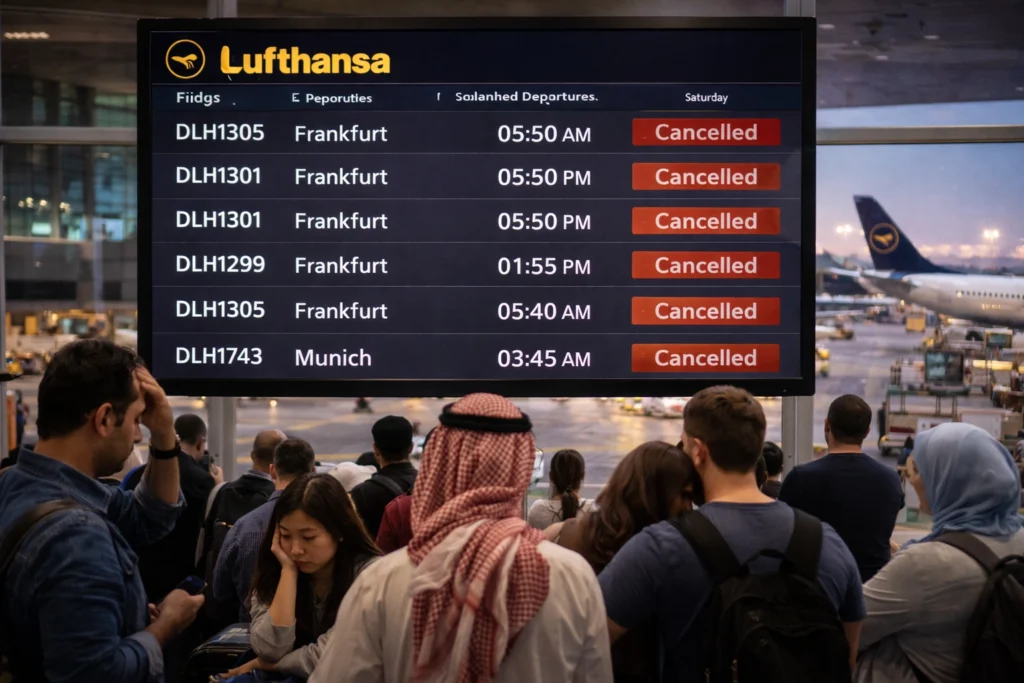
A fresh wave of flight cancellations at Istanbul Airport has disrupted travel from Türkiye after Lufthansa withdrew six scheduled departures to Frankfurt and Munich. The affected routes are among the most important air corridors linking Istanbul with Germany, creating immediate challenges for business travelers, tourists and passengers relying on onward international connections.
The cancellations were concentrated on multiple Frankfurt services, alongside one Munich departure, and occurred across several days and time slots. That pattern has raised concerns about broader operational strain on key European routes rather than a one-off schedule adjustment.
Frankfurt Flights Bear the Biggest Impact
Most of the affected departures were scheduled to Frankfurt, Lufthansa’s largest hub and one of Europe’s most critical transfer gateways. The Istanbul–Frankfurt route supports strong year-round demand from corporate travel, tourism, student movement and family visits.
Frankfurt also serves as a major onward hub for long-haul journeys to North America, Asia, the Middle East and Africa. When several flights on this route are cancelled, the consequences extend far beyond passengers traveling only between Türkiye and Germany.
Missed long-haul connections, overnight rebookings and disrupted itineraries can quickly follow when capacity is suddenly reduced on such a high-value corridor.
Munich Route Also Affected
In addition to Frankfurt, one scheduled Lufthansa service to Munich was cancelled. Although smaller in number, the Munich impact remains significant because the Bavarian city is another important Lufthansa hub with extensive European and intercontinental connectivity.
For many travelers, Munich offers an alternative gateway into Germany and Central Europe. Its loss reduces flexibility for passengers attempting to reroute around Frankfurt disruption.
That can increase demand on remaining flights and place additional pressure on available seats.
Why These Routes Matter for Travel
The air links between Istanbul and Germany are among the busiest in Europe, reflecting strong trade ties, tourism flows and diaspora travel. Istanbul itself is a major global city connecting Europe and Asia, while Frankfurt and Munich anchor extensive networks across the continent.
As a result, even a modest number of cancellations on these sectors can affect thousands of journeys indirectly. A traveler missing a Frankfurt connection may also miss a cruise embarkation, conference, hotel booking or domestic flight elsewhere in Europe.
This is the multiplier effect of hub aviation systems: one cancelled sector can disrupt an entire chain of travel plans.
Signs of Wider Operational Pressure
The spread of cancellations across multiple days, different time periods and repeated flight numbers suggests deeper scheduling or operational challenges. Airlines may need to adjust services due to aircraft availability, crew rotations, maintenance planning or broader network constraints.
Because airline systems are tightly coordinated, changes on one route can sometimes reflect pressures elsewhere in the network.
Passengers often experience only the final result—a cancelled flight—but behind the scenes airlines may be balancing dozens of operational variables.
Passenger Impact at Istanbul Airport
For affected travelers, the most immediate issues are rebooking delays, uncertainty and reduced same-day travel options. On busy international routes, replacement seats may fill quickly, particularly when several departures are removed close together.
Passengers may also face:
- Longer waits for alternate flights
- Missed onward connections
- Additional hotel or meal costs
- Schedule changes for business or leisure trips
- Increased fares on remaining services
Families, transit passengers and those on time-sensitive itineraries are often most affected.
What Travelers Should Do Now
Passengers flying from Istanbul to Germany or beyond should check flight status frequently and monitor official airline alerts. Acting early can improve the chances of securing preferred rebooking options.
Practical steps include:
- Verify departure status before leaving for the airport
- Use airline apps for live notifications
- Consider alternate airports or nearby dates
- Keep travel documents accessible
- Review accommodation needs if delayed overnight
Flexibility remains essential during periods of network disruption.
Wider Implications for European Aviation
The latest Istanbul cancellations also highlight how interconnected Europe’s aviation system has become. Major hubs depend on precise timing, strong aircraft utilization and efficient transfers. When one corridor weakens, pressure can spread quickly across the network.
For airlines, maintaining resilience on high-demand routes is increasingly important as travel demand remains strong across Europe.
Outlook for Travelers
Türkiye continues to be one of the region’s most dynamic tourism and business markets, and Istanbul remains a key crossroads for global aviation. While six cancellations do not define the wider market, their concentration on major Germany routes makes the disruption more significant than the number alone suggests.
For passengers in the coming days, staying informed, booking flexibly and allowing extra time for connections will be the best strategy as airlines work to stabilize schedules.
For more travel news like this, keep reading Global Travel Wire