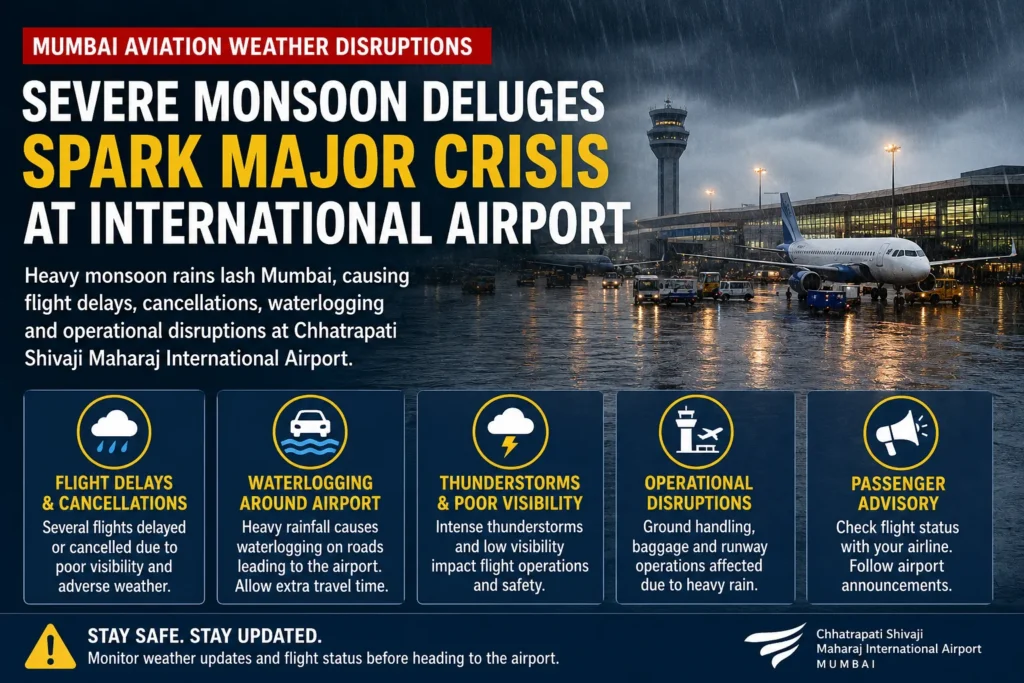
Chhatrapati Shivaji Maharaj International Airport (BOM) has transitioned into a high-alert operational framework as relentless monsoon downpours trigger significant transit challenges across Western India. The severe meteorological conditions have forced major domestic carriers, including SpiceJet, IndiGo, Air India, and Akasa Air, to implement emergency scheduling updates and wide-ranging flight diversions. Extreme weather patterns over the coastline have significantly compromised runway visibility and optimal landing conditions, creating a cascading sequence of delays across the country’s primary aviation gateways.
The intense atmospheric instability along the western coast has put regional infrastructure to a demanding test. According to statements released by the India Meteorological Department (IMD), a high-level weather warning has been maintained for the Mumbai Metropolitan Region due to continuous, heavy precipitation. The combination of torrential rain and gusty winds reaching high velocities necessitated a temporary suspension of runway operations earlier in the weather cycle to ensure absolute safety, which immediately displaced standard aircraft rotations.
Major Air Carriers Activate Emergency Transit Notifications
As regional weather patterns fluctuated, leading domestic airlines operating out of the financial capital activated coordinated operational alerts to mitigate terminal crowding and safely manage passenger expectations. IndiGo, Air India, Akasa Air, and SpiceJet have uniformly communicated urgent travel updates, emphasizing that strict adherence to safety protocols is completely overriding standard timetable punctuality.
Official airport management notifications indicate that ground operations teams are working in lockstep with national Air Traffic Control (ATC) units to dynamically reassign arrival gates and balance passenger flow during intermittent windows of improved visibility. Tourism boards and transport authorities are urging all outbound and inbound travelers to utilize verified digital airline platforms to monitor real-time status updates, given that flight timings are being adjusted hour-by-hour based on live meteorological data.
Regional Connectivity Challenges and Network Instability
IndiGo and Akasa Air have reported notable network adjustments, with individual flight paths being recalculated as cloud ceilings and runway visibility levels shift. Airline operations teams confirmed that inbound aircraft are being directed into holding patterns or rerouted to alternative airfields entirely whenever the local approach conditions fall short of the mandated safety minimums.
The operational impact has extended far beyond the local limits of the metropolis. Official alerts from Akasa Air specify that the active monsoon system is influencing regional connectivity across a broader Western India holiday and business corridor, encompassing key travel destinations such as Pune and Goa. This localized regional instability means that even flights scheduled outside the immediate impact zone are experiencing knock-on delays due to secondary airspace congestion and the tactical rerouting of long-haul air traffic into neighboring sectors.
Fleet Management Adjustments and Communication Measures
Airlines are navigating notable operational strain due to the compressed scheduling windows. SpiceJet has focused its resources on managing the dual impact of delayed arrivals and missed passenger connections. Due to heavy traffic volumes on traditional telecommunication customer channels during the peak hours of the weather disruption, the carrier has actively encouraged passengers to pivot toward official digital self-service portals and verified web communication channels for immediate rebooking assistance.
Simultaneously, Air India has maintained a cautious operational posture, aligning its fleet deployments with safety guidelines established during preceding monsoon alerts for the major Western India and New Delhi transit sectors. The airline’s central operational control room is maintaining a continuous feedback loop with public airport operators to ensure that wide-body and narrow-body aircraft entering volatile weather corridors are managed with maximum safety parameters.
Strategic Inbound Diversions and Runway Safety Measures
The extreme reduction in horizontal visibility over the regional airspace has led to a series of tactical flight diversions to alternative industrial and leisure hubs across the country. Official statements from private airport operators confirmed that multiple inbound flights were redirected to alternative facilities to prioritize passenger safety.
| Operating Airline | Original Destination | Diverted Arrival Station | Primary Operational Justification |
| IndiGo | Mumbai (BOM) | Hyderabad / Ahmedabad | Reduced Visibility and Unsafe Approach |
| Akasa Air | Mumbai (BOM) | Ahmedabad | Adverse Local Meteorological Conditions |
| Air India | Mumbai (BOM) | Bengaluru | Unstable Runway Weather Parameters |
| Oman Air | Mumbai (BOM) | Vadodara | Safety Margin Adjustments |
In addition to full-scale route diversions, standard aviation monitoring recorded a high frequency of “go-around” maneuvers, where flight commanders safely abort the final touchdown phase due to surface water accumulation on the tarmac, re-entering local holding patterns instead. To effectively manage this volume, air traffic controllers have systematically increased the safety separation intervals between arriving aircraft, contributing to the cumulative delay totals.
Urban Infrastructure Strain and Regional Transit Impact
The current challenges within the aviation sector reflect broader systemic pressure caused by intense seasonal precipitation. Heavy rainfall accumulation within concentrated windows has heavily taxed municipal drainage systems, resulting in localized waterlogging across low-lying urban sectors and critical arterial roadways.
This localized flooding has created significant logistical hurdles for airline crew members and passengers attempting to reach terminal buildings on time. Local public transit systems, including suburban rail networks and major highways like the Mumbai-Pune Expressway, have experienced intermittent slowdowns due to debris and water accumulation. State disaster management authorities have issued official advisories recommending remote working structures for non-essential regional offices, which has helped lower overall road congestion around the international airport zones.
Broader Outlook for National Aviation Hub Resilience
The current operational situation underscores the critical importance of weather resilience within major national transport hubs. When a primary international gateway experiences weather-driven capacity constraints, the broader domestic network experiences immediate logistical adjustments due to the interconnected nature of modern aircraft routing.
The ability to seamlessly divert aircraft to regional stations like Surat, Ahmedabad, Hyderabad, and Goa demonstrates the growing capability of secondary infrastructure to absorb sudden traffic redirections. Moving forward, public aviation authorities and ministry statements emphasize that continued investments in advanced ground radar systems, automated runway water-clearing technologies, and digital passenger communication networks remain paramount to ensuring seamless tourism and commercial travel operations during severe monsoon seasons.
For more travel news like this, keep reading Global Travel Wire