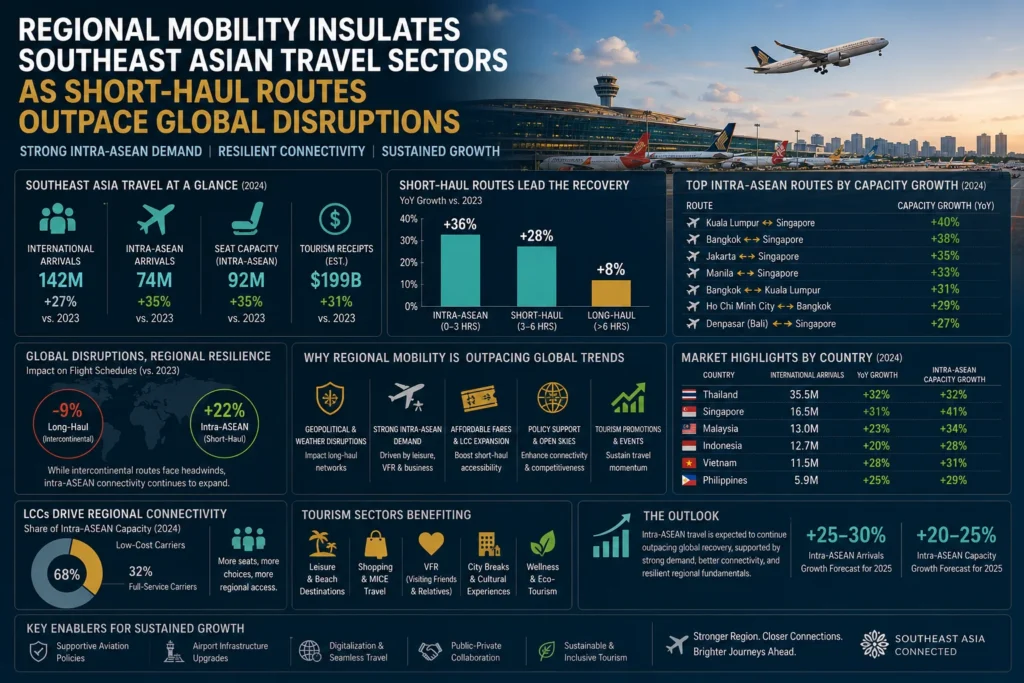
Long-haul international flight connections face ongoing scheduling disruptions, airport congestion, and unmanageable operational bottlenecks across several global transit hubs. In response to this volatility, the Southeast Asian travel market has actively repositioned its traffic distribution strategies.
Official performance metrics reveal that the Indonesian tourism industry has navigated these macro conditions by leveraging robust short-haul corridors. Rather than relying on multi-hub intercontinental transit routes, travelers from within the Association of Southeast Asian Nations (ASEAN) and the broader Asia-Pacific region are increasingly driving the market’s current momentum.
According to statements delivered by Tourism Minister Widiyanti Putri Wardhana during an official legislative review, Indonesia’s tourism foreign exchange earnings reached an impressive $4.05 billion in the first quarter of the year. This financial milestone marks a solid 6.3% year-over-year expansion.
The trajectory demonstrates that strengthening close-proximity flight routes and reinforcing regional air connectivity can provide a highly reliable buffer against global aviation instability. By protecting its arrival gateways from broader operational shocks, the nation has turned regional proximity into an effective economic shield.
Evaluating the Momentum of Inbound International Markets
The overall volume handled by the nation’s transportation and immigration infrastructure highlights a major shift toward regional demand. Cumulative data from Statistics Indonesia (BPS) verifies that the country registered exactly 4.68 million foreign arrivals during the January-to-April timeframe.
This represents an .824% growth margin compared to the 4.33 million arrivals documented during the identical period in the prior calendar year, establishing the highest entry volume recorded for that four-month sequence in recent years. For the single month of April, international visits specifically touched 1.25 million, demonstrating a clear 7.22% annual increase.
The breakdown of these inbound metrics shows that regional proximity is the primary anchor for market stability. Malaysia has consolidated its position as the top source market for international arrivals, contributing 16.65% of the overall inbound visitor volume.
This consistent cross-border flow is followed by Australia at 12.65% and China at 10.73%. Singapore and India also maintained consistent visitor traffic into major domestic tourism hubs. This steady regional performance has allowed the sector to reduce its historic reliance on volatile, long-haul Western markets.
Domestic Tourism Volumes and Infrastructure Capacity
While cross-border travel streams continue to expand, the domestic travel sector provides an essential baseline of economic activity. Official BPS summaries show that the domestic travel framework logged 319.51 million internal trips during the opening quarter of the year, driven by long holiday weekends and seasonal travel periods.
This high volume of domestic movement acts as a vital stabilizing mechanism for the hospitality ecosystem. It distributes consumer spending into rural areas and protects local small-and-medium enterprises from external market corrections.
Primary air gateways like Ngurah Rai International Airport in Bali and Soekarno-Hatta International Airport in Jakarta managed approximately 88% of all international air arrivals. Meanwhile, secondary entry networks across Batam, Sumatra, and East Java saw increased utilization from regional low-cost airline networks. BPS reporting shows that short-stay visas handled via border entry points in Batam registered substantial activity, underscoring the efficiency of direct, regional transit options.
Strategic Allocation of Financial Gains and Regional Events
To ensure that the financial returns from this tourism expansion are distributed equitably across the territory, the Ministry of Tourism is actively redirecting resources to support sustainable community infrastructure and local products. A key element of this program involves driving growth into rural areas through the structured certification of local tourism villages.
Public updates from the ministry confirm that collaboration with the Halal Product Assurance Agency (BPJPH) has successfully facilitated over 31,540 individual certifications for micro-enterprises across 1,116 specialized villages located throughout 34 provinces. This initiative directly builds visitor trust while strengthening local food and hospitality supplies.
Simultaneously, the administration is diversifying visitor traffic away from saturated hot spots through the Karisma Event Nusantara program. This national event framework has already launched across 15 provinces, creating direct employment opportunities for over 20,660 local workers and engaging nearly 4,000 small businesses.
By actively promoting distinct cultural, artistic, and athletic regional events nationwide, public planners are successfully distributing the arrival load across secondary destinations, preventing the severe localized congestion that can challenge traditional global travel hubs.
Evolving Consumer Habits and the Future of Regional Hubs
The solid economic performance observed during the early months of the year marks an evolving phase for the regional visitor economy. Official data tracking indicates that the average expenditure of international tourists reached $1,345.61 per visit, with an average length of stay extending to 10.84 nights. This pattern suggests that while travelers are choosing shorter, more reliable flight routes to reach their destinations, they are extending their stays and investing more heavily in premium, localized experiences.
As the aviation industry adjusts to changing operational realities worldwide, the integration of regional low-cost carrier paths and cross-border payment solutions is changing consumer behavior. The use of integrated cross-border digital payment networks among regional visitors has seen notable growth, making transactional processing more convenient for international arrivals.
By continuing to prioritize regional connectivity, expanding community-centered tourism assets, and implementing digital service solutions, the destination remains well-positioned to maintain its steady growth trajectory as a stable, accessible, and competitive hub within the Southeast Asian international travel market.
For more travel news like this, keep reading Global Travel Wire