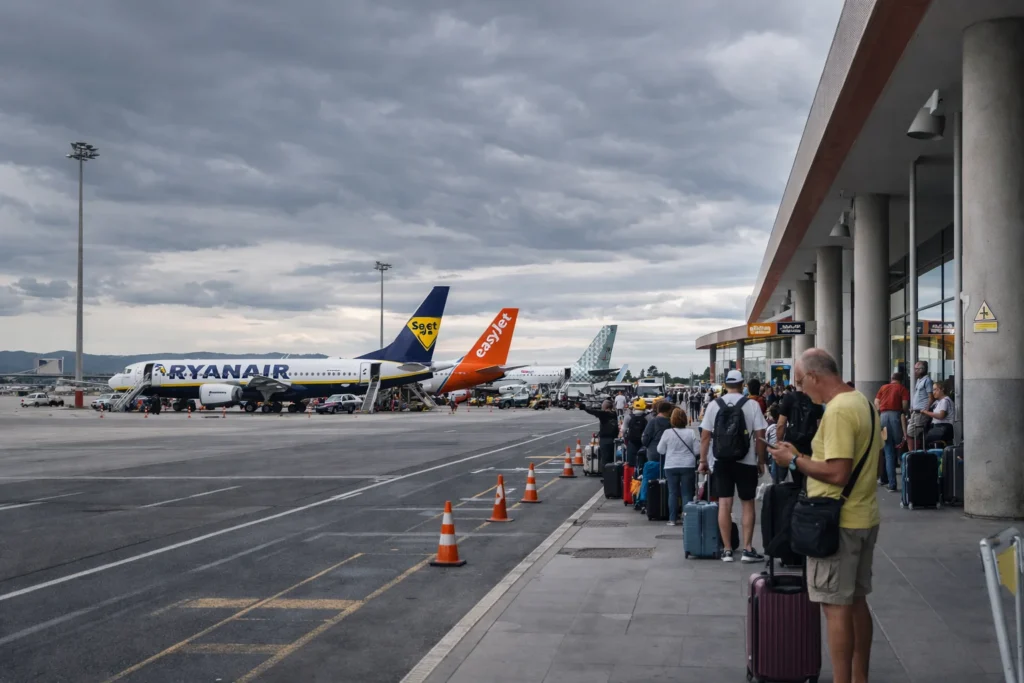
Europe’s summer tourism season is facing major uncertainty after an indefinite air traffic control strike in Spain raised concerns over delays, cancellations, and operational pressure across several regional airports. With Spain remaining one of the most visited destinations for travelers from the United Kingdom, Germany, France, and other European markets, the disruption comes at a critical time for airlines, hotels, tour operators, and millions of holidaymakers preparing for peak travel months.
Spain has long been a cornerstone of European tourism, attracting visitors to the Canary Islands, Andalusia, Mediterranean coastlines, and cultural cities through an extensive network of airports and affordable short-haul routes. Any sustained interruption to air operations can quickly ripple across the wider travel economy, affecting accommodation bookings, package holidays, ground transport, and seasonal employment.
The current strike focuses on selected control towers operated under private management contracts. While essential services may continue under national contingency rules, reduced staffing and slower traffic management can still create significant delays. Even when flights are not canceled, extended turnaround times, revised departure slots, and aircraft repositioning challenges may affect schedules throughout the day.
For travelers, the impact of air traffic disruption often extends far beyond the airport terminal. Missed hotel check-ins, lost connections, shortened vacations, and additional transport costs can turn a simple delay into a costly holiday setback. During the busy summer period, when aircraft and hotels already operate close to full capacity, rebooking options may also be more limited than usual.
The United Kingdom is expected to be one of the most affected source markets because Spain remains a leading overseas destination for British holidaymakers. Popular routes to the Canary Islands, Balearics, Costa del Sol, Alicante, Malaga, and city-break destinations carry high passenger volumes during spring and summer. Families traveling during school holidays could face heightened pressure if delays overlap with weekend peak periods.
German travelers are also closely linked to Spain’s tourism economy, particularly through long-stay beach holidays, island vacations, and cultural travel. German outbound tourism traditionally books early, meaning many passengers already hold confirmed itineraries for the coming months. Any major schedule changes may require flexible rebooking and rapid adjustments by tour operators.
French visitors form another important segment, especially for northern Spain, city breaks, road-trip holidays, and short leisure escapes. Proximity between France and Spain creates a mixed transport market where some travelers may switch to rail or road travel if flight uncertainty grows. That flexibility could help reduce pressure in some corridors while increasing demand on alternative transport networks.
Spain’s tourism industry is one of the strongest pillars of its national economy, supporting hotels, restaurants, attractions, retail, aviation, and local services. Summer is especially important because it generates substantial seasonal revenue and employment across coastal and island destinations. Airports act as gateways for these regions, making reliable air connectivity essential.
The Canary Islands are particularly sensitive to aviation disruptions because tourism arrivals depend heavily on regular air services. Unlike mainland destinations, islands rely on scheduled flights for visitor flows and business connectivity. If delays intensify during the peak season, accommodation providers, excursion companies, and hospitality businesses may feel the effects quickly.
Andalusia also remains a major draw for international visitors thanks to beaches, heritage cities, gastronomy, and cultural attractions. Airports serving southern Spain help distribute visitors across multiple destinations. Even moderate delays can affect onward transfers, car rentals, cruise connections, and guided tour schedules.
Northern Spain and emerging regional airports may face a different challenge. While passenger numbers may be smaller than in resort zones, these airports often support business travel, domestic connectivity, and regional tourism development. Operational instability could slow growth momentum in destinations working to expand their international profile.
Airlines are likely to activate contingency planning as the season develops. Common responses may include schedule adjustments, aircraft swaps, route consolidation, and stronger communication through mobile apps and booking platforms. Travelers should monitor official airline notifications rather than relying on speculation, as operating conditions can change quickly.
Tourism boards and local authorities may also increase traveler guidance to help visitors navigate disruptions. Real-time updates on transport links, airport transfers, accommodation policies, and visitor assistance services can reduce confusion during periods of uncertainty. Clear communication is especially valuable for families, elderly travelers, and first-time visitors.
Environmental concerns are another factor. Delays in air traffic systems can lead to longer taxi times, holding patterns, and less efficient routing, increasing fuel burn and emissions. As Europe’s tourism sector works toward more sustainable travel models, operational efficiency remains an important priority.
Despite the uncertainty, Spain’s long-term tourism appeal remains strong. The country offers world-class beaches, heritage cities, island escapes, food tourism, sports travel, festivals, and year-round sunshine in many regions. Demand for Spain holidays is supported by strong brand recognition, extensive accommodation supply, and frequent air connections from across Europe.
For travelers planning upcoming trips, flexibility will be essential. Choosing flights earlier in the day, allowing extra connection time, using airline apps, checking travel insurance coverage, and staying informed through official sources can help reduce disruption risks. Hand luggage can also make rebooking and airport movement easier during busy periods.
For the wider travel industry, the strike is a reminder that infrastructure resilience and workforce stability are critical to tourism success. Airports, airlines, and destinations depend on smooth coordination to handle millions of seasonal visitors. When one part of the system slows down, the entire travel chain can feel the impact.
As summer 2026 approaches, Spain remains one of Europe’s most desirable holiday destinations. Yet the coming weeks will be closely watched by travelers and tourism businesses alike. If solutions are reached quickly, confidence may recover fast. If disruption continues, flexibility and preparation will become the key tools for navigating Europe’s busiest travel season.