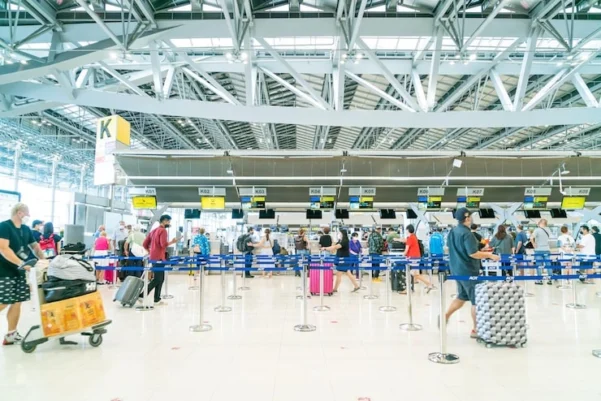
Thailand flight cancellations have disrupted passenger movement across Bangkok and Chiang Mai, with listed schedule withdrawals affecting international and domestic routes to Kuwait City, Techo International Airport, Hat Yai and Bangkok.
The disruption was concentrated mainly at Suvarnabhumi Airport, Thailand’s main international gateway, where seven cancellation entries were listed across regional, long-haul and domestic services. A separate cancellation was also listed at Chiang Mai International Airport, affecting north-to-capital connectivity on the Chiang Mai–Bangkok corridor.
The affected services involved multiple airline identifiers and aircraft types, including A320, A321 and Boeing 777-300ER operations. For travelers, the cancellations created uncertainty around international departures, domestic onward journeys, airport transfers and connecting itineraries through Bangkok.
Suvarnabhumi Airport Faces Route Disruption
Suvarnabhumi Airport recorded the largest share of the disruption, underlining its central role in Thailand’s aviation system. The airport connects Bangkok with major global markets and serves as a crucial gateway for tourism, business travel, family visits and regional transfers.
The listed cancellations from Bangkok included services to Techo International Airport, Kuwait International Airport and Hat Yai International Airport. These routes represent different layers of Thailand’s air network: regional Southeast Asian travel, long-haul Middle East connectivity and domestic movement within the country.
Because Suvarnabhumi handles heavy international and domestic traffic, even a small cluster of cancellations can affect wider travel plans. Passengers may miss onward flights, hotel check-ins, tour departures or business meetings when schedules change suddenly.
Kuwait-Bound Flights Add Long-Haul Pressure
The most significant international impact involved Kuwait-bound services. The listed cancellations included Kuwait Airways flight entries between Bangkok and Kuwait International Airport, operated with wide-body Boeing 777-300ER aircraft.
Long-haul cancellations can create deeper passenger disruption because rebooking options are often more limited than on high-frequency domestic routes. Travelers heading to Kuwait may also be connecting onward to other Middle East, Gulf or international destinations.
For Thailand’s tourism sector, Middle East connectivity remains important. Visitors from the Gulf support hotels, medical tourism, shopping, restaurants and family travel segments. Disruption on a long-haul route can therefore affect both outbound passengers and inbound tourism flows.
Bangkok to Techo International Route Repeatedly Affected
The cancellation list also shows repeated withdrawal of SWM675 between Bangkok and Techo International Airport. Multiple entries for the same route suggest a pattern of schedule instability rather than a single isolated adjustment.
The Bangkok–Techo International link is important for regional travel between Thailand and Cambodia. Regional flights support tourism circuits, business travel and cross-border movement across Southeast Asia.
For passengers, repeated cancellations on one route can create planning challenges. Travelers may need to switch dates, seek alternate airlines, connect through other airports or adjust hotel and transport arrangements.
Hat Yai Service Disruption Hits Domestic Travel
Domestic connectivity was also affected, with a listed Bangkok–Hat Yai cancellation. Hat Yai is a major southern Thailand city and an important gateway for trade, education, healthcare, tourism and travel toward the Malaysian border region.
Domestic route disruption can be especially difficult for travelers who depend on same-day connections through Bangkok. A cancelled flight may affect international departures, family travel, business appointments or regional tourism plans.
For southern Thailand, reliable air service remains important because air travel links cities faster than road or rail alternatives. Reduced availability can push passengers into longer journeys or more expensive rebooking options.
Chiang Mai–Bangkok Cancellation Affects Northern Corridor
Chiang Mai International Airport also appeared in the disruption list, with a cancelled flight to Bangkok. The Chiang Mai–Bangkok route is one of Thailand’s most important domestic corridors, connecting the northern tourism hub with the capital’s airport system.
Chiang Mai relies heavily on air access for domestic visitors, international tourists, digital nomads, cultural travelers and event-related demand. A cancellation on the route can affect passengers heading to Bangkok for onward international flights or returning from northern Thailand itineraries.
The impact may also extend to hotels, tour operators, airport transfers and local transport businesses when travelers arrive late or change plans.
Passenger Rights and Travel Planning Become Critical
Thailand’s aviation passenger-rights framework provides guidance for travelers affected by flight cancellations, delays and denied boarding. Passengers facing disruption should check directly with their airline and official airport channels before traveling to the airport.
For those affected, key steps include confirming flight status, saving booking records, asking the airline about rebooking options, and checking eligibility for assistance under applicable rules. Travelers with international connections should act quickly, as replacement seats may be limited during busy travel periods.
Tourists should also inform hotels, tour companies and airport transfer providers if flights change. Early communication can reduce extra costs and protect onward arrangements.
Tourism Network Feels the Wider Impact
The disruption highlights how sensitive Thailand’s tourism network is to flight reliability. Bangkok, Chiang Mai and Hat Yai are not only standalone destinations; they also act as connection points for wider regional travel.
Cancellations can affect hotel arrivals, group tours, medical appointments, business meetings, cruise or rail connections and cross-border itineraries. International routes to Kuwait and Cambodia add another layer because they link Thailand with broader inbound and outbound travel markets.
For airlines and airports, restoring schedule confidence is essential. For passengers, flexibility remains important as operational changes can occur quickly.
Thailand Travel Faces a Reliability Test
The latest Thailand flight cancellations show how a small group of schedule withdrawals can create wider disruption across domestic and international travel corridors.
With Suvarnabhumi Airport carrying most of the listed impact and Chiang Mai also affected, the disruption touches both Thailand’s global gateway and one of its most important tourism cities. For travelers, the priority is real-time verification through official airline and airport channels. For Thailand’s tourism sector, reliable air connectivity remains central to sustaining visitor confidence and smooth travel experiences.
For more travel news like this, keep reading Global Travel Wire