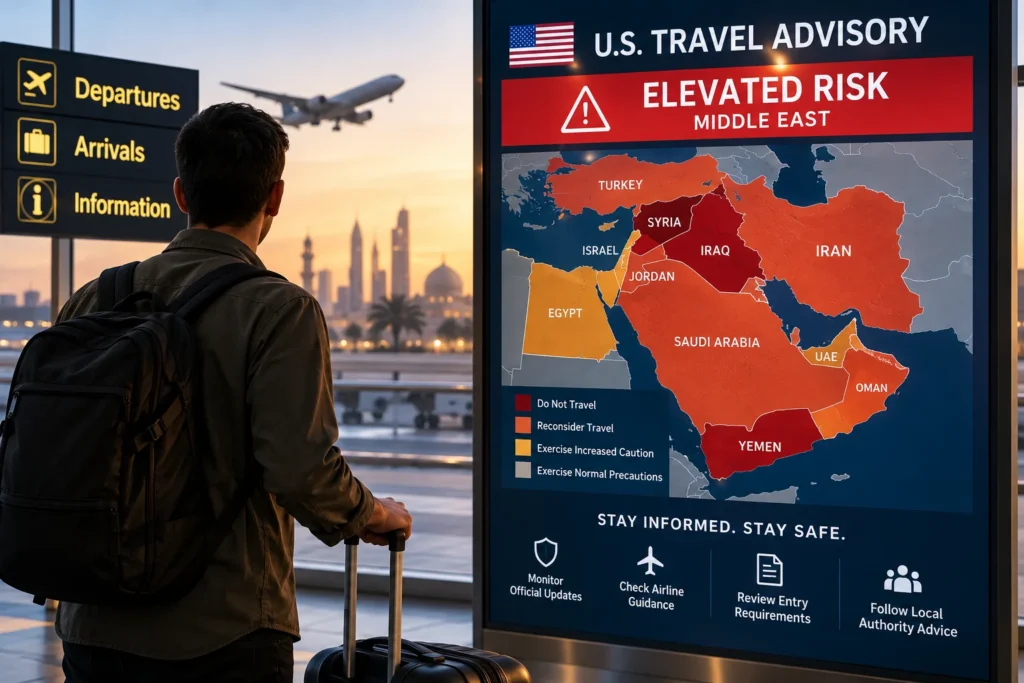
Global travel planners and international tourists face heightened uncertainties as official diplomatic bodies renew comprehensive security guidance for destinations across the Middle East. Recent diplomatic statements from the United States Department of State emphasize the need for heightened vigilance, flexible flight arrangements, and careful review of itinerary safety. With regional security dynamics shifting rapidly, official government notices are urging international travelers to monitor transportation status, maintain contingency plans, and consider regional stability when arranging commercial transit.
Public authorities continuously evaluate regional security metrics to protect international visitors, civil aviation corridors, and commercial shipping lines. As government agencies update public safety notices, tourism boards and civil aviation authorities across affected destinations are working to ensure clear communications for incoming international guests and transit passengers.
Official Diplomatic Alerts Urge Heightened Vigilance and Travel Flexibility
In official public security communications, diplomatic agencies have highlighted that the security environment in parts of the region remains complex with potential for unexpected disruptions. Public updates issued by the U.S. Department of State’s Bureau of Consular Affairs highlight potential impacts on commercial transportation networks, including sudden airspace closures, airline schedule changes, and unexpected flight cancellations.
Public safety authorities advise individuals currently located in or traveling near regional hubs to take proactive precautionary steps:
Commercial Airline Status: Continuously verify departure schedules and flight routing directly through airline carriers or official airport departure portals prior to heading to transit terminals.
Diplomatic Registration: Enroll in official emergency notification programs, such as the Smart Traveler Enrollment Program managed by consular bureaus, to receive real-time location-based safety updates.
Travel Plan Contingencies: Maintain flexible accommodation bookings, keep essential travel documentation easily accessible, and secure secondary routing options in the event of local airspace restrictions.
Regional Monitoring: Track verified local government announcements, official civil defense bulletins, and aviation administrative notices to remain informed on operational conditions.
Governments emphasize that international visitors should maintain active awareness of their immediate surroundings, particularly around commercial transport hubs, major public centers, and international business venues.
Civil Aviation Resilience and Destination Security Measures
Airport operations, air traffic management systems, and commercial carriers serve as the backbone of global tourism. Following recent regional defense incidents, national aviation agencies and airport authorities across the Middle East have reaffirmed their commitment to maintaining rigorous airspace surveillance and operational defense protocols.
Civil aviation administration releases confirm that integrated air defense systems and coordinated regional monitoring networks remain fully engaged to protect commercial flight routes and municipal airports. While air transport corridors between major hubs continue to manage scheduled commercial flights, temporary route diversions or precautionary air traffic holds may occur to preserve complete safety standards.
Tourism ministries and municipal destination authorities continue working closely with transport operators to support travelers impacted by unexpected scheduling delays. Maintaining high safety protocols ensures that international transit infrastructure remains protected, minimizing structural disruptions to civil travel.
Navigating Tour Packages, Cross-Border Itineraries, and Travel Planning
Strategic travel advisory updates play an influential role in guiding global tour operators, cruise itineraries, and corporate travel managers. Broad advisory categories serve to inform travelers about regional risk levels, enabling consumers to make well-informed decisions regarding leisure travel and business trips.
For popular cultural and historical destinations within the region, local tourism authorities are advising international tour groups to stay aligned with national security directives. Travelers planning multi-destination itineraries spanning several countries across the Gulf or Levant are encouraged to review country-specific travel advisories, as safety classifications and local entry requirements can vary substantially between neighboring states.
Comprehensive travel insurance policies that include coverage for unexpected travel interruptions, political evacuations, or flight delays are strongly recommended by consular offices. By staying informed through verified government announcements and maintaining adaptable schedules, international travelers can navigate shifting security advisories while prioritizing personal safety and travel confidence.
For more travel news like this, keep reading Global Travel Wire