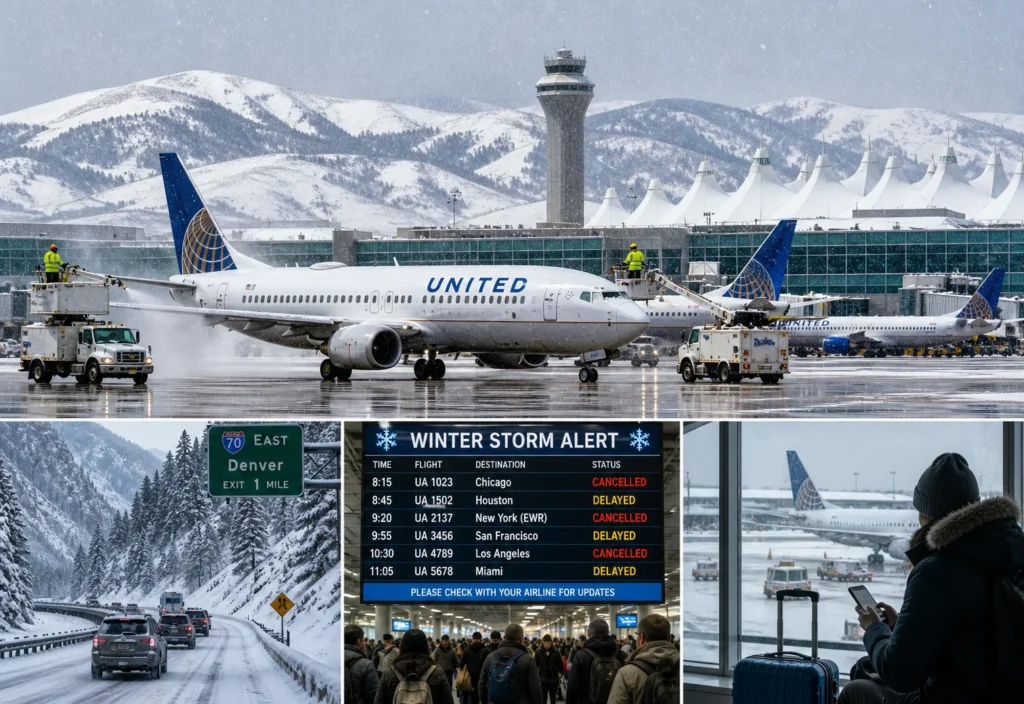
Severe weather conditions across the Rocky Mountain region are set to impact tourism and travel in the United States as United Airlines issues a winter weather alert for multiple airports. The advisory comes in response to a major spring snowstorm expected to affect Colorado and nearby areas, potentially disrupting hundreds of flights and altering travel plans for thousands of passengers.
According to official aviation updates, the alert covers key travel dates in early May 2026, with the heaviest impact anticipated around Tuesday and Wednesday. The airline has introduced flexible travel options for passengers, allowing them to reschedule flights without additional charges. This move is aimed at minimizing inconvenience and supporting travelers during unpredictable weather conditions.
One of the most affected hubs is Denver International Airport, which plays a central role in connecting domestic and international यात्रियों across the United States. As one of the busiest airports in the country, any disruption at this hub has a ripple effect on tourism flows, business travel, and connecting flights nationwide.
The weather system is expected to bring heavy, wet snow across mountainous regions and urban areas alike. Official guidance from transportation authorities in Colorado warns of hazardous travel conditions, including reduced visibility, slippery roads, and potential power disruptions. These conditions are likely to impact not only air travel but also road connectivity to major tourist destinations in the region.
In addition to Denver, several regional airports are included in the advisory. These include Aspen, Colorado Springs, Vail/Eagle, Steamboat Springs, Cheyenne, and Laramie. These locations are popular gateways for tourists visiting Colorado’s hill resorts, national parks, and outdoor attractions. Disruptions at these airports may affect visitors planning trips to ski resorts, hiking trails, and scenic destinations.
Tourism officials emphasize that weather-related disruptions are a natural part of travel, particularly in regions known for seasonal climate variations. However, proactive measures such as flexible booking policies and real-time updates help ensure that travelers can adjust their plans with minimal stress. Airlines and airport authorities are working closely to manage operations and maintain safety standards.
United Airlines has confirmed that passengers with eligible tickets can rebook flights within a specified travel window, provided the new itinerary matches the original route and cabin class. This flexibility allows travelers to avoid peak disruption periods and choose safer travel times. Authorities advise passengers to monitor official airline communications and check flight status regularly.
The impact of the snowstorm extends beyond aviation, affecting road travel and local tourism activities. The Colorado Department of Transportation has issued warnings about rapidly changing weather conditions, particularly in mountain corridors and high-altitude areas. Travelers are encouraged to avoid unnecessary journeys during peak storm periods and to prepare for delays if travel is essential.
Despite these challenges, the tourism sector remains resilient. Colorado continues to attract visitors year-round, with its natural landscapes and outdoor experiences drawing millions of tourists annually. While short-term disruptions may affect travel schedules, long-term tourism demand remains strong, supported by the state’s diverse offerings and well-developed infrastructure.
Airports and airlines are implementing additional measures to ensure passenger safety during the storm. These include aircraft de-icing procedures, adjusted flight schedules, and enhanced coordination with weather monitoring agencies. Such actions are essential for maintaining safe operations in adverse conditions.
Passengers traveling through affected airports are advised to arrive early, allow extra time for security and check-in procedures, and stay informed about any changes to their travel plans. Travel experts highlight the importance of flexibility and preparedness, particularly during the weather related disruptions.
The situation also underscores the importance of travel insurance and contingency planning. Official guidance recommends that travelers review their policies to ensure coverage for delays or cancellations. Having a backup plan can help mitigate the impact of unexpected changes and ensure a smoother travel experience.
While current cancellation numbers remain relatively low, authorities expect disruptions to increase as the storm intensifies. The extent of the impact will depend on weather severity and operational conditions at major hubs. Continuous monitoring and timely updates will play a crucial role in managing the situation.
The collaboration between airlines, transportation departments, and weather agencies highlights the coordinated approach required to handle such events. By sharing information and implementing safety protocols, these organizations aim to minimize disruption and maintain traveler confidence.
Colorado travel disruption caused by the snowstorm serves as a reminder of the dynamic nature of tourism. Weather conditions can change rapidly, but effective planning and communication ensure that travelers can navigate these challenges successfully.
As the storm passes and conditions improve, normal operations are expected to resume, allowing tourism activities to continue. The resilience of the aviation and tourism sectors ensures that temporary disruptions do not overshadow the long-term appeal of destinations like Colorado.
For travelers, the key takeaway is to remain informed, flexible, and prepared. By following official guidance and utilizing available resources, travellers can continue to explore destinations safely, even in the face of changing conditions.