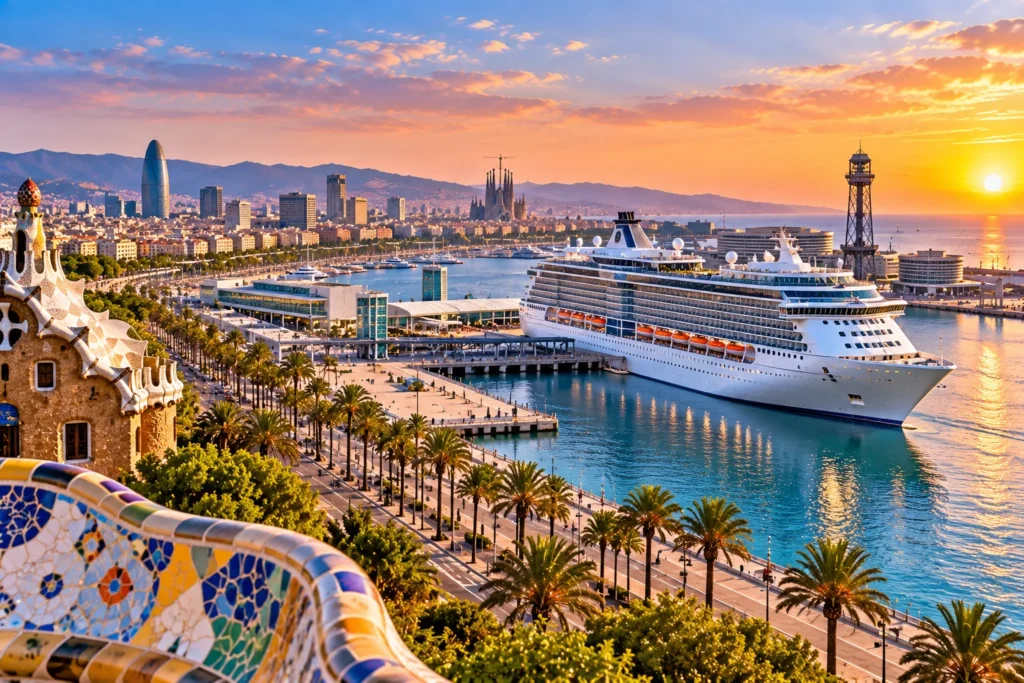
Public dialogue surrounding maritime governance and visitor management in Catalonia has intensified as nearly fifty maritime enterprises and port-related suppliers published a joint institutional declaration at Moll de Drassanes. The unified manifesto emphasizes the sector’s structured contributions to local employment, supply-chain commerce, and urban revenue, while advocating for balanced regulatory frameworks and evidence-based municipal tourism policies.
The collective initiative brings together licensed harbor service providers, maritime agency operators, shore excursion firms, provisioning contractors, and local logistics companies. Industry stakeholders underscore that public evaluations of maritime travel should not focus exclusively on passenger traffic figures, but must also account for broader economic integration, employment density, and ongoing environmental transitions across urban terminals.
Core Governance Principles for Port and Urban Integration
The joint document establishes six guiding principles aimed at supporting constructive engagement among local authorities, the Port Authority of Barcelona, tourism development entities, and municipal residents:
Institutional decision-making grounded in verified economic and environmental research.
Comprehensive assessments that evaluate direct and indirect commercial impacts across municipal services.
Structured dialogue connecting government agencies, port directors, business associations, organized labor, and civil society.
Legal certainty and regulatory stability to enable long-term maritime and infrastructural investment.
Proportionate and equitable fiscal policies that support competitiveness while funding municipal improvements.
Sustained operational investment in environmental performance, shore-to-ship clean power connections, and urban-port integration.
Enterprise representatives noted that major investment cycles in cleaner maritime vessels and advanced harbor infrastructure require predictable operating environments. Clear timelines and structured stakeholder consultations remain essential for operators planning multi-year itineraries and local service contracts.
Economic Footprint and Employment Across Catalonia
Official economic evaluations of the regional visitor economy demonstrate that maritime passenger operations support a broad domestic supply network. Beyond terminal arrivals, commercial activity encompasses specialized maritime logistics, vessel maintenance, food and beverage provisioning, licensed land transport, cultural tours, and artisan retail across the metropolitan area.
Academic analyses conducted by public research institutions in Catalonia indicate that cruise operations generate more than 9,500 direct and indirect jobs across the region, with approximately 6,700 positions concentrated directly within Barcelona. The overall economic turnover attributed to the maritime travel ecosystem exceeds €1.2 billion across regional industries.
Proponents of the manifesto point out that these figures represent stable career pathways across varied disciplines, including pilotage, terminal customs management, hospitality, domestic farming, culinary supply operations, and cultural heritage guiding. Maintaining a stable operational climate ensures that these interconnected economic sectors continue to thrive alongside broader urban planning goals.
Addressing Municipal Tourist Surcharges and Fiscal Predictability
A primary operational concern highlighted by port enterprises involves announced revisions to passenger taxation schedules. Municipal proposals outline gradual increases to the city surcharge applied to transit maritime visitors, with projections moving the municipal rate from five euros up to 24 euros per transit passenger by 2030.
When combined with existing regional tourism taxes administered by the Government of Catalonia, total fiscal assessments could reach 30 euros per visitor within the coming years. Commercial operators have raised formal concerns regarding the steep progression of these charges, advocating for tax structures based on objective, proportionate economic metrics rather than singular fiscal escalations.
Stakeholders stress that tax adjustments must remain equitable and non-discriminatory relative to other international transit modes. Transparent fiscal roadmaps allow regional tour operators, shipping lines, and ground agents to set transparent commercial pricing, maintain competitiveness across the Western Mediterranean basin, and avoid unexpected operational shocks that could redirect passenger routes to alternative regional ports.
Advancing Sustainable Maritime Infrastructure and Community Coexistence
Environmental modernization and community balance serve as central pillars of the sector’s long-term framework. Through major infrastructure programs coordinated with the Port of Barcelona, extensive projects are underway to electrify passenger wharves, enabling berthing vessels to connect to shore power grids and eliminate terminal emissions while docked.
Maritime suppliers advocate for ongoing public-private investments in alternative fuels, modern waste treatment facilities, and advanced digital flow-management systems. By distributing excursion departures across broader regional heritage sites and coordinating passenger transport away from high-density neighborhoods, operators seek to mitigate congestion while distributing visitor spending across wider territorial districts.
The initiative marks an invitation to public administrations to establish institutional roundtables that bridge municipal policy, port administration, and private enterprise. By aligning scientific data, environmental commitments, and proportionate public finance policies, stakeholders aim to preserve Barcelona’s standing as a responsible, world-class Mediterranean maritime gateway that balances economic vitality with urban quality of life.
For more travel news like this, keep reading Global Travel Wire