Honduras has become the first destination in Latin America to participate in Carnival Corporation’s global surplus meal donation initiative, marking a major expansion of the cruise company’s international food waste reduction strategy and community support efforts. The milestone was achieved in Roatán, where prepared but unserved meals from Carnival cruise operations were redirected to local partners supporting vulnerable communities.
The initiative forms part of Carnival Corporation’s broader Less Left Over sustainability program, which focuses on reducing food waste across its global cruise fleet while strengthening partnerships with port communities worldwide. The expansion into Honduras represents a significant development for both regional cruise tourism and sustainable hospitality practices in Latin America.
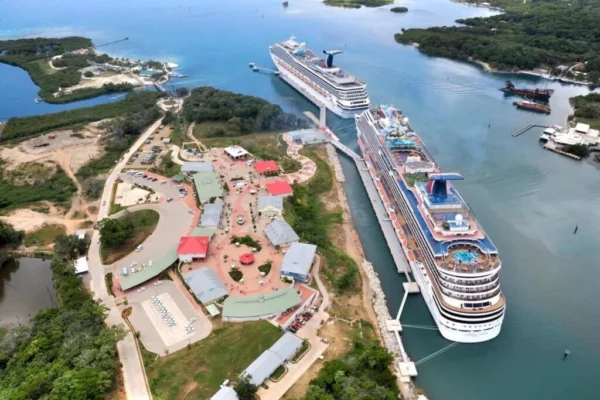
Carnival officials confirmed that the first official meal donation in the region took place at Isla Tropicale in Roatán during May 2026, involving 210 prepared meal portions transferred from Carnival Jubilee to local organizations engaged in food distribution programs.
The move positions Honduras as a key partner in Carnival’s growing environmental and social responsibility network while highlighting how cruise destinations are increasingly integrating sustainability into tourism operations.
Roatán Emerges as a Strategic Cruise Sustainability Hub
Roatán has steadily grown into one of the Caribbean’s most important cruise destinations, attracting rising passenger volumes from major international cruise operators. Carnival’s latest initiative further strengthens the island’s role not only as a tourism hotspot but also as a center for innovative sustainability partnerships within the cruise industry.
The meal donation program was developed through collaboration between onboard culinary teams, local authorities, and community organizations to ensure surplus meals could be safely transferred ashore while meeting all food handling and health regulations.
Cruise tourism continues to play a significant role in Honduras’ visitor economy, particularly in Roatán, where tourism supports employment across hospitality, transportation, retail, excursion services, and port operations. The addition of a structured meal redistribution framework introduces a new social sustainability component to the destination’s cruise operations.
Local organizations involved in hunger relief and food distribution are expected to benefit from improved access to prepared meals generated during cruise visits, creating long-term opportunities for community support.
Carnival Expands Global Less Left Over Strategy
Carnival Corporation’s Less Left Over strategy was designed to minimize food waste across cruise operations through data-driven planning, smarter inventory systems, optimized portion management, and advanced waste processing technologies.
The company has steadily expanded the initiative worldwide since its launch, targeting a substantial reduction in overall food waste by 2030. Through surplus redistribution, composting systems, biodigesters, dehydrators, and more efficient food production methods, Carnival aims to reduce the environmental impact of large-scale cruise hospitality operations.
With Honduras now joining the program, Carnival’s global meal donation network extends to 18 port destinations worldwide. Since the initiative began, more than 320,000 surplus meal portions have reportedly been redirected to communities in need.
The company’s expansion into Latin America reflects growing momentum within the global cruise industry to adopt more sustainable tourism practices while strengthening relationships with local port communities.
Cruise Industry Sustainability Becomes a Competitive Focus
Environmental stewardship and social responsibility are becoming increasingly important across the international cruise sector as travelers place greater emphasis on sustainable tourism experiences. Cruise operators are now investing heavily in cleaner technologies, reduced emissions, waste management systems, and community-focused programs to align with evolving passenger expectations.
Carnival’s Honduras expansion demonstrates how food sustainability programs are becoming integrated into broader cruise operations rather than functioning as standalone charitable activities. By using onboard analytics and consumption forecasting, cruise lines can reduce excess food production while identifying opportunities to safely redistribute unavoidable surplus.
The approach also supports wider tourism sustainability goals by reducing waste disposal volumes and improving resource efficiency across maritime hospitality operations.
Industry analysts note that sustainability initiatives increasingly influence traveler perception, destination partnerships, and long-term operational planning within the cruise sector.
Latin America Positioned for Further Cruise Sustainability Expansion
The success of the Honduras launch could pave the way for additional expansion throughout Latin America as cruise lines seek to strengthen sustainability frameworks across regional ports. Carnival has already explored agreements and operational models in destinations including Mexico and the Dominican Republic, laying groundwork for future growth.
As cruise traffic across the Caribbean and Latin America continues to recover and expand, ports are increasingly seeking partnerships that generate both economic and social value for local communities.
Roatán’s inclusion in the global donation network may also encourage other cruise destinations to explore similar collaborations involving food redistribution, environmental management, and community engagement.
The broader cruise industry continues to evolve rapidly as operators balance passenger growth with sustainability commitments. In 2026, cruise tourism remains one of the fastest-growing sectors in international travel, with destinations competing to attract vessels while also demonstrating responsible tourism practices.
For Honduras, Carnival’s latest initiative adds a new dimension to the country’s cruise tourism profile. Beyond generating visitor spending and employment, the partnership introduces a long-term sustainability model capable of supporting local communities while reinforcing the destination’s strategic importance in Caribbean cruise operations.
As Carnival Corporation continues expanding its Less Left Over strategy globally, Honduras now stands at the forefront of Latin America’s emerging role in sustainable cruise tourism and community-centered maritime development.
For more travel news like this, keep reading Global Travel Wire