The global cruise industry has reached an unprecedented peak in worldwide popularity. Official market data published by the Cruise Lines International Association indicates that passenger volumes soared past 37 million travelers globally by the conclusion of recent travel years. As international tourism expands, cruise operators face the massive logistical task of maintaining flawless hospitality standards across vast floating resorts. While passengers focus on exotic destinations, gourmet dining, and Broadway-caliber entertainment, the unseen backbone of the entire vacation experience rests heavily upon the shipboard housekeeping departments.
Stateroom attendants and floor stewards navigate some of the most demanding schedules in the hospitality sector. During standard turnover days, these dedicated crew members frequently have only a fraction of a day to completely sanitize, restock, and refresh thousands of guest quarters as one wave of travelers departs and the next arrives. Understanding the mechanics of shipboard housekeeping operations not only fosters mutual appreciation but also allows travelers to drastically improve their own comfort and convenience at sea.
Navigating the Complex Daily Routine of Shipboard Hospitality Teams
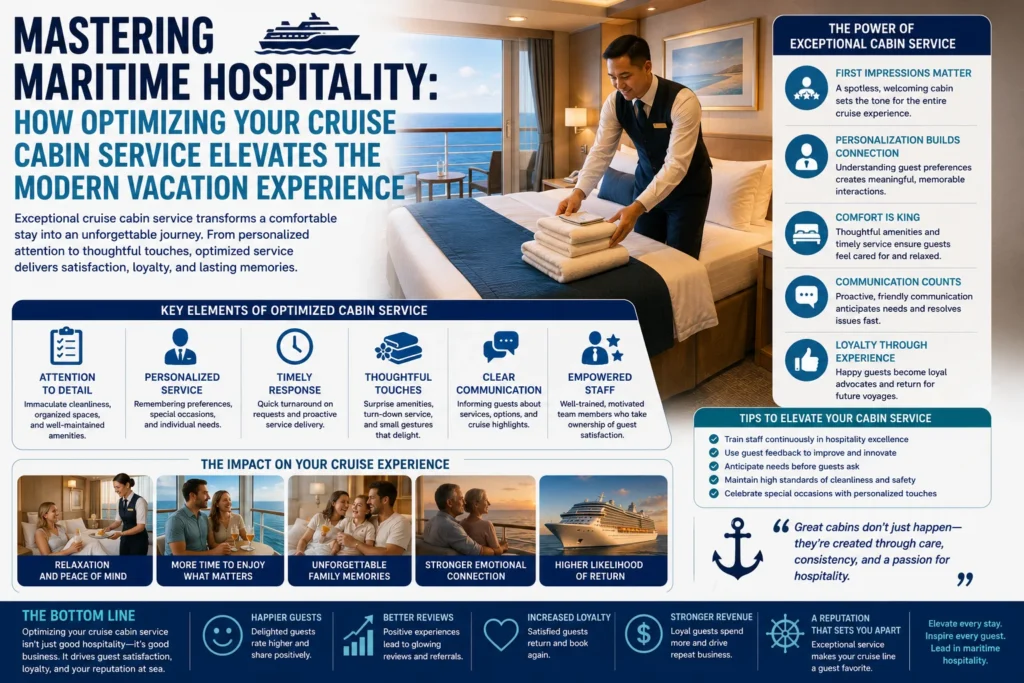
A typical day for a stateroom steward involves balancing rigid operational timelines with highly customized guest requests. On premium international lines, standard operating procedures dictate that cleaning services occur twice daily. The initial morning visit, usually conducted while guests are enjoying breakfast, focuses on heavy sanitation, resetting linens, renewing towels, and clearing standard service items. The second visit occurs during evening dining hours, involving a comprehensive turndown service, restocking amenities, and delivering the following day’s official activity schedule alongside shore excursion documentation.
Though this routine is standard across the maritime industry, official operational guidelines from leading cruise lines emphasize that service times are highly flexible. Professional housekeeping managers note that stateroom teams are entirely equipped to adapt their cleaning windows to mirror the specific daily excursions of individual passengers. Many modern fleets now provide dedicated hospitality contact cards or utilize integrated mobile applications, allowing passengers to communicate their daily schedules instantly. Sharing your planned absences allows the crew to maximize their productivity while ensuring you never return to a half-serviced room.
The Power of Personalization Through Specialized Guest Requests
A frequent misconception among new cruise passengers is that requesting specific room modifications creates an unnecessary burden on the crew. In reality, maritime hospitality frameworks are intentionally built around personalization. Official fleet updates confirm that an extensive repository of comfort items is maintained on every vessel to make staterooms feel personalized and accessible.
Through official shipboard digital networks and physical check-lists, travelers can easily secure an array of practical adjustments, such as:
Customized bedding options and specialized non-allergenic linens.
Technical equipment including extension cords and power converters.
Dedicated daily refreshments, scheduled ice deliveries, and personalized mini-bar configurations.
Marine hospitality management emphasizes that clear communication regarding physical needs or severe medical allergies should ideally be logged before boarding through official guest portal systems. Stateroom teams routinely accommodate complex environmental adjustments, ranging from laundering sheets exclusively with chemical-free detergents to providing specialized storage solutions for long-term passengers traveling with extensive luggage sets.
Simple Stateroom Habits That Streamline Onboard Cleaning Efficiency
While stateroom attendants are fully trained to manage diverse room conditions, minor organizational choices by guests can dramatically accelerate daily cleaning timelines. Maintaining low levels of personal clutter on horizontal surfaces like desks, vanities, and sofas allows the crew to sanitize living spaces much more thoroughly without accidentally misplacing important travel paperwork, personal electronics, or souvenirs.
Furthermore, operational managers point out that prolonged activation of digital or physical privacy indicators can significantly disrupt the structural flow of a steward’s shift. If a privacy sign remains displayed deep into the afternoon, it forces the housekeeping team to compress their remaining duties into a severely limited window later in the day. Simple, cooperative habits—such as clustering used room service dinnerware in a single visible area, hanging towels intended for reuse to support shipboard conservation efforts, and separating standard refuse before leaving the cabin—ensure that the daily maintenance of your living space remains smooth and efficient.
Understanding Modern Gratuity Frameworks and Evaluating Crew Performance
The financial structures governing maritime service rewards have evolved considerably. The vast majority of mainstream international cruise corporations now utilize automated, centralized gratuity pooling systems. These automatic service charges generally range between $16 and $21 per passenger on a daily basis, with adjusted variations depending on the structural class of the stateroom or suite occupied. The core benefit of this centralized arrangement is equity; it ensures that back-of-house personnel who do not maintain direct public contact, such as commercial laundry operators and culinary support staff, are fairly compensated for their vital contributions to the cruise ecosystem.
For travelers wishing to express additional direct gratitude for exceptional face-to-face attention, supplemental cash gratuities remain a highly respected industry practice. Experienced maritime travelers often recommend presenting these direct tokens of appreciation during the final evening of the voyage, rather than waiting until the morning of disembarkation when the crew is entirely focused on the intense physical demands of ship turnover.
Beyond monetary rewards, filing specific, named commendations via official post-cruise guest satisfaction surveys represents one of the most impactful actions a traveler can take. Official cruise line human resource departments rely heavily on these verified metrics to determine internal promotions, allocate performance bonuses, and select candidates for advanced corporate leadership tracks within the global fleet.
For more travel news like this, keep reading Global Travel Wire