Argentina is moving toward one of the most significant railway policy changes in its modern history, with reforms focused on freight privatization, network modernization, and lower operating costs for passenger services. While much of the debate has centered on economics and logistics, the long-term impact could also be substantial for tourism, regional mobility, and the future of train travel across the country.
The proposed changes come as the government seeks to improve infrastructure, attract investment, and increase the efficiency of one of Latin America’s largest rail networks. For travelers, the direction of reform matters because railways are not only transport assets. They connect cities, support commuter life, open tourism routes, and shape how visitors experience destinations.
Argentina’s rail future now stands at a crossroads between modernization opportunities and uncertainty over how passenger services will evolve.
One of Latin America’s Largest Rail Networks
Argentina has approximately 36,000 kilometers of railway lines, making it one of the biggest rail systems in the region. Built over different historical periods and by multiple operators, the network includes various track gauges and a mix of freight and passenger corridors.
Freight activity remains central to rail operations, especially the movement of agricultural goods, minerals, and industrial products from inland provinces to ports. Major lines such as Belgrano, San Martín, and Urquiza are strategically important for exports and economic growth.
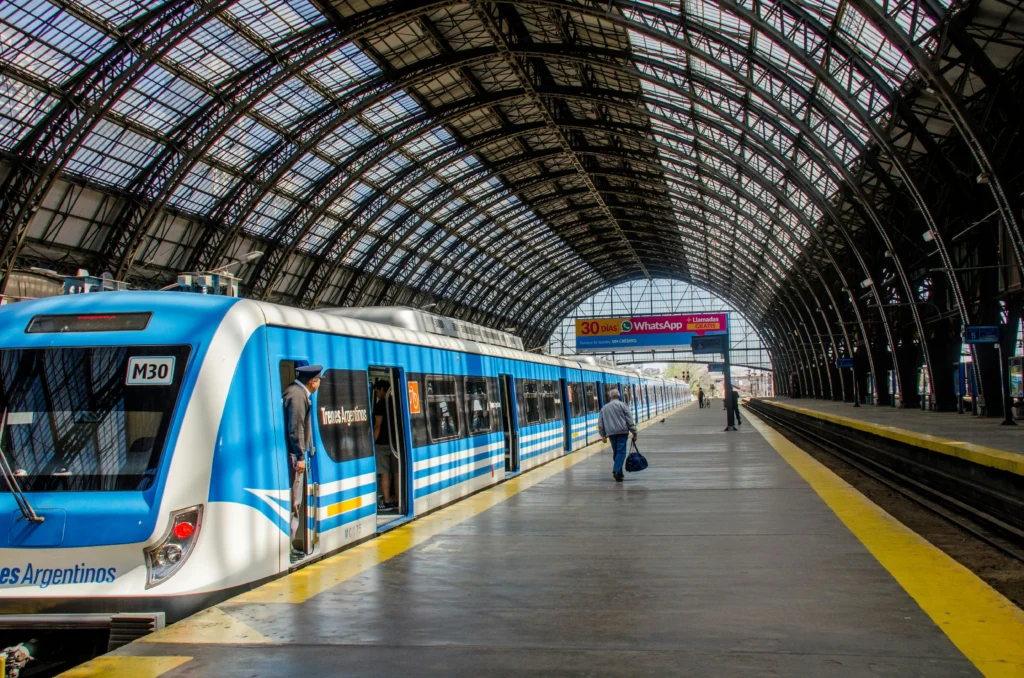
At the same time, passenger rail remains vital in the Buenos Aires metropolitan area, where commuter services help millions of journeys each year. Intercity routes linking major cities such as Rosario, Córdoba, and Mar del Plata also continue to play an important tourism and mobility role.
The challenge for reform is how to strengthen commercial freight performance without weakening passenger access.
Why Rail Matters for Tourism
Railways are a key part of tourism ecosystems around the world. They connect city centers, reduce road congestion, provide scenic travel experiences, and help visitors move affordably between destinations.
In Argentina, train travel has strong tourism potential. Visitors can use rail to reach coastal resorts, cultural cities, and regional destinations while enjoying a more relaxed journey than domestic flights or long-distance buses.
Buenos Aires itself depends on rail for urban mobility, allowing tourists to travel from airports, suburban districts, and transport hubs into the city.
If services improve, rail could become an even stronger part of Argentina’s visitor economy. If services shrink, tourism accessibility in some regions may become more limited.
Freight Reform at the Core of Policy
The government has made freight modernization a major priority. Officials see rail cargo as essential for boosting exports, reducing logistics costs, and improving competitiveness in sectors such as agriculture, mining, and energy.
Argentina’s freight rail volumes have remained relatively stagnant for decades while road transport has dominated cargo movement. Expanding rail freight could ease pressure on highways, lower emissions, and improve supply chains.
From a tourism perspective, stronger freight corridors can also create indirect benefits. Modernized tracks, upgraded signaling, and improved terminals may support wider network improvements over time.
However, balancing freight growth with passenger needs will be critical, especially where both services share infrastructure.
Passenger Services Face Pressure
One of the biggest concerns surrounding reform is the future of passenger rail. The government has openly acknowledged that many services require heavy subsidies, especially long-distance and regional routes.
Some lower-demand passenger services have already been reduced, raising fears among communities that rail access could decline further. For many smaller towns, trains are more than transport. They support local economies, family connections, and domestic tourism flows.
In the Buenos Aires region, suburban rail remains indispensable. Reliability, maintenance, spare parts, and investment in rolling stock all remain essential to keep daily mobility functioning smoothly.
If passenger systems are underfunded, both residents and visitors may face reduced service quality and fewer travel choices.
Buenos Aires and Urban Tourism
The capital city is where rail has the clearest everyday tourism value. Suburban lines such as Roca, Sarmiento, and Mitre connect dense districts with the city center and major terminals.
These networks help travelers reach hotels, attractions, museums, neighborhoods, and business districts. Improvements made in recent years to stations, electrification, and signaling have strengthened parts of the metropolitan system.
For international tourists, dependable commuter rail can make Buenos Aires easier to navigate and more attractive as a city-break destination.
Continued maintenance and modernization in the capital will therefore be just as important as national freight ambitions.
Investment and Regulatory Questions Remain
The success of reform may depend less on ideology and more on practical execution. Investors typically look for clear rules, stable contracts, transparent access charges, and confidence that infrastructure will be maintained.
Rail systems also need strong institutions to regulate competition, oversee safety, and resolve disputes. Without these foundations, modernization plans can slow or fail to attract long-term capital.
For tourism, certainty matters too. Operators, travel planners, and visitors need confidence that routes will continue, timetables will be reliable, and stations will be safe and functional.
A well-designed framework could support both business investment and better travel experiences.
Opportunities for Scenic and Regional Rail Tourism
Argentina has strong potential for leisure rail travel beyond commuter routes. Scenic landscapes, wine regions, mountain areas, coastal corridors, and historic towns could all benefit from improved rail services.
Around the world, rail tourism is growing as travelers seek lower-emission journeys and immersive experiences. Overnight trains, heritage routes, and city-to-region connections are attracting renewed interest.
If Argentina combines modernization with visitor-focused planning, rail could become a stronger tourism asset rather than only a freight tool.
This would require integrated ticketing, station upgrades, tourism partnerships, and marketing of rail-based itineraries.
Why This Matters Nationally
Rail reform is about more than trains. It influences trade, urban life, regional development, tourism access, and environmental sustainability.
A stronger railway system can reduce dependence on roads, improve mobility choices, and help spread tourism benefits beyond major airports and highways.
A weaker or fragmented passenger network could increase inequality in access and reduce travel options for domestic visitors.
The decisions made now may shape Argentina’s transport landscape for decades.
Outlook for Argentina Rail Travel
Argentina’s reform agenda presents both promise and uncertainty. Freight modernization could unlock major economic gains, while better infrastructure could create new opportunities for tourism and passenger travel.
But long-term success will depend on whether policy makers can balance commercial efficiency with public mobility needs.
If investment, regulation, and passenger priorities move together, Argentina could build a railway system that supports exports, connects communities, and strengthens tourism across one of South America’s most diverse travel destinations.